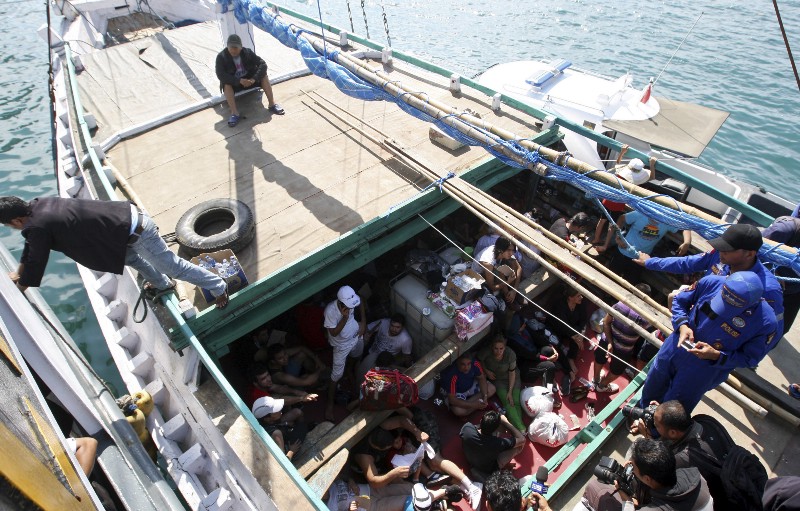
More than 2,000 reports detailing abuse and neglect at a detention camp for asylum seekers on the Micronesian island of Nauru were leaked in “the largest cache of leaked documents released from inside its immigration regime,” The Guardian first reported.
The reports, which detail a trove of assaults, sexual abuse, self-harm attempts, child abuse, and poor living conditions between 2013 and 2015, found that children were “vastly overrepresented in the reports,” according to the publication.
Allegations include a young asylum seeker whose request for a four-minute shower instead of the usual two-minute shower was accepted on “condition of sexual favours” by a male guard; children who committed self-harm, with at least one cutting his arm “with a plastic knife from lunch”; guards who grabbed and assaulted minors; and a young girl who sewed her lips together and was roundly laughed at by officers.
“This leak has laid bare a system of ‘routine dysfunction and cruelty’ that is at once dizzying in its scale and utterly damning for the Australian authorities who tried so hard to maintain a veil of secrecy,” Amnesty International’s Senior Director for Research Anna Neistat said in response to The Guardian’s leak. She added that her own organization had seen “systemic abuses taking place,” which the Australian government has tried to “roundly deny.”
“The exposure of just how appalling the conditions on Nauru are — and the impact of this on refugees — has to end the government of Australia’s denials,” Neistat added.

Australia has long refused to accept asylum seekers who reach its shores, instead sending them to detention centers on the Micronesian island of Nauru and Papua New Guinea. In April, the Papua New Guinea supreme court said that the detention of asylum seekers and refugees was unconstitutional, which led to a shutdown of the Manus Island immigration detention.
Former Save the Children workers who worked at Nauru said that The Guardian’s release of the cache of abuse allegations were “just the tip of the iceberg.”
“It appears from looking through the published database that nowhere near the full extent of the incident reports written on a day-to-day basis have been released,” one worker told the publication. “What you are seeing here is just the tip of the iceberg.”
“The lack of independent oversight meant that this reporting system was ineffective and placed asylum seekers at greater risk inside the camp.”
Widespread issues at the Nauru detention center is not new. In April, two asylum seekers set themselves on fire to protest being deported back to their home countries. One died from his injuries. The detention center has been compared to a prison, with at least 653 people being detained “indefinitely” as of August 2015, according to Amnesty International.
Still, the alleged treatment of asylum seekers at Nauru echo parallels faced by other people seeking humanitarian relief in the United States and in Europe. In the United States, Central American mothers and children who began showing up in large numbers on the southern U.S. border have gone so far as to go on hunger strikes reportedly because of unsafe conditions and unsanitary detention centers.