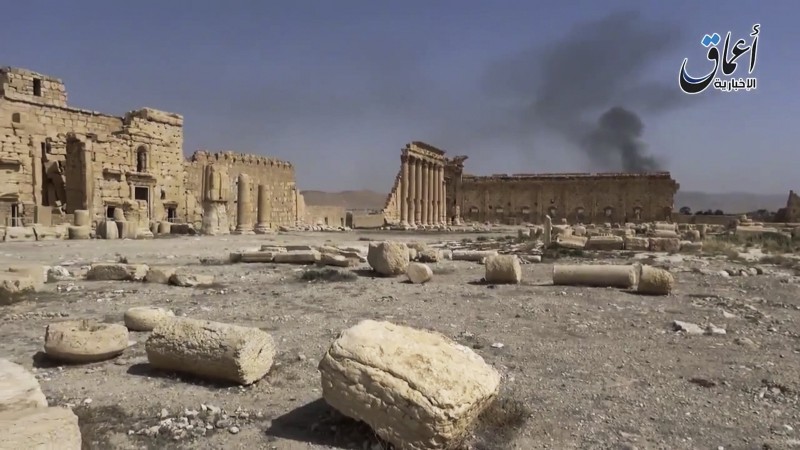
The United Nations moved to safeguard historical cultural sites from ISIS’ reign of terror across much of what is considered to be the “cradle of civilization.” The U.N. General Assembly unanimously passed a resolution on Thursday to help protect such sites and prosecute antiquities smugglers in order to combat what officials called “a new phenomenon” of “cultural cleansing.”
Signatories to the resolution vowed to “stand up against attacks on the cultural heritage of any country as attacks on the common heritage of humanity as a whole,” although enforcing such a nonbinding decree will be up to individual countries on a voluntary basis.
Still, U.N. officials have called the move a “turning point” in protecting the heritage of Iraq, which is the main focus of the resolution as ISIS tightens its grip on key historic sites both there and in neighboring Syria.
Jan Eliasson, Deputy Secretary General of the U.N. noted the particular importance of the relics of the Mesopotamia, which was one of the earliest known civilizations in the world.
“[The] destruction of cultural heritage bears witness to a form of violent extremism that seeks to destroy the present, past and future of human civilization,” he said.
Eliasson called on “all Member States, in cooperation with…relevant authorities, to step up efforts to prevent the trade in items of cultural, scientific and religious importance illegally removed from Iraq.”
Iraqi officials called on the 193 countries represented in the U.N. to follow through on the resolution.
Mohamed Ali Alhakim, Iraq’s ambassador to the U.N. described the resolution as “a first step, not the end.” He noted that ISIS earns as much as $100 million a year from antiquities trading — although those earnings are far from the group’s primary revenue stream. According to the New York Times, ISIS takes in more than $1 million a day from taxation and extortion alone.
But ISIS does not appear to be motivated by financial gains when it comes to ancient artifacts. The group has opted time and again to destroy what many consider to be priceless antiquities instead of trying to sell them.In March, ISIS fighters took sledgehammers to centuries-old statues in the Iraq’s Mosul Museum and later bulldozed the Assyrian city of Nimrud which was established in the 13th century B.C.

Many feared for the worst when ISIS captured the ancient city of Palmyra in Syria last week. UNESCO calls the world heritage site “one of the most important cultural centres of the ancient world.”
“Concerning the historical city, we will preserve it and it will not be damaged,” Abu Laith al-Saoudi, a man identified by Syria’s Alwan Radio as ISIS’ military commander in Palmyra said on air.
“But,” he added, “What we will do is to pulverize statues that the miscreants used to pray [to].”
According to local residents, ISIS has already destroyed several ancient statues, including one of a lion god dating back to the 1st century A.D.
“They promised us that they are not going to destroy any of it, but we knew that they would not keep their promise,” Abo Ali, a Palmyra resident told a Syrian journalist. “As we expected they have actually destroyed one of the most important places in the city, the museum, and I guess they will continue doing this.”
For now, ISIS militants seem more interested in using the ruins of Palmyra as a backdrop for a different sort of destruction — that of human life.
On Wednesday, ISIS militants executed 20 government officials inside Palmyra’s ancient amphitheater.