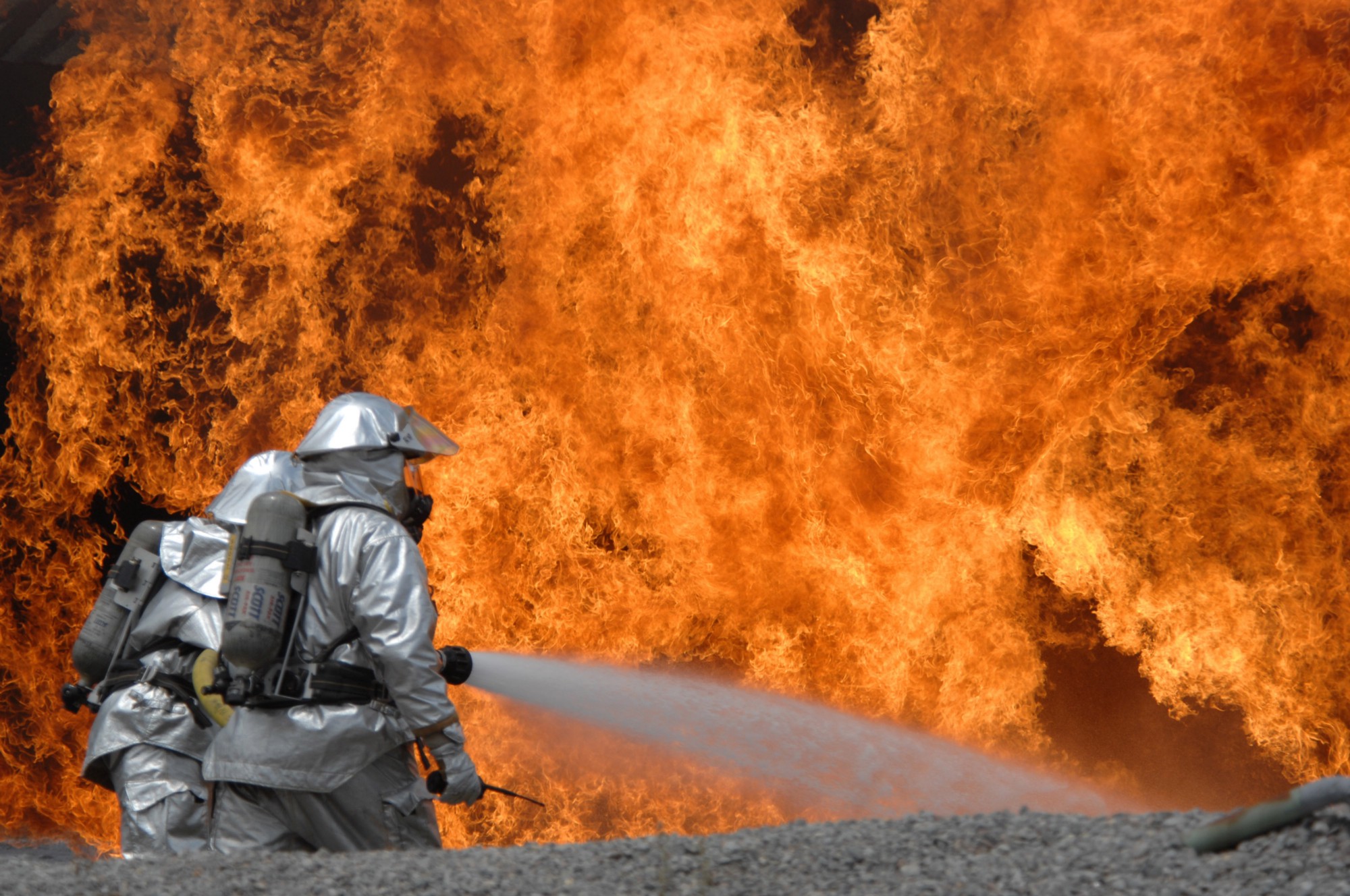
A toxic firefighting foam that may have tainted drinking water near military sites with cancer-causing chemicals will cease to be used across the country, the U.S. Air Force said Thursday.
The announcement comes as Colorado health officials said this week it’s highly likely toxic chemicals found in three drinking water systems south of Colorado Springs stem from firefighting foam used at a nearby Air Force base, the Associated Press reported.
A $6.2 million contract to replace the foam with an “environmentally responsible foam” was awarded Monday, the Air Force said, as the agency tries to reduce the risk of contamination of soil and groundwater.
The Air Force has used foams made with chemicals related to perfluoroalkyl substances, or PFAS, since 1970 to extinguish fuel-based fires. PFAS are a class of chemicals that resist heat, grease, and water. These substances have been used for more than half a century on fabric, food packaging, nonstick cookware, and fire-fighting foam rich. These foams are unlike fire retardants used in wildfire response, which contain about 85 percent water, 10 percent fertilizer, and 5 percent minor ingredients like colorants, thickeners, corrosion inhibitors, stabilizers, and bactericides, according to the U.S. Forest Service.
In the past two decades PFAS and offshoot chemicals like perfluorooctane sulfonate (PFOS) and perfluorooctanoic acid (PFOA), have fallen out of favor as they have been linked with birth defects, various forms of cancer, and immune system dysfunction. Some firefighting agencies across the country, as well as school districts, have been curtailing their use for that reason. Though now mostly phased out in the United States, PFAS are highly resistant to breakdown in the environment, and for decades were disposed of in watersheds because they were unregulated.
PFAS are still proliferating in developing nations, particularly in Asia.

The Air Force said it will stop using foam in training exercises, and it will replace all foam in fire vehicles and at fire stations with the new formula by the end of this year. The new formula does not have PFOS and contains little or no PFOA.
The Air Force move is significant for water quality across the country. A public water system is 35 percent more likely to have elevated levels of PFAS related pollution, according to a Harvard-led study published earlier this month. The study also found the drinking water of some six million people across the country may have elevated levels of PFAS.
In May, the Environmental Protection Agency lowered the recommended safety levels of PFOA and PFOS to no more than 70 parts per trillion, levels that Harvard experts have told ThinkProgress may still be too high to curtail the chemical’s toxic effects. That month the Air Force said it would apply the new EPA guideline and noted it tested for related chemicals at 30 bases, with 202 homes showing levels above the new EPA’s health advisory.
In this week’s announcement the Air Force said it’s also investing in research to develop a foam that meets military standards and doesn’t contain toxic chemicals at all. That may be a daunting task, according to recent studies, though breakthroughs in so-called fluorine-free firefighting foams have been reported.
The Navy and the Army are yet to make a similar announcement about their foam use. Both agencies have started testing and cleaning various sites, according to published reports, as the drinking water in communities in Pennsylvania, Virginia, Rhode Island, and other states has been found to contain elevated levels of toxic chemicals, too.