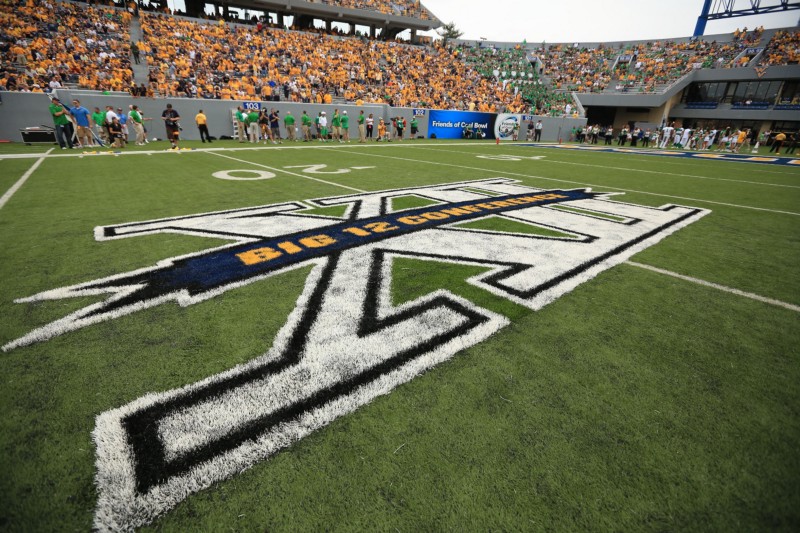
The Big XII, one of the NCAA’s five biggest athletic conferences, announced a new concussion policy this week that goes farther than previous guidelines in college sports by giving final authority over whether players should return to games to medical practitioners instead of coaches.
The Big XII’s Board of Directors approved the policy this week after the conference’s representatives voted against new concussion protocols at the NCAA’s annual convention last month because they felt it did not go far enough. The conference wanted that policy to mandate that trained medical staff have final say in concussion decisions, but a different proposal was approved instead.
According to a news release, the conference’s policy requires that Big XII schools follow the NCAA’s guidance and concussion protocols, which mandate that schools should have a concussion management plan and treatment policies. The Big XII policy also requires education for coaches, trainers, and athletes about concussion symptoms and reporting, and it will include specific roles of medical professionals — including trainers, neurologists, and physicians — in the treatment and management process.
The most important part, though, is that the policy “empowers the institution’s medical staff to have the autonomy and the unchallengeable authority” to determine how athletes who suffer concussions should be managed and when they should return to play. The policy “ensures that no coach serve as the primary supervisor for any medical provider, nor have hiring, retention and dismissal authority over that provider.”
That’s not exactly revolutionary: handing these decisions to medical professionals instead of coaches is exactly what organizations advocating for better concussion policies recommend. The Sports Legacy Institute, for instance, clearly states on its web site that “after an athlete suffers from a concussion, only a medical professional should return the athlete to play.”
But in the NCAA, it’s at least a start. In a 2013 Chronicle of Higher Education survey of 101 college athletic trainers, 53 said that football coaches had pressured them to return athletes to the field before they should have been, and 42 said they felt pressure from coaches to return a player to the field even after he suffered a concussion. Thirty-two said that coaches could influence their firing.
“Too many medical decisions are made by individuals outside of the medical profession,” one trainer told the Chronicle, and doctors were similarly critical. “Any institution that places a coach in a supervisory role over the athletic trainer or allows a coach to put pressure on medical decisions is just asking for trouble,” Kevin Guskiewicz, a concussion researcher at the University of North Carolina, said.
The Big XII policy will at least try to address that problem.
“This policy goes beyond what was approved during the recent NCAA Autonomy Governance, and puts all associated protocols where they belong; in the hands of trained medical staff,” Big XII commissioner Bob Bowlsby said in a news release.
Handing over authority to medical professionals won’t solve all the issues with concussions. After University of Michigan quarterback Shane Long returned to the field despite suffering a concussion during a 2014 game, athletic director Dave Brandon said in a statement that the school’s trainers have “unchallengeable authority” over return-to-play decisions. Whether that is true or not, the Michigan case highlighted other important issues in dealing with concussions, including how to properly monitor for the injuries and communicate to coaching staffs that players need to be immediately evaluated.
The Big XII’s policy also appears to go farther than the NCAA-wide protocols in that it allows Bowslby to punish schools that do not comply. At the annual convention, other conferences were loath to adopt such sanctions, as CBS Sports detailed this week. A Big XII conference spokesperson, however, told CBS Sports that the conference could levy fines or hand out reprimands and suspensions for schools that don’t adhere to its new policy.