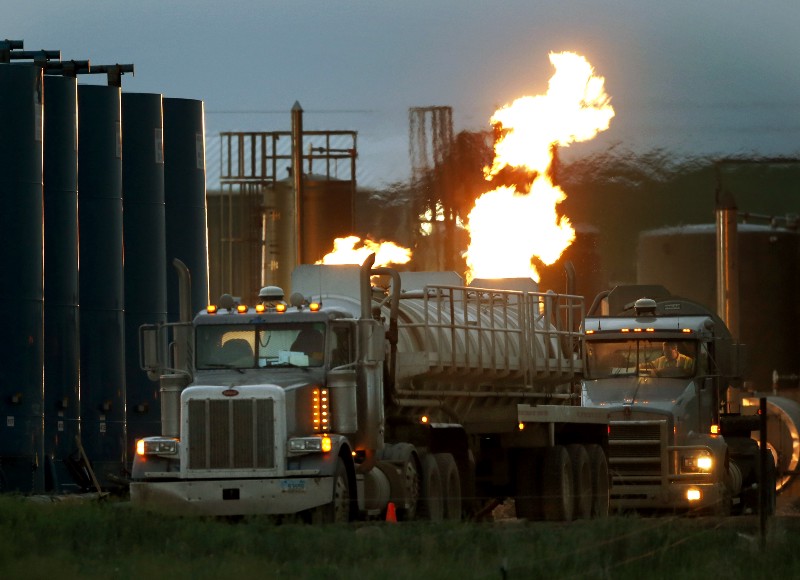
California Air air regulators proposed new emission rules for oil and gas operations Thursday, touting massive cuts in greenhouse gases and tougher regulations than federal mandates.
Though some exemptions exist for smaller operations, the California Air Resources Board (ARB) rules would make all facilities use emission control systems, increase testing to pinpoint annual methane emissions, and beef up leak detection controls for equipment and underground storage sites. These proposed rules made draft regulations unveiled earlier this year more stringent, as the agency revised a provision that allowed the testing frequency to drop down to once a year if a facility was found in good standing after several tests. The ARB said the rules are more rigorous than Environmental Protection Agency standards, which the federal government updated earlier this year but only apply to new or modified facilities.
The ARB rules come some five months after California plugged the largest methane leak in U.S. history just northwest of downtown Los Angeles. For 112 days a natural gas well spewed methane at rates that at times twice exceeded the next largest source of methane in the country. New rules will cover some 70,000 oil and gas wells, but are mostly directed at natural gas operations. Natural gas is mostly methane, which is a potent greenhouse gas that traps heat 86 times more efficiently than CO2 over a 20-year period. Natural gas burns more cleanly than coal, but methane leaks can quickly offset gains. In fact, some studies suggest that methane leaks in the United States have cancelled out the benefits of energizing the grid with gas instead of coal.
The Massive Methane Blowout In Aliso Canyon Was The Largest in U.S. HistoryClimate by CREDIT: AP Photo/Richard Vogel When the massive methane gas leak in Aliso Canyon was discovered in…thinkprogress.orgCalifornia — widely considered a leader in climate change laws — has been working on updating emission rules on oil and gas for some two years, as the state conducted site visits and field tests, and surveyed industry equipment statewide. The ARB said overall estimated annual cost — with natural gas savings in place — come up to be around $22.3 million. Rules will also cause methane emission reductions equivalent to 1.5 million tons of CO2 per year. That would be aside from reductions in nitrogen oxide emissions, which the EPA describes as a group of poisonous and highly reactive gases. Emissions of harmful volatile organic compoundswould decline as well.
“California has proposed the nation’s strongest standard to cut methane and associated toxic air pollution from oil and gas facilities. It is an example that other states and the Environmental Protection Agency should follow,” said Bruce Baizel, energy program director at Earthworks, in a statement. The EPA announced this spring that it had begun crafting a rule that will regulate methane from older infrastructure. But that rule is not expected to be finished during the Obama administration or cover storage operations. So in a sense, California new rules would shut down any loophole the federal government could leave open.
BREAKING: EPA Finalizes Methane Rule For New Oil And Gas OperationsClimate by CREDIT: AP Photo/Charles Rex Arbogast The Environmental Protection Agency on Thursday issued its final rule…thinkprogress.orgThe Western States Petroleum Association and other groups have said the estimated annual cost of the rules were low, according to published reports. Critics of the rule also note that these rules are honing on minor emission sources. The oil and gas industry accounts for about 14 percent of methane emissions, according to the ARB, while agriculture — by far the largest source of methane in the state — is responsible for 58 percent of emissions.
The ARB will vote on the rules in 2017 and if approved, regulations will have a two-year phase-in period starting in 2018.