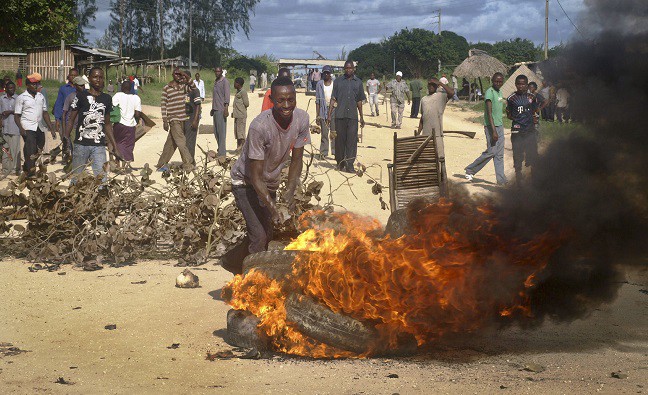
Amid civil unrest in the Northeastern region of Kenya and threats of violence against medics, Doctors Without Borders will suspend medical activity at the world’s largest refugee camp and evacuate its medical team from the facility — depriving hundreds of thousands of Somali refugees of much needed care.
Doctors Without Borders operates a 100-bed hospital and two health posts at the Dagahaley camp, one of five sites at the Dadaab complex, home to 350,000 refugees. Increasing insecurity and a dearth of funds has threatened humanitarian activity in recent years. Doctors Without Borders’ announcement follows the closure of four health posts and the suspension of care for expectant mothers.
The medical charity has provided health services at Dadaab for more than 20 years, including surgery, maternity care, HIV and TB treatment, and an inpatient feeding center for malnourished children. After the Garissa University attacks in April, its medical team treated the wounded and those evacuated to the nearby airport. Last year, the humanitarian aid organization gave 180,000 outpatient consultations, cared for 12,000 patients, and delivered more than 3,000 babies.
“Refugees and medical staff are bearing the brunt of the deteriorating security conditions,” Charles Gaudry, Doctors Without Borders’ head of mission in Kenya, wrote in a press statement. “The current security situation is severely limiting the ability of our medical staff to provide humanitarian aid to people who desperately need it.”
Ongoing problems with healthcare in war zones go beyond Kenya. Human Rights Watch and the Safeguarding Health in Conflict Coalition raised similar points in a recent report highlighting increasing attacks on health care workers around the world.
Instances mentioned in the report include 41 ambushes of hospitals in Afghanistan, and the deliberate killing of health workers in Nigeria and Pakistan. At the height of the Ebola outbreak, eight health care workers in Guinea died at the hands of villagers skeptical of their efforts. In Syria, meanwhile, more than 100 medical facilities have been bombed and 194 medical personnel have been killed since 2014. A data analysis also showed attacks on health care workers in South Sudan and Central African Republic over the past decade.
Even with calls from the UN General Assembly for members to protect health care workers, global health care organizations acknowledge that a lack of accountability makes meeting that goal difficult — particularly in places like Turkey, where providing medical care without governmental approval has been criminalized.
“Attacks on health facilities and workers violate international law and interfere with fundamental protections of the right to health,” Joe Amon, health and human rights director at Human Rights Watch, said in the wake of the report’s release. “Monitoring attacks can help us better understand how widespread this problem is but ultimately the UN and governments need to protect health workers and press for accountability against those responsible.”
Some entities have made moves to protect health care workers. In 2011, the International Committee of the Red Cross launched its Health Care in Danger campaign, a global effort to mobilize support for health care providers in war zones and strengthen their capacity to provide lifesaving resources during civil conflicts. Red Cross officials followed up with the launch of the initiative with the release of a report that highlighted factors that prevent the delivery of health care and plans. During a workshop held in Brussels last year, the group compiled recommendations that nations could adopt immediately, including the improvement of legal protection for patients, health care facilities and the proper use of distinctive emblems.
The lack of protections for health care workers in Kenya has shed light on the country’s fragile health care infrastructure and need of outside forces. Despite reforms to Kenya’s health care system in the late 2000s, the prospect of higher pay compels the most country’s most qualified health care workers to work in countries with better facilities. In turn, the quality of maternal, perinatal, neonatal, and child health care has plummeted, ultimately increasing mortality rates among Kenyans. Kenyans suffer long wait times for in-hospital care and staff members have low morale. Without the presence of foreign health care workers, the physician to resident ratio and that for midwifery personnel would stand at 1.4 and 1.8 per 100,000 people respectively.