Just over a year ago, a district judge held that automatically holding Virginia’s death row inmates in solitary confinement indefinitely violated their constitutional right to due process. This week, that decision was reversed by a court of appeals.
In a 2–1 decision, the Fourth Circuit Court of Appeals ruled that prisons have authority to decide the appropriate housing and disciplinary measures for inmates, including those on death row. As a result, the forced isolation of death row inmates is constitutional. Though the majority opinion penned by Judge Diana Gribbon Motz, a Clinton appointee, acknowledged that “the district court, perhaps correctly, described the isolation that characterizes Virginia’s death row as ‘dehumanizing,’” she concluded that “the Supreme Court has long held … that state correctional officials have broad latitude to set prison conditions as they see fit.”
In his dissent, Judge James A Wynn Jr., an Obama appointee, wrote that, “[a] unanimous Supreme Court told us in no uncertain terms that prisoners have a liberty interest in avoiding indefinite, highly restrictive imprisonment.” The ACLU dubbed the decision a “major setback.”
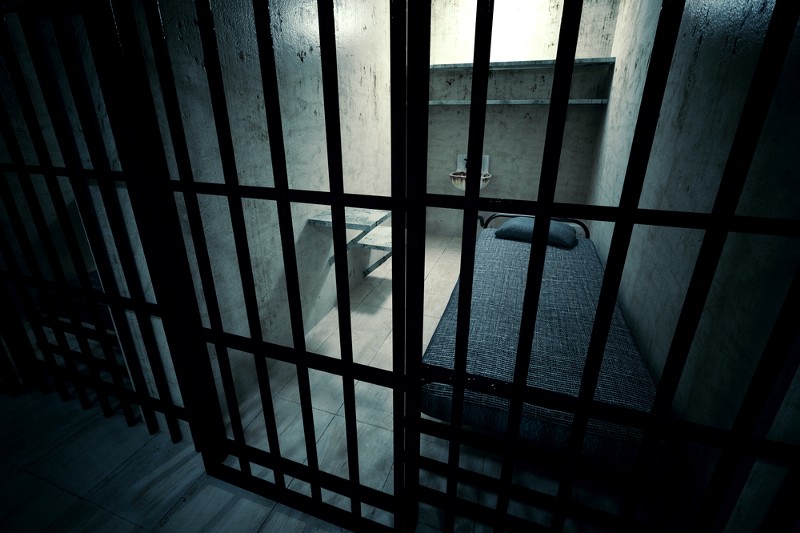
Alfredo Prieto, the plaintiff in the case, has been confined to a 71-square-foot cell in Sussex I State Prison for close to six years. When District Justice Leonie Brinkema ruled that Prieto’s isolation was “de-humanizing” and unconstitutional in 2014, she stated that the lights in his cells were never turned off and that he had no opportunity to see the sky. Like other death row inmates in the state, he was also prohibited from participating in social activities or rehabilitation programs. Because the only way to fight placement in solitary is to be taken off of death row, Brinkema held that Prieto and other death row inmates who were automatically put in isolation, with no chance to challenge that decision, were denied due process.
Solitary confinement is defined as 22–24 hour isolation in a closed cell, according to Solitary Watch. In addition to severely limiting inmates’ movements, isolation has long-lasting causes psychological and physiological damage. Neuroscientists believe that the section of the brain that deals with memory and emotion, the hippocampus, can shrink due to stress. Isolation can also cause “extreme paranoia, self-mutilation, hypersensitivity to sound, light and touch, and severe cognition dysfunction among prisoners.” And spending time in a solitary cell can actually exacerbate violent behavior, which poses long-term risks for prison and public safety.