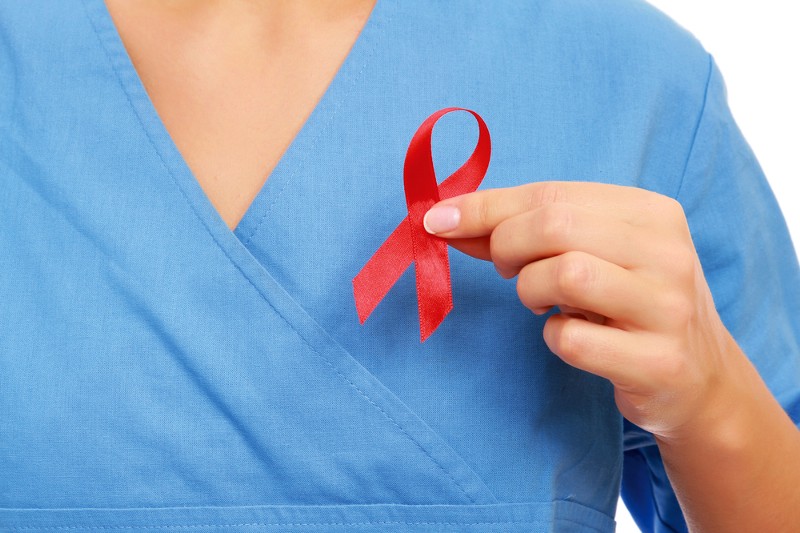
Decades after global leaders commenced efforts to quell the spread of AIDS, officials say that the end of the global epidemic is on the horizon. Earlier this week, officials announced that they’re on the way of meeting this goal by 2030, especially if world leaders take the appropriate steps within a five-year window.
A United Nations report — released during a financing conference in Ethiopia this week — touched on previous triumphs in the fight against AIDS and outlined the steps that should be taken in ensuring affected regions build on the success of years past. Findings include a 40 percent decline in AIDS-related deaths within more than a decade. New HIV infections fell by 35 percent between 2001 and 2014, according to the report, particularly among children.
“Ending the AIDS epidemic as a public health threat by 2030 is ambitious, but realistic, as the history of the past 15 years has shown,” U.N. Secretary-General Ban Ki-moon said in the report.
The advances to which Ban Ki-moon alluded include the development of retroviral medications and the surge of HIV/AIDS treatment investment dollars. Those efforts have ensured that 15 million HIV-infected people worldwide can access life-saving medication. Cuba also made headlines earlier this month when it became the first country to eliminate mother-to-child HIV transmission.
While global health groups say there’s cause for celebration, they also warn against complacency at a time when more than half of 37 million people living with HIV worldwide still don’t have access to treatment. Gaps in access are partly due to low coverage for men who have sex with men, transgender people, sex workers, and drug users. The lack of biomedical prevention tools in high-priority regions also remains an issue.
Part of that dilemma, UNAID representatives say, stems from the pharmaceutical industry’s “tight grip” on drug prices. Some headway, however, has been made with the passage of legislation that allows developing countries to circumvent patent rights and create generic versions of drugs. Today, HIV/AIDS medication can be bought for $100 per year, a dramatic decrease from the eight-pill-a-day regimen that would cost each patient 100 times more that amount.
With medication in circulation, UNAID has shifted its focus to increasing access to treatment and spurring HIV prevention efforts. Such a feat will cost the United Nations $36 billion annually.
Additionally, building on these past successes requires advocates on the front lines to accurately track who has received help and challenge misconceptions about the capacity of those in living in impoverished nations to follow through on a treatment regimen. In its report, UNAID said that couldn’t be done without ensuring that all HIV-infected people knew their status. That’s why the document included a call for the expansion of community-based testing campaigns, provider-initiated testing, and self-testing. Efficiently doing so would help public health officials do what UNAID described as “scaling up” — a method of reaching the goal by gradually raising output and target goals in low and middle-income countries.
The report also asked low and middle-income countries to increase domestic funding so they can eventually finance prevention efforts. Annual HIV/AIDS spending recently reached $1 billion in South Africa. Domestic spending in response to HIV/AIDS among Sub-Saharan African countries topped $9 billion in 2012, as Kenya, Togo, and Zambia increased domestic spending within the last seven years.
Rwandan leaders have also done their part in the last couple decades in raising the bar for standard treatment and altering the metrics of success so that government officials count the number of HIV-infected who can access treatment rather than who didn’t die from complications of the virus. Dr. Neil Gupta of Partners in Health points out that Rwanda’s leaders found success by drafting their public health goals to fit their vision for the country’s future economic and social wellbeing — a suggestion outlined in the recent UNAID report.
“While many countries continue to approach the HIV epidemic in isolation, Rwanda has managed to integrate its response to HIV within its broader platform for social and economic development. [I]t’s astonishing to see how investments in health care infrastructure have manifested in some of the country’s hardest-to-reach areas,” Gupta posted on the Partners in Health website last year.
“More than 400 new health facilities dot the rural landscape, effectively decentralizing health care from major cities to villages. To ensure care is accessible, the government offers community-based health insurance that costs barely $5 per year, which has resulted in health care coverage for more than 90 percent of the population,” Gupta added.