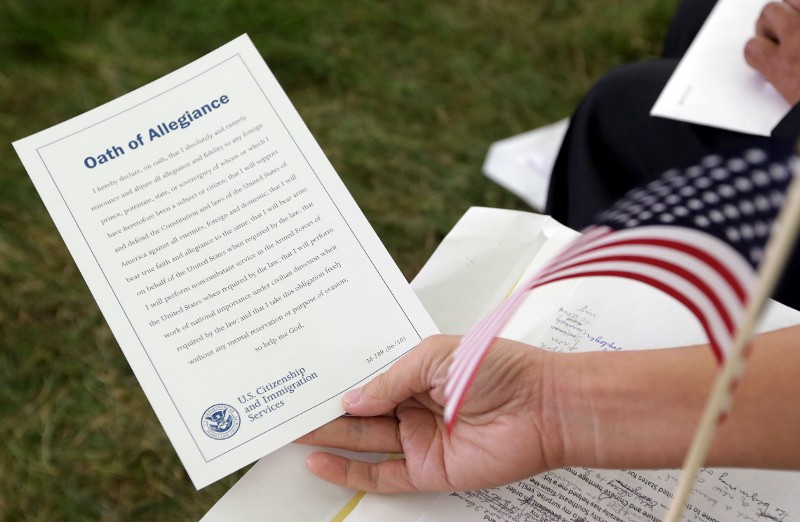
New York state has launched an initiative pairing two groups of people who may have difficulty integrating into American society: Military veterans and immigrants studying to become citizens.
Through a statewide effort, Gov. Andrew Cuomo (D) is recruiting military veterans to teach newcomers English and to help them prepare for their citizenship exam. The initiative also aims to encourage immigrants to volunteer with veterans organizations such as the New York State Division of Veterans’ Affairs and the United States Department of Veteran Affairs hospitals to help them transition from military to civilian life.
“New York has long been a beacon to those who come to this nation to make a better lives for themselves and their families,” Governor Cuomo said in a press release. “I can think of no better way to honor and continue this rich legacy than this program, which pairs heroes who fought to preserve the American Dream with those who came to here to pursue the American Dream. Our strength is our diversity and I’m proud to help launch this new initiative for new New Yorkers.”
The program would allow veteran volunteers to help immigrants learn to use a computer or tablet device to practice English, practice English conversation, conduct mock testing sessions for immigrants hoping to take the naturalization exam, among other types of assistance. Meanwhile, veterans will be able to “use their experiences and world knowledge to connect with people and help develop diverse communities,” the press release stated.
Who better to help folks along the path towards citizenship … than someone who was out there whose job it was, in some ways, to help protect the American dream?
“Who better to help folks along the path towards citizenship or learn English than someone who was out there whose job it was, in some ways, to help protect the American dream?” Jorge Montalvo, the Deputy Secretary of State of New York and founder of the New York State Office for New Americans, told ThinkProgress. “For the immigrant, you have the chance to sit with someone, who you see as a hero returned from overseas … [and] is taking time out of their day to help you become a U.S. citizen.”
The program aims in part to help ease the transition for veterans who may have a difficult time readjusting to their post-military life, an issue that affects at least 27 percent of returning veterans, according to a 2011 Pew Research Center survey. As the Pew Research Center survey found, the veterans most likely to report problems with societal reintegration include people who had an emotionally traumatic experience while serving or had a serious service-related injury.
“As [veterans] transition [back to civilian life], there’s a piece of them that’s missing,” Montalvo said. “There’s a reason that they entered the Armed Forces. They wanted to do something to help their countries and when they’re back, they sometimes don’t have that sense fulfilled. But doing something like this and helping their neighbors — many of them new neighbors who they just met — really become part of America is really powerful… Helping someone else is very therapeutic and makes you engage in a community that you’ve been away with from a while.”
The program could help veterans hone skills that can translate into future professional careers. About 7 percent of New York state veterans are unemployed. Montalvo said that the initiative is open to everyone, but that they particularly “have an eye towards those who are really trying to find their way as they try and transition.”
About one million immigrants in New York State are eligible to become citizens, according to a July 2013 Department of Homeland Security population estimate fact sheet. But as Pew Research Center found in 2012, there are hurdles that prevent some of those individuals from becoming naturalized, including administrative barriers, the need to learn English, and finding the citizenship test to be too hard. Through the initiative, immigrants could likely feel an incentive to volunteer at veterans’ hospitals and organizations as a way to give back to people sustaining their pursuit of the American dream.
“It’s a two-way street. Welcoming happens both ways,” Montalvo said.