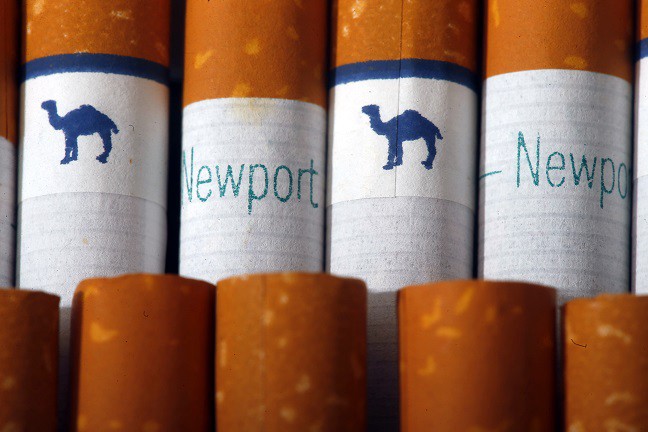
Long gone are the days of being able to spark a cigarette at a bar or casino in the Big Easy.
Lawmakers in New Orleans unanimously voted to ban smoking in bars and gambling halls earlier this week, continuing where a current citywide ban on smoking in restaurants left off. Under the smoking ban, people can’t take their puffs within five feet of bar entrances. The law also requires bar managers to enforce the ban in their establishments. Fines start at $50 per person and increase with each offense within a 12-month period. Businesses caught allowing smoking or vaping also risk losing special permits or licenses.
If Mayor Mitch Landrieu signs the bill, the city’s department of health and other agencies would be able to enforce the law within 90 days. Residents can also call 311 to report bars that allow smoking or vaping.
“We have people who are working in these environments right now who we can say matter. The city government [has] demonstrated that by the actions of this council today,” LaToya Cantrell, the New Orleans councilwoman who introduced the bill last year, told the Times-Picayune on Thursday. During her interview, Cantrell recounted the story of Mervin Lewis, a 77-year-old nonsmoker who developed lung cancer after working at a casino for more than a decade. “When I saw Mr. Lewis, it really brought it home for me,” Cantrell said.
New Orleans counts among the growing number of cities and states — including Arizona, California, Minnesota, New York, and Rhode Island — that have banned smoking in public places. Today, more than 80 percent of the nation’s population lives in a jurisdiction that has enforced a public smoking ban in workplaces, restaurants, bars, and public parks. Since 2000, the U.S. Department of Transportation has prohibited smoking on commercial passenger flights. An executive order issued by President Bill Clinton in 1997 also bans smoking in interior spaces owned, rented, or leased by the executive branch of the federal government. Congress has yet to pass a federal smoking ban.
While opponents of New Orleans’ smoking ban — including the French Quarter Business League and bar owners on Bourbon Street — have mulled over how the law would decimate revenue, supporters have been successful in framing the issue of indoor smoking as a public health matter, especially in light of research that has helped lawmakers better understand the effects of long-term secondhand smoke exposure on children and adults.
According to data compiled by the Centers for Disease Control and Prevention, secondhand smoke has killed more than 2.5 million people since the mid-1960s. Secondhand smoke contains more than 7,000 chemicals, including 70 that cause lung cancer, lymphoma, leukemia, and brain tumors in children. Caring for those who develop ailments caused by secondhand smoke exposure costs the United States more than $10 billion annually, according to the American Cancer Society.
That’s why public health officials say that separating smokers and nonsmokers who share the same air space doesn’t go far enough in protecting nonsmokers from harmful chemical particles. Instead, eliminating indoor smoking has been touted as the most effective means of reducing exposure to secondhand smoke and lowering health care costs.
A 2012 study confirmed that city and state anti-smoking laws have decreased the occurrence of heart attacks and sudden cardiac deaths, especially among restaurant employees. The research presented in that study also showed that hospitalizations for asthma and chronic obstructive pulmonary disease fell by nearly 25 percent in jurisdictions that implemented smoking bans. Indoor and public smoking bans have also been found to help smokers kick the habit and discourage tobacco use among youth.
A smoking ban could be of great benefit to people living in New Orleans, especially since lung cancer and heart disease count among the leading causes of death among men and women living in Louisiana. The Louisiana Cancer and Prevention Programs said that secondhand smoke, which has been found to increase a Louisianan’s chances of developing lung cancer by at least 20 percent, plays a significant role in the prevalence of cancer-related ailments in the state.
“New Orleans took a long-overdue step toward being a healthier community,” the Times-Picayune editorial board wrote on Friday. “The vote is especially important for musicians, bartenders, waiters and others who have been inhaling secondhand smoke on the job. While customers can choose to avoid businesses that allow smoking, it is not so simple to quit a job and find another where the air isn’t toxic.”
Efforts to curb smoking across the country haven’t stopped at indoor smoking bans. Earlier this week, Washington state’s attorney general proposed raising the minimum age to purchase tobacco products from 18 to 21. Last year, residents in Westminster, Massachusetts defeated a measure that would have totally banned the sale of tobacco products in the town.