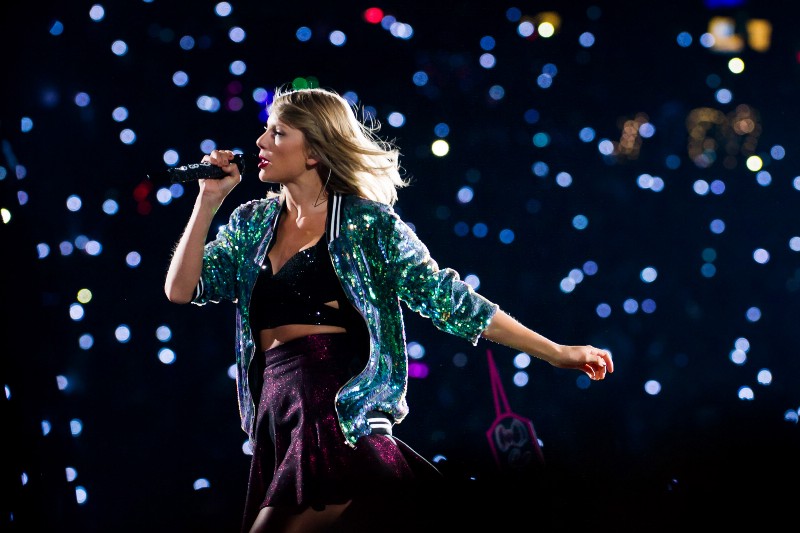
To many Americans, T.S. 1989 is a clear reference to Taylor Swift, whose album “1989” is the top-selling in 2015. In China, however, the year of Swift’s birth and her initials may bring something very different to mind: the Tiananmen Square massacre which took place in 1989, the same year as Swift’s birth.
The dueling interpretations may give rise to a political firestorm next month, when the singer launches her brand of clothing in China. That’s because the Chinese government has vehemently censored references to its 1989 crackdown on protesters, which resulted in the deaths of hundreds, if not thousands of people. The blackout of the massacre has been so thorough that many young people in China may not have even heard of the event. That’s despite of the fact that the massacre shaped how many around the world looked at their country a generation ago. That means T.S. may be far more likely to mean Taylor Swift than Tiananmen Square, even for them.
Yi Gu, a Chinese student at the University of Georgia told ThinkProgress in an email that while some people in his generation may have heard that something occurred in 1989, but they rarely know details or have an accurate account “because of the inaccessibility to records and information at home.”

Gu himself knew little about the significance of June 4, 1989 until he moved to the United States and was no longer blocked by censors from learning about the bloody rampage that took place on that day.
“This part of history has since been so carefully edited and shielded away that many of us today know very little about it,” he wrote in an open letter to fellow college students in China ahead of the 26th anniversary of the massacre earlier this year.
Signed by 10 other students in the U.S., the United Kingdom, and Australia, the letter’s goal was “to share the truth with you and to expose crimes that have been perpetrated up to this day in connection with the Tiananmen Massacre in 1989.”
Those crimes, Gu maintained, are ongoing.
“[The suppression has never stopped,” he wrote. “[T]he truth about June 4th is still covered up, the dead still do not have closure, some survivors have served long prison terms.”
So thorough is the censorship that any combination of the date are blacklisted on Chinese social media sites, as are references to the street leading up to the infamous Square.
So far, promotions for Swift’s merchandise emblazoned with her name, initials, and the year “1989” has not seen such censorship. The singer even released a video to announce launch of her brand of clothing in China on Weibo, a Chinese social media site. Whether the Chinese government will move to block reference to Swift’s latest album or block sales of her merchandise is still unclear.
The singer will perform in Shanghai in November. When Swift played there last year, her show at a stadium that seats about 12,000 people sold out in less than a minute, breaking records in China. Although it’s hard to estimate her fan base in China, the American pop star may be far more recognizable to many young people in China than the so-called “Tank Man” photo which is instantly connected to the Tiananmen Square massacre by many around the world.
NPR correspondent Louisa Lim found that only 15 out of 100 students at one of China’s top universities were able to identify the photo of a man seemingly calmly staring down a line of tank.
“The students I spoke to are the crème de la crème, the best-educated students in China,” Lim noted in her book, The People’s Republic of Amnesia. “Yet the vast majority of them looked at the photo with the slightest flicker of recognition. ‘Is it in Kosovo?’ one astronomy major asked. A student pursuing a Ph.D in marketing hazarded a guess, ‘Is it from South Korea?’”
While he’s never heard of the pop star, Gu told ThinkProgress that Swift “probably has some popularity and even loyalty among some young Chinese.”