Mexico’s National Human Rights Commission is blaming the country’s government after completing an investigation into the death of a 12-year-old Ecuadoran migrant girl, who reportedly committed suicide at a shelter in 2014 after an unsuccessful attempt to reach New York City.
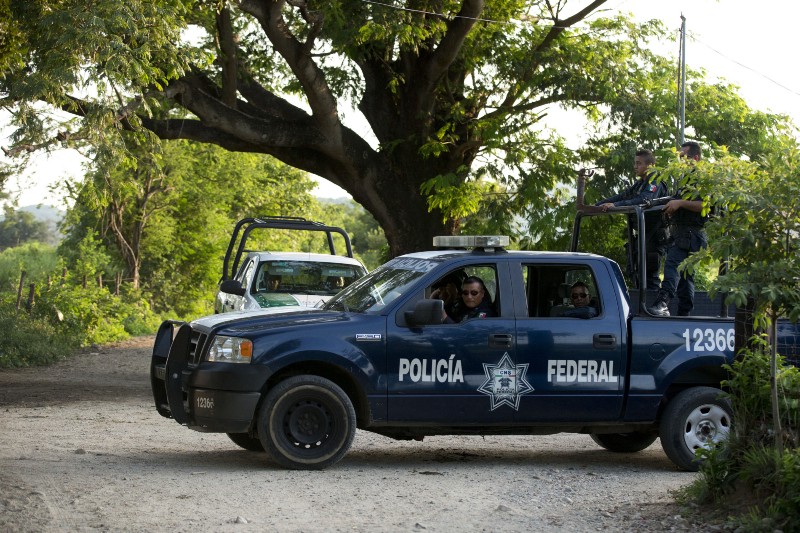
Mexican police officers placed Nohemí Alvarez Quillay in a shelter for minors named Esperanza (or hope) after they found her inside a pickup truck with a coyote (or human smuggler) making their way through Ciudad Juarez, located in the Mexican state of Chihuahua. Her parents had paid the coyote to bring her to their home in New York City’s Bronx borough, where they settled when she was a toddler.
At the time, the coyote admitted that he was a smuggler and gave fake information about the girl, stating that she was eight years old. The police also recorded her name as Noemi Álvarez Astorga.
The National Human Rights Commission indicated that Mexican police officers did not provide support and counseling for Nohemí, but instead screamed at her and harassed her, the Mexican publication El Mexicano reported. Nohemí was later found dead from self-inflicted asphyxiation. The New York Times reported last year that Nohemí’s parents received a call from Ecuadorean consular officials stating that their daughter had died.
The Human Rights Commission sent seven recommendations to the Attorney General of Mexico and five others to the Government of Chihuahua to draw up protocols to train staff members on the rights of children and adolescents. They also called on the Attorney General’s office to compensate the girl’s family.
Since Nohemí’s death in February 2014, there has been a major uptick in the number of unaccompanied children making their way toward the United States. The U.S. Customs and Border Protection (CBP) agency made 57,478 apprehensions of unaccompanied children from the Latin American countries of El Salvador, Honduras, Guatemala, and Mexico in the 2014 fiscal year at the southwest border.
Children are still trying to make their way into the country, with or without guardians. So far this fiscal year, border agents made 26,685 apprehensions of unaccompanied children, a 54 percent decline compared to the same time period (October 2014 to June 2015) for the 2014 fiscal year. And in response to the continued flow of Central American migrants coming into the United States, the CBP agency launched a new ad, warning potential migrants from making the trek into the United States. The dangers of the journey are still there. On Thursday, an 11-year-old Salvadoran boy died from heat-related injuries in Texas’ Rio Grande Valley.
The number of Latin Americans immigrating to the United States has dropped precipitously this year in part because Mexico has been under pressure by U.S. officials to apprehend and deport migrants.
A May 2015 Washington Office on Latin America report found that Mexico deported 39,315 Central American migrants, including 5,273 unaccompanied children in just the first three months of 2015. Mexico’s National Migration Institute found that the total number of Central American migrants deported in the first three months was a 79 percent increase from the same time period in 2014. The majority of the deportations occurred in Mexico’s southernmost state as a result of that country’s Southern Border Plan, which promises to increase border security and enforcement efforts.
But immigrant advocates argue that Mexican authorities do not properly process asylum claims and that children aren’t being adequately screened before they’re sent back to their countries of origin. An investigation by Animal Politico found that there have been multiple accusations of abuse by Mexican authorities. There have also been reports from deported Central American migrants stating that Mexican authorities don’t actually ask migrants about their fear to return to their home country.
Meanwhile, there continues to be widespread violence in the countries that migrants are fleeing. There were 700 murders in El Salvador in just one month as criminal gang members begin targeting police officers.