Over the past few weeks, as the measles has spread rapidly among unvaccinated people, there’s been a national conversation about whether people should be obligated to follow the government’s recommended immunization schedule. Regardless of their political affiliation, most Americans agree that vaccinations should be required.
But what about the vaccination that stems the spread of HPV, the most common sexually transmitted disease in the United States?
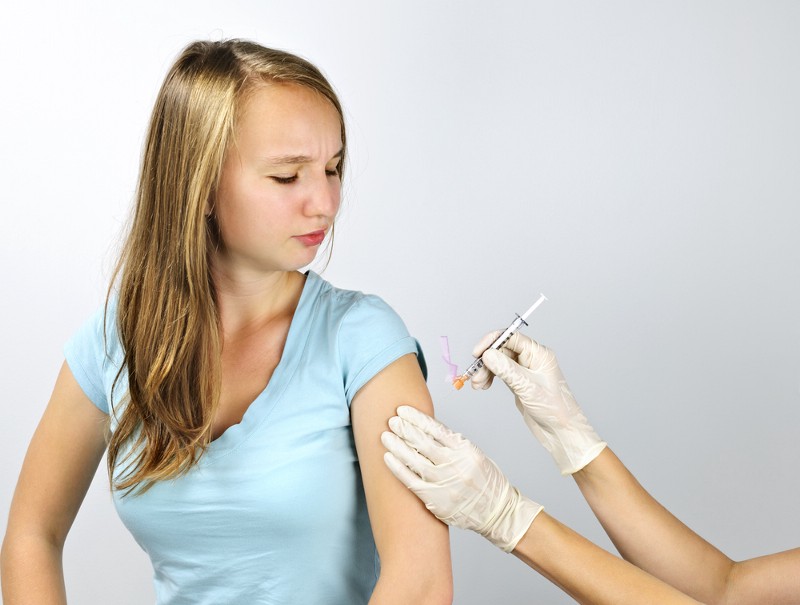
Nearly every sexually active adult will contract Human Papillomavirus (HPV) at some point in their lifetime. Often, the body can fight off the virus on its own, but sometimes HPV can lead to cancers of the cervix, throat, or anus. The good news is that there are three rounds of shots that can immunize young people against multiple types of HPV. By preventing many of the most dangerous strains of the virus, the HPV vaccine can also prevent those cancers from developing.
Few Americans buy into the conspiracy theories about behavioral changes or mental health defects when it comes vaccines like MMR — but in the case of HPV, most of us are anti-vaxxers. The MMR vaccination rates in outbreak areas like Orange County hover around 90 percent; the average HPV vaccination rate is three times lower.
Despite its cancer-preventing abilities, the HPV vaccine suffers from a 30 percent vaccination rate, plagued by cries from parents that their sons don’t need it, it will make their daughters promiscuous, and cause mental deficiency in both sexes.
Study after study — the most recent of which was released yesterday — has disproved these claims. The vaccine can help men of all sexual orientations, there is no evidence that the vaccine spurs inoculated women to have risky sex, and there is no causal relation between vaccines and mental issues.
The recent measles outbreak has shown how untenable the current rates of MMR vaccinations really are. More children had the measles last year than any year since the 1990s, before the measles was declared eliminated. They are visibly sick. Refusing to vaccinate your children against measles has obvious, sometimes immediate, effects.
Meanwhile, since HPV often goes undetected, the consequences of low vaccination rates are harder to see. If the virus does lead to cancer, it could emerge decades after the vaccine was first suggested. It is difficult to be outraged at a problem you can’t see.
But every year we continue to miss vaccination targets, it is estimated that 4,440 more girls will develop cervical cancer in their lifetime. Already, women in the South suffer disproportionate rates of cervical cancer. They also have the lowest HPV vaccination rates of women in any region.
The CDC recommends that boys and girls between the ages of 11 and 26 get the HPV vaccine. Unlike the vaccine for measles, however, it’s not tied to public school admission.
Casey Farrington is a Press Intern for the Center for American Progress.