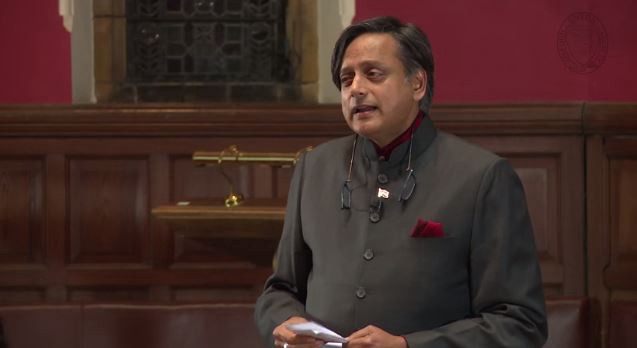
An Indian Parliamentarian’s take down of the British Empire has gone viral since it was posted on YouTube earlier this month. The video of Shashi Tharoor making a case for why former colonial subjects are owed reparations in a debate at the Oxford Union has so far been viewed more than 1.6 million times.
“We literally paid for our own oppression,” Tharoor said having noted that the India became what he called “Britain’s largest cash cow” after its local industries were crippled to better serve the colonial regime.
“Britain’s rise for 200 years was financed by its depredations in India. In fact, Britain’s Industrial Revolution was actually premised upon the deindustrialization of India,” the former Under-Secretary General of the United Nations said.
As an example of how local industries were crippled in order to serve the economic development of Britain, Tharoor gave the example of how India had long had a reputation for producing some of the world’s finest cloth on hand looms. The British ordered many such looms to be destroyed, he said, and then shipped the raw materials used to produce cloth to Britain. In the end, India was forced to purchase the cloth manufactured in England.
India went from being an exporter to an importer, Tharoor said, and weavers who were once profitable became beggars.
He also noted that the value of Indian resources and troops who supported Britain during both World Wars added up to billions of pounds which remain unpaid.
Tharoor, who has written several books on Indian history and society, countered a popular argument among historians that South Asians should be grateful to the British for building up infrastructure in what would later become India and Pakistan. He said, “Railways and roads were really built to serve British interests and not those of the local people.”
“I might add that many countries have built railways and roads without having to be colonized in order to do so,” he said to uproarious applause.
He further rebutted the claim that the former colony owed its democratic and liberal traditions to the British Raj.
“There was reference to democracy and the rule of law,” Tharoor said. “Let me just say with the greatest possible respect, it’s a bit rich to oppress, maim, kill, torture and repress people for 200 years and then celebrate the fact that they’re democratic at the end of it.”
“Is there a debt? Does Britain owe reparations?” he asked to sum up his arguments. “As far as I’m concerned, the ability to acknowledge a wrong that has been done” will go a long way.
“Personally,” Tharoor said, “I would be happy if it was one pound a year for the next 200 years after the 200 years of Britain in India.”