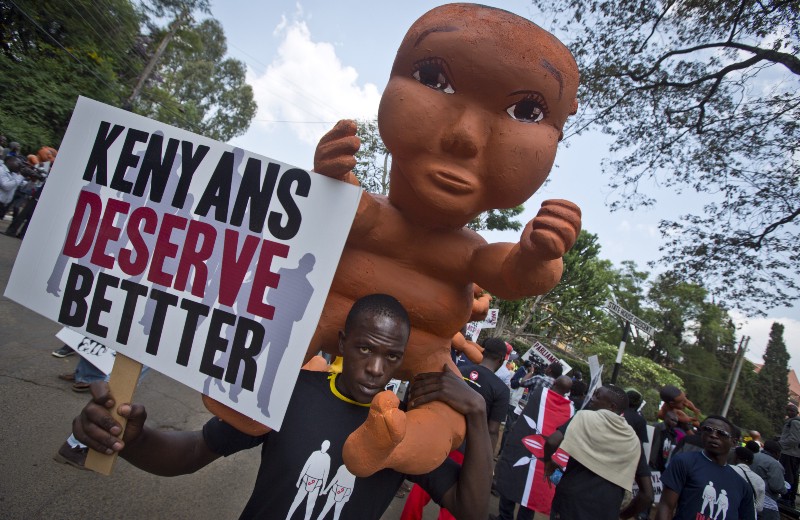
$85 for a ball point pen. $1,000 for a wheelbarrow. The outrage over government malfeasance in Kenya has continued to grow, along with revelations of outrageous expenditures. Millions of dollars were spent on similarly commonplace items, according to a document sent to a parliamentary committee earlier this week.
“More than $80 on a single pen?” John Githongo, a Kenyan anticorruption activist said after expenditures from the list were made public. “Come on, this is the biggest bunch of crooks to ever run a government in this part of Africa. This is literally the rape of the country[.]”
Githongo served as a high-level anti-corruption official in Kenya before having to flee the country due to death threats.
We don’t have a government. We have a scandal.
“We don’t have a government. We have a scandal,” he said.
Public sector corruption is a major menace in much of the developing world.
The development organization ONE estimated that developing countries lost a combined total of $2 trillion to corruption — a sum which it said could have been used to pay to educate 10 million children or purchase nearly 165 million vaccines.
Kenya, however, is among the worst offenders. Transparency International ranked the country 145 out of 175 in its corruption perceptions index last year. Analysts believe that Kenyan politicians are skimming government budgets in order bankroll their campaigns ahead of national elections in 2017.
Many Kenyans are fed up with corruption, which has caused prices for commonplace goods to skyrocket. The misuse of public funds has drawn heightened vitriol due to high rates of inflation, unemployment, and a refusal to meet teachers’ demands for pay increases.
“Here in Kenya, it’s time to change habits, and decisively break that cycle, because corruption holds back every aspect of economic and civil life,” President Barack Obama said during a visit to the country in July.
Just days after his visit, Kenya’s auditor general found said that about a quarter of the country’s $16 billion budget could not be accounted for.
The revelations from this latest report offer details as to where some of that money might have gone — and they are shocking even for a country where corruption is seen as part and parcel of public affairs.
According to the report to parliament, one government department listed sex toys as public assets — which means they may have purchased them with federal funds.
Some of those accused of profligate spending have come out in defense of their seemingly exorbitant purchases.
When Devolution Cabinet Secretary Anne Waiguru was outed for purchasing a $17,000 TV, she bit back.
“Kenyans were not told that it was a PC-cum-television,” Waiguru said in parliament.
As the heat on her increased, Waiguru said that her ministry’s astute bookkeeping might have been the real mistake.
“Perhaps our transparency is our undoing,” she said. “Maybe we should have kept quiet. You wouldn’t have known.”