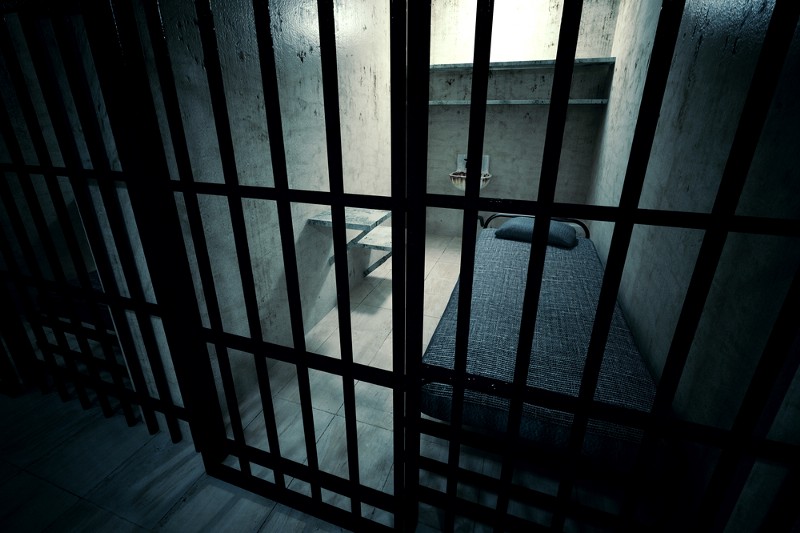
More than two years after a class action lawsuit was filed against the Illinois Department of Juvenile Justice (IDJJ), the solitary confinement of juveniles has finally been banned.
Under consent decree, the IDJJ can no longer use solitary confinement as a punitive measure, and can only be used if an inmate is deemed a threat to himself or others. Individuals who are separated from the general population for more than 24 hours must spend 8 hours a day outside of their cells, receive education and mental health services, and have an opportunity to talk to prison staff. Moving forward, three federal monitors, as well as the ACLU, will supervise the policy’s implementation.
In 2012, the state’s eight juvenile facilities housed approximately 1,000 people, and a four-year ACLU investigation found that a significant number of juveniles were put in isolation. According to the lawsuit filed on behalf of five plaintiffs, youth in solitary were not provided adequate mental health or education services, and many were thrown into isolation for non-violent offenses. Confinement cells were unsanitary and excessively hot and cold, and some youth were kept in isolation for three months.
“Solitary confinement is abusive and tortuous for anyone, but it’s especially so for young people. And it’s especially so for people with mental health issues,” Adam Schwartz, the plaintiff’s lead counsel, told ThinkProgress. Indeed, neuroscientists argue that solitary confinement actually shrinks a portion of the brain, which can pose problems for people under 25-years-old whose brains are still maturing and developing. Isolation also causes PTSD, hallucinations, paranoia, higher risk of suicide, and insomnia.
“There are many states, which as part of the process of reform, have been defining the number of hours kids who are temporarily separated can get out of their cell and be near other people. The one in Illinois is the best one we know of. Other states have done four and five hours, which is positive, but eight hours is the most,” Schwartz concluded.
As of March 2015, the latest month for which IDJJ data is available, there are 685 institutionalized juveniles. Nearly 70 percent are African American and 72 percent are between 17 and 20 years of age. In 2012, the Department of Health Services found that 67 percent of juveniles had mental health needs.