For decades, Lebanon was considered a progressive jewel in the conservative Middle East. Western dress, a shaky democracy, and a lively nightlife scene often give the small, coastal nation on the Mediterranean the air of a liberal bastion in the midst of a conservative region of harsh deserts and autocrats.
In recent years, however, Lebanon stood still as basic rights — as well as infrastructure, development, and technology — have advanced in some other Middle Eastern countries. Women’s rights are a prime example of this with Lebanese women still not legally allowed to pass on their nationality to their children despite the law passing in the socially conservative United Arab Emirates.
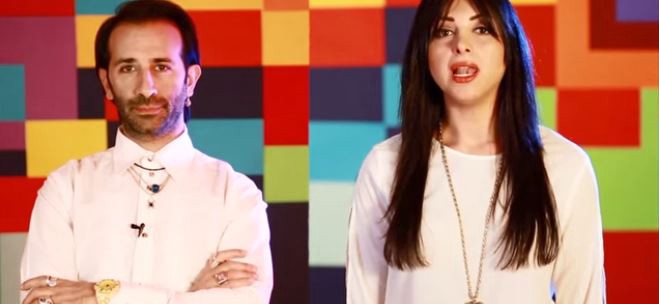
Such discriminatory laws are being fought by Lebanon’s civil society though. A new ad campaign aimed at fighting homophobia launched earlier this month in Lebanon. It features a few local celebrities and could be a testament to a growing number of youth in the country that don’t view homosexuality in a negative light.
The video is in Arabic but Myra Abdallah, the media consultant for Proud Lebanon, the Lebanese non-profit that produced the video, provided the translated message:
You do not have to be poor to defend the rights of the poor. You do not have to be a woman to defend women’s rights. You do not have to be a refugee to defend the rights of refugees. You do not have to be gay to defend the rights of the LGBT. Being human is enough.
“The majority of LGBT community in Lebanon suffer from discrimination,” Abdallah told ThinkProgress by email. “[T]heir situation is slightly getting better, but this does not mean that they do not struggle every day.”
Lebanese law does not directly address LGBT rights. Instead, there is an article in the Lebanese penal code that stipulates any sexual relations that are deemed unnatural or “against nature” are considered illegal. That being said, two separate court rulings in recent years have seen judges dismiss charges against members of the LGBT community. The judges’ reasoned that homosexuality is not unnatural and therefore not illegal.
Nonetheless, members of the LGBT community have been victims of harrassment and sexual assault at the hands of authorities in the past. In 2012, a prominent Lebanese journalist uncovered a gay-porn cinema and showed the attendees faces on camera. The men were later arrested and given “homosexuality tests” whereby an egg-shaped item was forced into a man’s rectum.
“Fortunately, the ‘gay test’ known as the ‘egg test’ or the ‘test of shame’ is not being practiced anymore,” Abdallah said. “In 2012, the Lebanese Order of Physicians banned this test and warned doctors who practice this test that they will face disciplinary measures.”
Abdallah said that cases of authorities using the test were still reported as recent as last year but the situation is improving. The new anti-discrimination video was initially produced for social media but quickly went viral and started getting the attention of Lebanese media. “Its success urged TV channels, news websites and newspapers from Lebanon and other countries to speak more about it, air it, and produce short reports on it,” Abdallah said, adding that the feedback has been mostly encouraging. “We are very happy that it went viral and was highly appreciated by people to an extent that media outlets — even those slightly rejecting the idea — could not ignore it.”
Update:
This post has been updated to report that an article in the Lebanese penal code deems unnatural sexual relations as illegal. The original version incorrectly reported it as the Lebanese constitution.