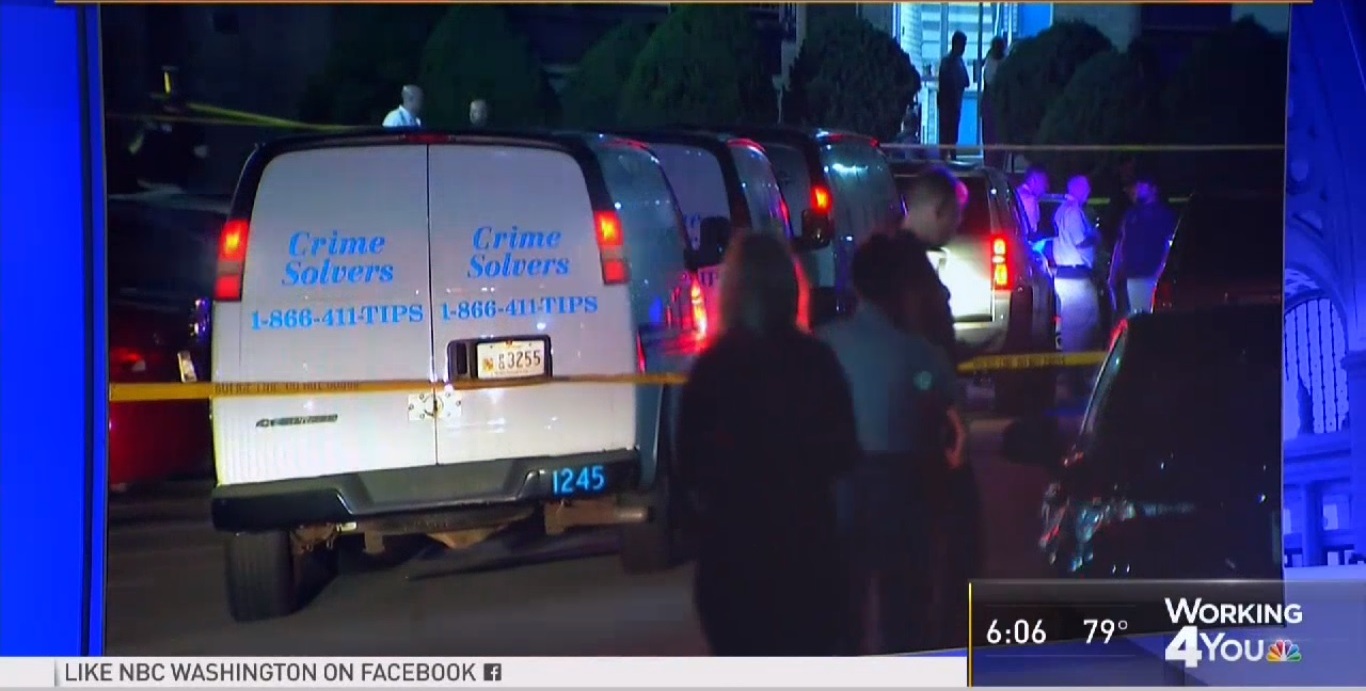
Police are entirely capable of resolving encounters with armed individuals without killing anyone, an extraordinary exchange of gunfire in Maryland proved on Wednesday.
A Prince George’s County man fired his shotgun on officers who raided his home based on an inaccurate tip from a drug informant, striking two of them. One officer fired one shot into the home in response, but the ballistics stopped there. Realizing the men who’d banged in his door were police and not robbers, the man dropped his gun and implored officers not to shoot his daughter, who’d been napping next to him on the couch when the warrant team burst in on the sleeping duo.
The two officers struck by buckshot will be okay, PG County Police Chief Hank Stawinsky said Thursday in a press conference. One has already been released from the hospital and the other remains in care but is stable.
Stawinsky said the department would suspend all warrant-serving activity for at least 24 hours in hopes that stricter scrutiny of the information underlying the department’s most dangerous routine activities can prevent a repeat of the near-catastrophe Wednesday.
A police informant had told officers that the man living at the upstairs address in an apartment complex was a drug dealer. He is not. “A law-abiding, hard-working citizen and his daughter were home at the point where we began to execute that search warrant,” the chief said.
Stawinsky also noted that officers had not simply misread the number plates. They went to the address provided by the informant, but the information was wrong. Dozens of times in the past two decades, law enforcers around the country have harmed or killed citizens after either acting on bad information or misidentifying an address and ending up at a different house than they intended to raid. The two quite different forms of erroneous violence are sometimes interchangeably referred to by students of the drug war and paramilitary policing as “wrong-door raids.”
The man who shot the officers will not be charged with any crime, Stawinsky said, after he decided in conjunction with local prosecutors that the man had no criminal intent when he defended his home. The chief said the man had almost immediately told officers, “You’ve got the wrong address. Don’t shoot my daughter.”
Though the circumstances differ in important ways, the Maryland incident’s contrasts to recent police killings involving an armed civilian are instructive.
Thurman Blevins’ family angrily demanded that cops be charged for killing him, despite video evidence that the 31-year-old Blevins had a gun in hand and may have been twisting his body to fire at the officers chasing him through north Minneapolis in June. Chicago’s black community erupted in anger after police killed Harith Augustus, then were expected to retreat into acceptance based on just a thirty-second clip from one body camera that proved Augustus’ right hand had fallen to the butt of his holstered pistol just as officers opened fire.
The PG County incident this week suggests — not for the first time — that the simplistic official handling of some on-duty killings is misleading. Sometimes a subject with a gun does something that crosses a red line and officers feel they have no choice but to shoot preemptively. Other times, officers are capable of bringing a man in alive and unhurt even after he’s fired a weapon at them.
The difference may often come down simply to compliance versus defiance — a grim reminder that many police officers are trained to believe that challenges to their authority are the real delineation point between people who can be reasoned with and people who must be harmed into submission.