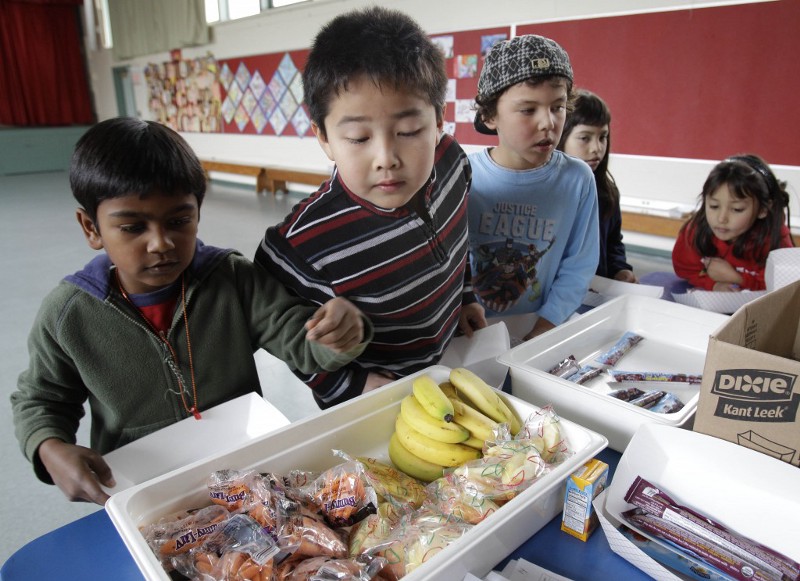
Hunger is stalking America’s classrooms. The vast majority of public school teachers say they teach under-fed students week in and week out, according to a new survey that details how food insecurity impacts educational environments and offers suggestions for addressing it.
Three-quarters of teachers surveyed by No Kid Hungry say their kids come to school hungry regularly. Six in 10 say they teach un-fed students every single week. Among those who see hungry kids on a regular basis, more than four teachers in five say their students are lethargic, struggling to concentrate, and underperforming academically.
The high rate of classroom hunger may seem befuddling given the free meal programs that the federal government provides in most public schools around the country. But as the report explains, the current structure of those programs makes them particularly ineffective at getting students breakfast prior to the beginning of the school day. Even students who are able to get to school early for breakfast must grapple with the social stigma that comes from showing up early to walk past peers into the cafeteria, signalling economic hardship to everyone in sight. And because the population that relies on these programs is disproportionately made up of students of color, breakdowns in the system serve to reinforce racial achievement gaps in schools.
To address those failings, the report recommends a different approach called Breakfast in the Classroom. By serving meals as part of the regular school day, schools can reduce stigma and reach kids who can’t get to school in time for a traditional breakfast program. Teachers in schools using this approach report their students perform better academically and have fewer disciplinary and attendance problems.
Policymakers are trying to address child hunger, but in the austerity-minded national political landscape even those valuable new initiatives come at the expense of core anti-hunger spending. The Department of Agriculture (USDA) is giving out $27 million in grants for pilot programs designed to end child hunger in three states and two tribal areas, among other expenditures tied to the Healthy Hunger-Free Kids Act of 2010. Many other school districts have used funds from the law to give free meals to all students, another step that can reduce stigma and increase student achievement.
But that money doesn’t mark an overall increase in spending to fight food insecurity. Instead, it is funded using billions of dollars that were cut out of the Supplemental Nutrition Assistance Program (SNAP) commonly referred to as food stamps. “It’s the old magician’s trick of misdirection. Look at the shiny coin while we’re picking your pocket,” New York City Coalition Against Hunger executive director Joel Berg told Al Jazeera America’s Ned Resnikoff. (In addition to lamenting the SNAP cuts, Berg, who is also a Senior Fellow at the Center for American Progress, praised the new school food programs that USDA is funding.)
Fighting hunger in schools is one of those spending choices that ultimately saves society money on net, because hungry kids are much more likely to turn into expensive adults. The intellectual distraction and disciplinary issues that teachers report from hungry kids translate into lower academic performance, lower test scores, lower graduation rates, and a lower ceiling on what these children will be able to achieve as adults in the job market. Tamping down the economic prospects of these young citizens makes it more likely they will end up in poverty, raising the cost of public assistance programs for low-income Americans.
On top of that core effect, hunger puts adolescents and children at a far higher risk of mental health issues that are linked to large social costs in the future, including higher incarceration rates. A kindergartner from a food-insecure household — a classification different from outright starvation, defined as a family not being consistently able to put sufficient nutrition on the table throughout the year — is twice as likely to have been suspended from school as other children by the time they reach high school age. Kids from households classified as hungry — meaning they regularly have to skip meals — are seven times as likely to get in frequent fights and 12 times as likely to steal as their adequately-fed peers.
It isn’t just bleeding-heart social scientists who urge early investment in programs that boost educational achievement and graduation rates, either. The nation’s law enforcement professionals have urged lawmakers to support a universal pre-school system for similar reasons.
America spends about $23,000 per inmate per year to keep people locked up. As the national hunger charity network Feeding America notes, the drivers of America’s high incarceration rates are more complicated than any single social factor. But childhood food insecurity’s “very real influence on brain architecture and chemistry at an early age, and its impacts on social and emotional health during critical years of socialization make it responsible for at least a fraction of the enormous costs that crime imposes on the broader society.”