New York City has had mayoral control of its schools since Michael Bloomberg pushed for it in 2002, but if the New York state legislature doesn’t act soon, the schools could be controlled by the old system of 32 community education councils.
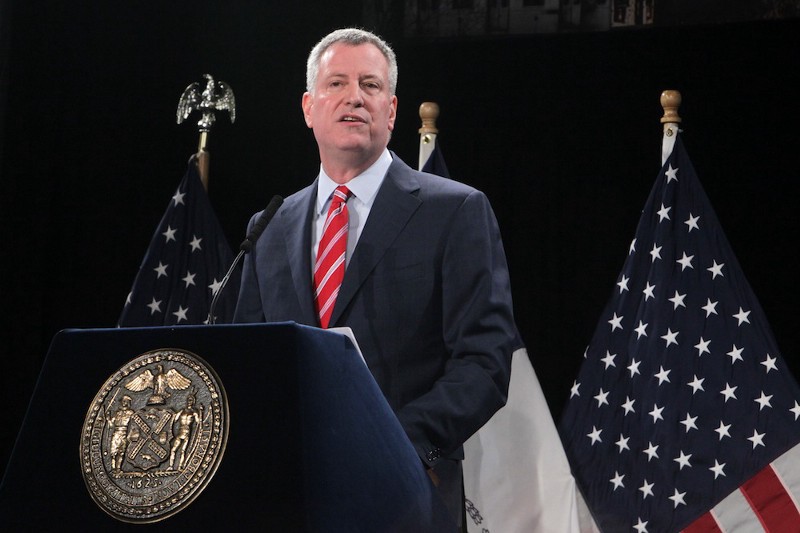
Mayor Bill de Blasio says the old system was inefficient, nontransparent and corrupt. “There was dysfunction, there was chaos, there was corruption. Things didn’t move. Everything was about politics and horse-trading,” he told reporters at a recent press conference.
Reports from the time of New York City School Board control show that political patronage was common and allegiances were very much divided by racial lines.
A 1999 New York Times story covered the way in which district 14, whose students were mostly people of color (only 9.7 percent were white) was controlled by a majority white school board. The reporter, Joseph Berger, wrote:
“There is still a widespread feeling that district officials cater to the board’s white majority bloc, with a flap earlier this year over the use of separate entrances for Hasidic children at two district schools. New school board elections will be held tomorrow, but residents would be shocked if much changed.”
Public Advocate Letitia James has been an outspoken critic of the current form of mayoral control, and supports a renewal, but with more involvement from the public. James suggested giving some power to the community education councils, such as the ability to have a say in colocation policies, which make public schools share space with other schools.
If mayoral control isn’t renewed by June 30, the Board of Education will be reinstated by law. New York’s legislative session ends June 17. If reinstated, the school board would have two mayoral appointees and five members who are appointed by borough presidents. The president would be chosen by the board members.
It’s certainly possible that the legislature in Albany could fail to approve mayoral control in time. It’s happened before. In 2009, the New York City Board of Education gathered for the first time in seven years after the New York state Senate could not come to an agreement by the deadline. It didn’t last long. In August, then-Gov. David Paterson (D) signed legislation extending mayoral control through 2015.
Although de Blasio would like permanent control of schools, the only bills being considered now are a one-year extension and three-year extension. Senate Majority Leader John Flanagan (R) introduced the one-year extension legislation, which includes a few unrelated measures, such as an increase in the cap of charter schools from 460 to 560. Last month, Democrats in the assembly approved a bill for a three-year extension that mostly kept the details of mayoral control unchanged.
Wiley Norvell, deputy press secretary for the mayor, told ThinkProgress the mayor can’t support a one-year extension because it isn’t feasible to plan ahead for only one year’s time given all of the initiatives the office is working on.
“A one-year extender is very problematic and doesn’t provide the stability and true accountability we need in our schools. We’ve launched free, full-day, high-quality Pre-K for every 4-year-old,” Norvell said. “We’re taking the lowest performing schools and putting more than $150 million in resources into them through aggressive and individualized turn around plans, and doing so at a scale and speed that will develop over years … That cannot happen in a world where school governance is in doubt, where the chaos of the old board of education looms right around the corner.”
State Sen. Andrew Lanza (R) told New York State of Politics that the GOP conference is backing an extension of no longer than three years and called the charter school cap a “a political football that we can’t handle.” A coalition of business leaders have also supported the mayor’s push for extended control of schools, with 75 CEOs signing on, including Jamie Dimon, chairman and CEO of JP Morgan Chase. Lanza’s comments, combined with the support of New York business leaders, may point to Republicans’ eventual support of a three-year extension.
Despite the fact that borough presidents would have far more control over city schools, all five borough presidents sent a letter asking state legislators to renew mayoral control. Gov. Andrew Cuomo (D) supported a three-year extension of mayoral control. Cuomo has also supported efforts for mayoral control of school districts in large Upstate New York cities, such as Buffalo and Rochester.
Several members of Congress also supported the push, including Carolyn Maloney (D), Steve Israel (D) and Charles Rangel (D), but noticeably absent from the list were Hakeem Jeffries (D), Grace Meng (D) and Joseph Crowley (D). Jeffries has been critical of the mayor’s approach to policing the city, but when reached for comment, Jeffries’ spokesperson said he supports mayoral control of schools.