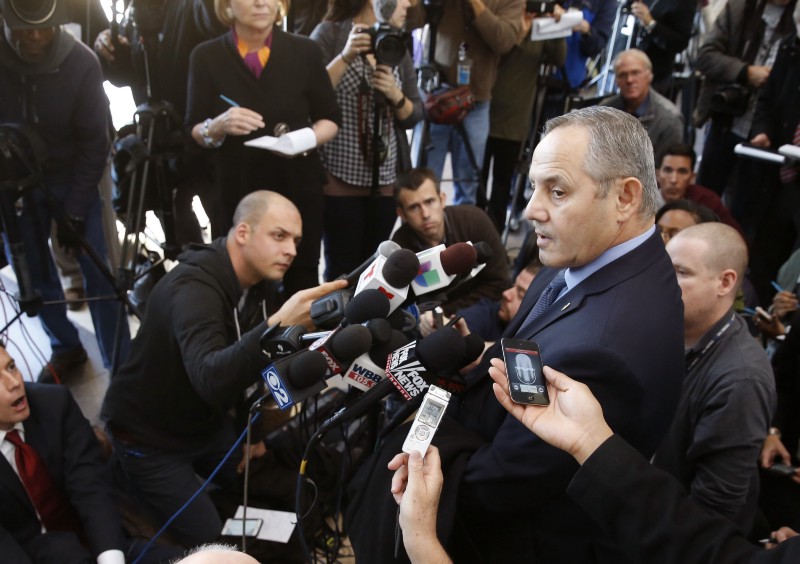
During a local radio hit on Tuesday morning, Chicago’s police union president criticized the decision to release videos that show officers kill Paul O’Neal, an unarmed black teenager, and high five each other afterward. The president also blamed investigators for influencing public opinion before the footage was made public.
Speaking to host Tony Sarabia on WBEZ 91.5, Fraternal Order of Police Lodge #7 President Dean Angelo Sr. slammed the release of nine body and dash camera videos that show the moments before and after O’Neal was fatally shot in the back last month. The cameras filmed several officers firing their guns at O’Neal as he tried to speed away in a Jaguar, then officers standing over the teenager’s body as he died. None of the cameras captured the shooting itself, and protesters are demanding to know why that footage is conveniently missing.
On Tuesday, Angelo argued that the body camera question isn’t important.
“ I don’t think it’s that big of a deal,” he said, adding that it wasn’t second nature for officers at the scene to activate the equipment.
He also condemned the Independent Police Review Authority (IPRA), the agency responsible for investigating officer shootings, and the O’Neal family attorney for publicly discussing the shooting before the investigation was complete, accusing them of using inflammatory rhetoric.
“ I don’t think it’s that big of a deal.”
“You have to start off with the language and the demeanor that came out prior to the video release, or from the attorney, before they even had a chance to see it, calling it an execution,” Angelo said. “Then you had the chief investigator from IPRA talk about the shock and the horror… But again, that sets the stage for the audience — almost a preconceived type of a position when you have yet to view the video itself.”

According to the union president, the new city policy of releasing shooting videos within 60 days is a violation of officers’ union contracts. Police contracts often include provisions that make it difficult, if not impossible, to hold individual officers accountable for misconduct. Authorities are contractually obligated to withhold the names, photos, and other identification information of cops under investigation. Personal details can only be released if the Chicago Police Department superintendent deems it necessary.
“The language is clear there,” Angelos said of the union contract, noting that the revelation of officer information can jeopardize undercover investigations. “These are individuals with families and children and spouses.”

Angelo has repeatedly blamed critics of police violence for discouraging cops from doing their jobs. During a speech in late July, he lambasted “anti-police correctness” and attributed the surge of homicides in Chicago to attacks on law enforcement.
“We have an Orlando every month in Chicago, and no one seems to raise an eyebrow,” he said. “But catch a policeman hitting somebody on a video — oh, my God!” In March, Angelo hired Jason Van Dyke, the former officer charged with first degree murder for shooting Laquan McDonald 16 times, as a janitor for the FOP.
But Angelo is just one cog in the so-called “blue wall of silence,” which refers to the culture in many police departments that shields officers from accountability at all costs. When cops do speak up about a peer’s misconduct, they are considered snitches and retaliated against within their departments. Top union officials take extra steps to ensure that police officers aren’t prosecuted or fired by fighting court decisions behind closed doors, publicly supporting officers in question, and smearing police victims.
Protesters have called attention to this wall of silence in recent months. In July, protesters occupied Chicago’s Homan Square, the black site where police “disappear” suspects and torture locals. Black Lives Matter, the Black Youth Project 100, and the Movement Hoodies Movement for Justice also occupied the National Fraternal Order of Police in Washington, D.C. and the Patrolmen’s Benevolent Association (PBA) in New York City last month.
At the time, BYP 100 spokeswoman Clarise McCants compared police unions to college fraternities that cover-up rape and sexual assault.
“ The FOP is the most dangerous fraternity in America and they need to be stopped,” she said.