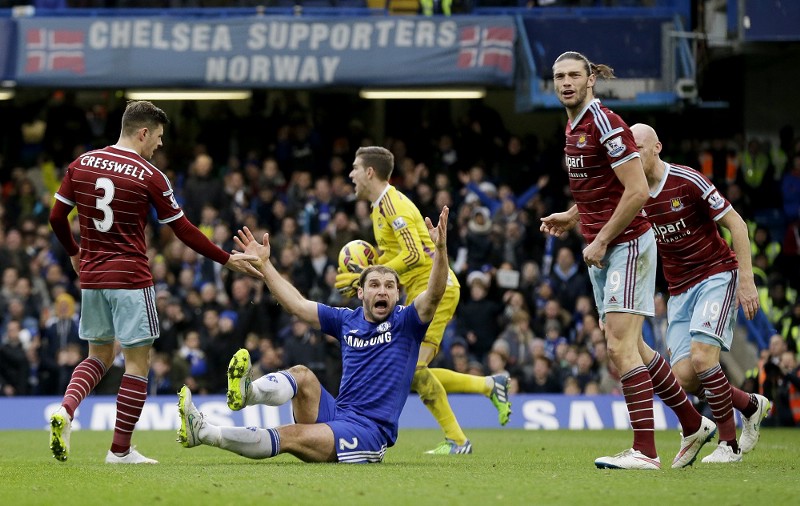
This summer, stadium workers and other staff members at English soccer club West Ham United will begin earning a living wage for their work.
West Ham chairman David Gold announced on Twitter over the weekend that the East London club will begin paying all full- and part-time workers a living wage beginning in June, a move that will make West Ham just the second of the English Premier League’s 20 teams to guarantee workers such pay. Chelsea, based in West London, became the first club to be accredited for paying the living wage to all workers, both to its employees and subcontracted workers, in December 2014. Smaller clubs in England and Scotland have also made similar commitments, and Manchester City, another Premier League club, pays its employees a living wage but does not do so for subcontractors.
Calls to increase wages for workers in English soccer — from stadium staff to other club workers — have escalated over the last week after the Premier League signed a lucrative new television contract worth nearly $8 billion over three years. The new TV deal is a 70 percent raise over the past agreement and will increase yearly payments to English clubs by millions of dollars, leading politicians, fans, and local activists to call on the league to spread some of that money to workers.
“Today Premier League clubs signed a new TV deal worth £5.1 billion. 19/20 of them still refuse to pay Living Wage,” David Lammy, a member of Parliament who has pushed for a living wage for club workers, tweeted last week. Other Labour Party politicians have made similar calls, and fans of clubs who do not pay the living wage have also urged their clubs to do so, The Independent reported this week.
According to the Fairness In Football organization, which advocates for a living wage for all club employees, “it would take a full-time cleaner or security guard earning the minimum wage more than 13 years to earn what top players make in a week.” The organization cited a survey showing that 84 percent of fans support paying those workers a living wage.
Premier League chief executive Richard Scudamore has resisted such calls, saying that it isn’t the job of the clubs to raise workers’ wages.
“At the end of the day there’s a thing called the living wage but there’s also a minimum wage, and politicians do have the power to up that minimum wage,” Scudamore told the BBC. “That’s entirely for the politicians to do, that’s not for us to do.”
The United Kingdom’s current national minimum wage is set at nearly $10 per hour for workers above age 21. The living wage, or the minimum needed to cover basic needs like food and shelter, is £9.15 (about $14) per hour for workers in London and £7.85 ($12) per hour for those outside the city, according to the Living Wage Foundation, a national effort to raise wages. Those efforts mirror many similar pushes in the U.S., where fast food and other low-wage workers have fought for higher wages and President Obama and national Democrats have called for increasing the federal minimum to $10.10 per hour. Members of both parties in the U.K., including Prime Minister David Cameron — a Conservative — and Labour Party leader Ed Miliband, have supported instituting a living wage.
Similar wage issues have become increasingly evident in American sports over the last year, especially as leagues and teams have hauled in more money from television deals and other revenue sources. In the NFL, cheerleaders for five teams have sued over improper wage practices, which each suit alleging that they were paid less than the state and federal minimum wage. There have been union campaigns and other pushes to ensure fair wages and working conditions for security guards, concession workers, and others at various NFL stadiums. And the Tampa Bay Times reported last year that an organization working at the stadium of the Tampa Bay Buccaneers (one of the teams facing a lawsuit from cheerleaders) was using unpaid homeless workers to staff the stadium on game and event days. A California bill introduced in January would guarantee the minimum wage for cheerleaders.
Meanwhile, at least four Major League Baseball teams — the San Francisco Giants, Oakland A’s, Miami Marlins, and Baltimore Orioles — have been investigated by the Department of Labor for paying front office and clubhouse staff improper wages, and the Giants and others have paid hundreds of thousands in back wages as penalty. In a 2013 memo to teams obtained by FairWarning.org, the league described issues of wage theft as “endemic to our industry,” and it is also facing challenges on other fronts: multiple minor league players have filed lawsuits against MLB alleging that they were not paid the minimum wage during their careers.