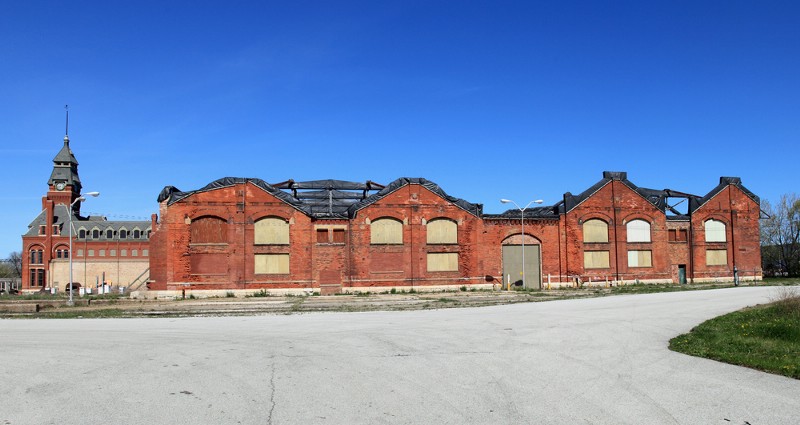
Late Monday night, the Chicago Tribune reported that President Obama will designate a historic district on the south side of Chicago as a national monument.
The president will travel to Chicago next week to officially announce Pullman Historic District as a National Monument, according to the Tribune. The designation, which will be the President’s 14th under the Antiquities Act, could put the site under management of the National Park Service — a move supported by a large, bipartisan coalition of surrounding communities, businesses, members of Congress, and state and local leaders, including Senators Durbin (D-IL) and Kirk (R-IL), and Chicago Mayor Rahm Emanuel.
The country’s first planned industrial town, Pullman Historic District, became well known after a violent factory strike in 1894, which sparked an industry-wide strike and is now seen as a pivotal moment in the history of the labor and civil rights movements — leading to the creation of the first African American labor union. The site was determined to be of “national significance” by the National Park Service in 2013 and was identified as a “national treasure” last year by the National Trust for Historic Preservation.
“The people who are part of the Pullman legacy helped to shape America as we know it today. Pullman workers fought for fair labor conditions in the late 19th century and the Pullman porters helped advance America’s Civil Rights movement,” said Lynn McLure, Midwest Senior Director at the National Parks Conservation Association in a statement. “Thanks to the President, Pullman’s story will soon be remembered and recounted for the millions of people that visit America’s national parks each year.”
The monument designation builds on the Obama Administration’s focus on ensuring that the National Park System as a whole reflects the country’s diversity and that parks are accessible to all Americans. A 2014 Center for American Progress analysis found that only 24 percent of our nation’s national parks and monuments are dedicated to diverse communities or commemorate minority figures or events. Of the country’s 461 national park units, only 26 focused on African Americans, 19 on Latinos, eight on women and only two on Asian Americans.

At a public meeting last summer, National Park Service Director Jonathan Jarvis voiced support for including the Pullman District in the National Park System, citing the opportunity for the site to be accessible to many Americans. “The history of the Pullman Historic District seems all the more relevant, including compelling stories about manufacturing, civil rights, labor relations, and urban planning,” Jarvis said in a press release. “As the National Park Service looks toward our centennial in 2016, sites like Pullman also offer opportunities for more Americans to visit parks that are close to home and that allow them to discover the stories of our shared history that resonate on a personal level.”
In addition its historic significance, economic analysis released in 2013 by the National Parks Conservation Association, the City of Chicago and the Chicago Neighborhood Initiatives concluded that protecting Pullman Historic District as a national park service unit would be “a good investment in the region’s long-term prosperity,” and “will stimulate new business growth, create jobs, spur renovation of Pullman’s historic core and provide a significant return on investment.” The report estimated that protecting Pullman would generate more than $40 million in economic activity, create more than 350 jobs and attract over 300,000 visitors annually.
Both Republican and Democratic Presidents have used their authority under the 1906 Antiquities Act to protect some of the Country’s most historically significant and iconic places, including the Statue of Liberty, Ellis Island, and Arches National Park.