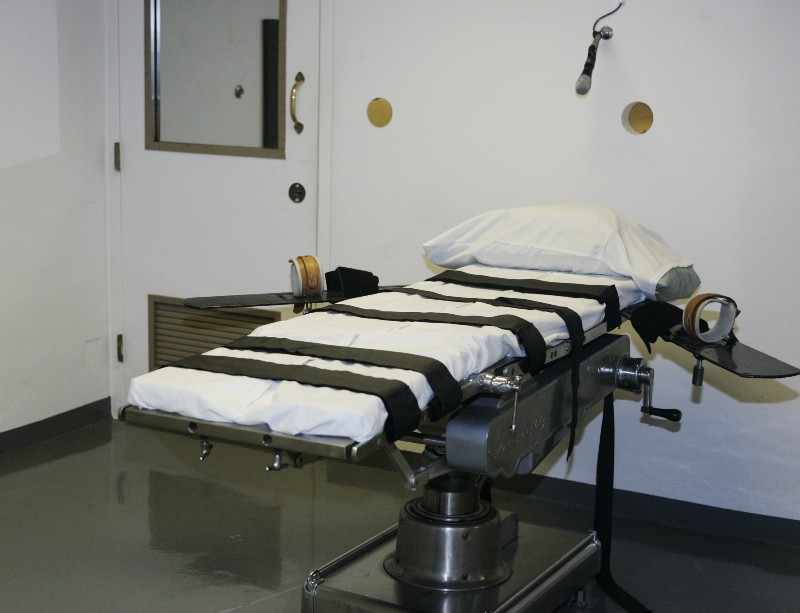
Richard Glossip is scheduled to die this afternoon after several delays and a Supreme Court ruling that allows Oklahoma to use controversial drugs to execute him. Despite the win in court, the Oklahoma Department of Corrections will try their best to keep witnesses from hearing if anything goes wrong with the lethal injection.
DOC says they will turn off the microphone in execution chamber after any final statement, no way to hear if anything is said as drugs go in
— Phil Cross (@philsnews) September 30, 2015
The DOC changed the microphone policy after the botched execution of Clayton Lockett in 2014, during which witnesses could hear him choking and talking as he lay dying for 43 minutes. His torturous death, ultimately by heart attack, prompted new scrutiny on the shady means by which states were procuring the drugs.
But the attempt to keep the death chamber silent didn’t work with the next inmate to be executed after Lockett. Though they turned off his microphone, Charles Warner could still be heard saying “I’m not afraid to die,” “my body is on fire” and that the drug felt “like acid.” His execution lasted 18 minutes.
The Supreme Court’s ruling in Glossip v. Gross this summer held that a state’s interest in executing inmates may trump the inmate’s right not to suffer excessive pain under the Eighth Amendment’s protection from “cruel and unusual punishments.” “Holding that the Eighth Amendment demands the elimination of essentially all risk of pain would effectively outlaw the death penalty altogether,” Justice Samuel Alito wrote, explaining the Court’s priorities in capital cases.