WASHINGTON, D.C. — On Wednesday, former Texas governor and presidential candidate Rick Perry took to the stage at the high-end Willard Hotel across the street from the White House, adjusted his glasses, and launched into a speech blasting Donald Trump as a “barking carnival act” and “cancer on conservatism.” Perry’s super PAC, the Opportunity and Freedom PAC, hosted and paid for the event, and invited Perry as a “special guest.” It’s a scene that has become all too common in the modern election cycle.
The problem? Candidates and the PACs that support them are barred from coordinating with one another.
It’s a vaguely written, increasingly unenforced part of campaign finance law, but candidates running for president are becoming more brazen about blurring the lines between their campaigns and “independent” advocacy groups that can raise and spend unlimited amounts of cash.
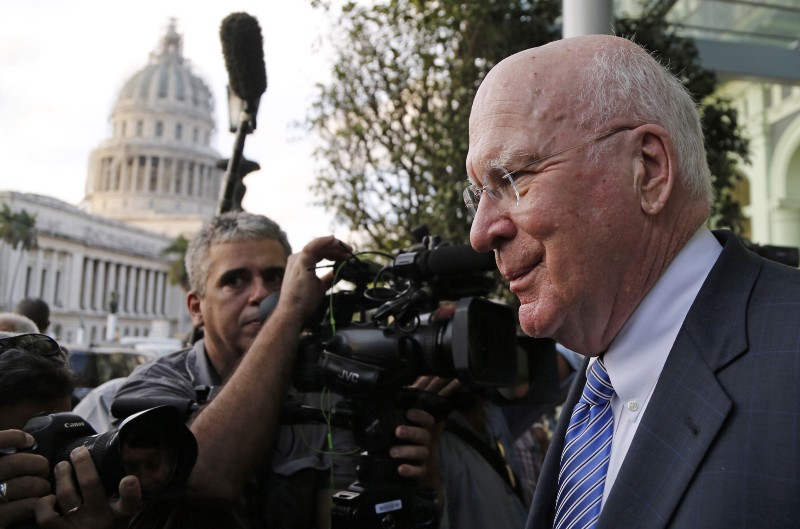
Some Democratic members of the Senate are now attempting to crack down on this behavior. Sen. Patrick Leahy (D-VT) introduced a bill this week to “stamp out coordination between super PACs and political candidates” by making the definition of “coordination” stricter and barring candidates and their agents from raising money for their PACs.
“The Stop Super PAC-Candidate Coordination Act would end the sham practice of presidential candidates boldly and shamelessly exploiting our campaign finance laws by coordinating with allegedly independent super PACs,” Leahy’s statement said, adding that voters in his home state pushed him to tackle the problem. “Vermonters … have always remained steadfast in our belief that our democracy should not be for sale, and that the size of your bank account should not determine whether or not the government responds to your views or needs.”
Some of Leahy’s Republican colleagues, however, are pushing in the opposite direction. This week, Senate Majority Leader Mitch McConnell (R-KY) tucked a provision into a massive budget that would further deregulate campaign finance coordination rules. Some senators and a host of voting rights groups blasted the move, saying it would “open the floodgates of money in our politics” even wider, but a committee vote to strip it out of the bill narrowly failed.
The nearly two dozen people currently running for the White House may become bolder still in flouting what is left of U.S. campaign finance law following a court ruling halting the investigation into whether Scott Walker’s campaign illegally coordinated with right-wing advocacy groups and ordering all evidence destroyed.