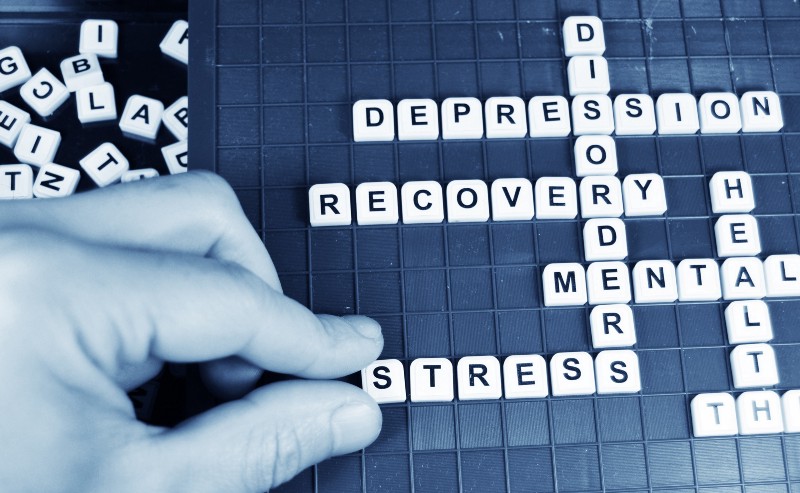
If a group of California students and teachers win their lawsuit against the Compton Unified School District, trauma triggered by the violence and hardships will be classified as a type of disability that warrants access to school-based mental health support and other services, as guaranteed in the Americans with Disabilities Act (ADA) for other impairments.
The group — which includes three Compton teachers and five students who have been transferred or expelled from school for disciplinary issues — filed the lawsuit this week alleging that school district officials have denied educators the training they need to help students cope with trauma and excel academically. According to court documents, pupils at the center of the case have suffered physical and sexual violence, witnessed the death of friends and family, and experienced rejection from elders because of their sexual orientation.
Compton, a working-class neighborhood situated within urban Los Angeles, has garnered a reputation for its high rate of crime and violent gang activity. According to court documents, 25 homicides and hundreds of violent crimes have taken place in the city south of downtown Los Angeles in the last year. The Compton Unified School District is composed of 26,000 students in 40 schools — 80 percent Latino and nearly 20 percent African-American — a great number of whom policy analysts say stand a great risk of engaging in unhealthy behavior, dropping out of school and entering the criminal justice system.
“If we had children in wheelchairs of course we would say that we have to build ramps,” Mark Rosenbaum, directing attorney for Public Counsel’s Opportunity Under the Law project, told the Center for Public Integrity. Public Counsel, the nation’s largest pro-bono firm filed the lawsuit in a Los Angeles-based federal court. “These kids need opportunity now. It’s an urgent matter. Trauma needs to be addressed so these kids have a fighting chance. To close the achievement gap, we must deal with trauma,” Rosenbaum added.
The rates of depression and anxiety among young people have more than quadrupled in the last 50 years. Today, one in five children have a mild or serious mental health problem. Residents of poor, majority-minority communities, often find more difficulty accessing mental health services in the early stages of their children’s mental trauma. Young people who experience trauma stand a greater likelihood of misbehaving in the classroom, building a dismal attendance record, and getting suspended from school.
Under the ADA, public spaces including restaurants, hotels, theaters, schools, parks, and libraries cannot discriminate against patrons on the basis of disability. Reasonable changes must be made to ensure that the people in question have the aid necessary to access and fully participate in those institutions. The law applies also applies to mental health if the impairment in question limits a person’s major life abilities.
The language of the ADA has become the center of the ongoing lawsuit, emboldening childhood mental health advocates to see to it that schools are equipped to healing traumatized youngsters. For the plaintiffs in this landmark case and children across the United States, unaddressed trauma counts as an obstacle in their proper social development, especially since it can trigger post-traumatic stress disorder (PTSD) and depression in adolescents and young adults.
According to the U.S. Department of Justice’s National Survey of Children’s Exposure to Violence, more than 60 percent of children have been exposed to violence within the last year, either as a witness or hearing about accounts from family and close acquaintances. One out of three adolescents who develop PTSD say that people doubt the severity their mental anguish, often misinterpreting the signs as just mischief.
In recent decades, mental health experts and education groups have cited in-school mental health services as the key in helping children come to grips with their mental trauma. Once embedded in school buildings, psychologists can evaluate students for special education services, consult with teachers and family members, and lead grief groups for students who have suffered from traumatic experiences. Academics say that these kind of services can do more in teaching children coping skills and preventing the dismal life outcomes that relegate youngsters to the prison system later in life.
A group of teachers from Sandy Hook Elementary School shared similar thoughts in their appeal to teacher union officials and lawmakers last year to secure grants that would fund ongoing trauma and grief counseling for students and community members directly affected by a 2012 mass shooting at the Newtown, Conn. school that claimed 26 lives, the majority of whom were children.
“It’s a combination specialty,” Frank C. Worrell, PhD, director of the school psychology program at the University of California, Berkeley, told the American Psychological Association in 2012. “The solution to a psychology problem may be an academic intervention, and the solution to an academic problem may be a psychological intervention. Recognizing the connection between these worlds is important.”
Troubled students, however, will very likely never get to meet a mental health professional in their school. An economic downturn and dwindling school budgets have caused school districts across the country to eliminate psychologists along with arts and music programs that are designated as “non-essential.” The few psychologists who keep their jobs often attend to a student patient base of more than 500, a situation that further complicates their efforts to providing individualized attention to those who need it.
When troubled youngsters enter certain institutions — whether it be the juvenile justice system, special education classes, and child welfare — — the care they receive only goes surface level, rarely tackling the underlying cause of depression, anger, and — in many cases — drug addiction.
Education advocates argue that the lack of attention among school administrators about childhood trauma deserves part of the blame for the spur in suspensions among young students for minor offenses. Research has shown that taking troubled children out of the classroom doesn’t get to the root of what’s causing them to lash out at others. Additionally, removing them from what may be the only stable environment they have can give them a negative disposition toward school that, in tandem with mental trauma and other external factors, can perpetuate the school-to-prison pipeline where their unpleasant journey continues. More than half of inmates currently in local and state jail systems deal with schizophrenia, depressive disorder, and bipolar disorder, according to an April Urban Institute report.
The outcome of the lawsuit notwithstanding, this debate could have a ripple effect throughout the country. Other school districts have taken steps in connecting students with mental health practitioners and wrap-around services.
Baltimore’s Community Schools Initiative created educational institutions that have a hodge-podge of local services and programs that troubled students often find difficulty accessing, including those related to mental health. Officials in the Los Angeles Unified School District launched a 10-session counseling program that researchers said helped student recover from mental trauma and perform better in school. One case involved a student with anger issues who witnessed civil unrest in his native Guatemala and gang violence in Los Angeles. In the program, he learned how to cope with trauma by walking to school with others and seeking teachers who support him.
“He went through the program and did very well,” Marleen Wong, former director of mental health, crisis team, and suicide prevention for the Los Angeles United School District, told the L.A. Times. “He was able to go back to school, calmed down, and had fewer fights and better attendance.”