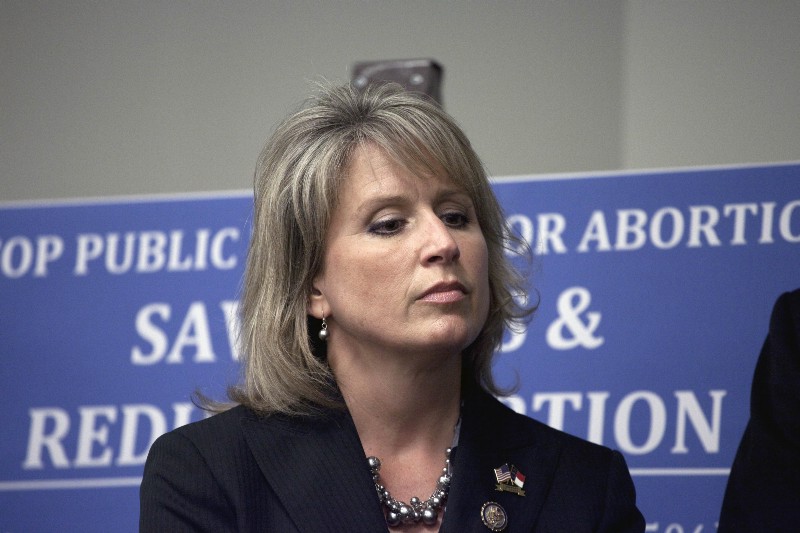
Since becoming the presumptive GOP nominee, Donald Trump has almost entirely ignored the down-ticket races in his party. But he did go out of his way to support Rep. Renee Ellmers, a Tea Party Republican running for reelection in North Carolina’s second district. Trump made robocalls for Ellmers, praising her as the first member of Congress to endorse him, and she in return touted his endorsement in e-mails to her supporters.
Early Tuesday evening, Ellmers lost her primary to George Holdings by a staggering 30 points. Holdings is a Tea Party-backed congressional representative who, thanks to gerrymandering in North Carolina, was drawn into the same district as Ellmers.
That redistricting plan is currently being challenged in court for unconstitutionally packing black voters into fewer districts to limit their political power and make it easier for Republicans to maintain a majority. Ironically, Ellmers, a white Republican, is now falling victim to the plan. She is the first GOP incumbent to lose her seat in 2016.
Ellmers recently became a target of the far right of the Republican Party by opposing a bill that would have outlawed all abortions after 20 weeks, with only a narrow exception for rape victims. After she withdrew her support for the bill, abortion opponents picketed her office.
The outcome of the House primary indicates trouble for other officials in tight races who have aligned themselves with Trump. The controversial nominee could be such a toxic factor for down-ticket races that Democrats have expressed cautious hope about winning back control of the Senate.
One Republican lawmaker in a heated race — Sen. Mark Kirk (R-IL) — after being repeatedly slammed for remaining silent on Trump’s race-based attack on a federal judge, became the first Republican to publicly withdraw his endorsement of Trump.
“I cannot and will not support my party’s nominee for President regardless of the political impact on my candidacy or the Republican Party,” Kirk declared.