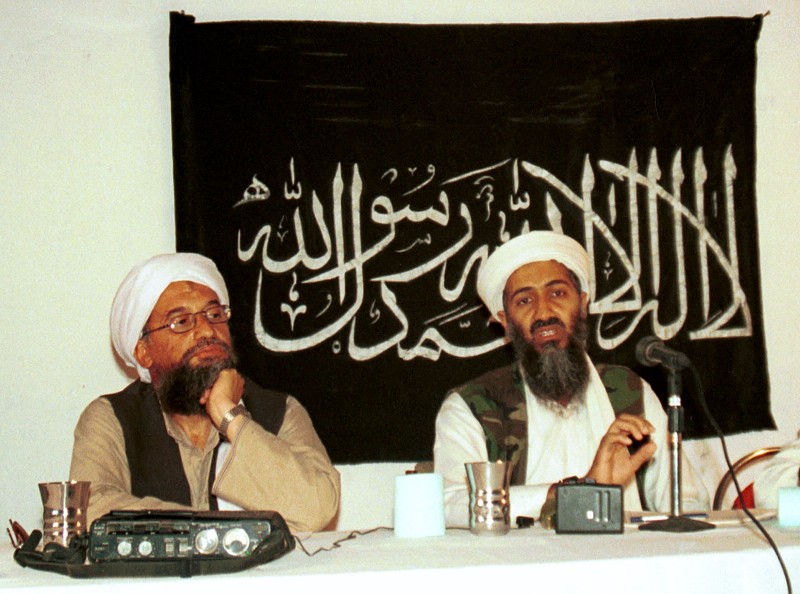
Allegations that the Obama administration lied about the killing of late al Qaeda leader Osama Bin Laden in a piece written by storied investigative journalist Seymour Hersh were widely doubted by American media and denounced by U.S. officials Monday. And despite article’s accusations that two senior military officials in Pakistan were also aware of the operation beforehand, the Pakistani public saw it as a conspiracy aimed at harming the military’s image.
“It’s [seen as] a way to humiliate the Pakistan military and block join future investment in Pakistan,” Political and Defense Analyst Ayesha Siddiqa told ThinkProgress by phone from London. “It’s on every TV channel in Pakistan — and there are 72 of them — and they think that it is probably one of many conspiracies to embarrass Obama, stop [American] negotiations with Iran, or [damage] Pakistan-China relations.”
Hersh’s latest 10,000+ word report is called “The Killing of Osama bin Laden” and ran in the London Review of Books over the weekend. In it, Hersh weaves an alternative history of the lead up to and execution of the operation that took out Bin Laden in Abbottabad, Pakistan four years ago this month. Pakistani media took a critical view of the report, as depicted in this tweet from Newsweek Pakistan’s Reporter Benazhir Shah.
Dunya TV headline regarding the Seymour Hersh report, "Another American journalist concocts another lie about Pakistan." #HershConspiracy
— Benazir Shah (@Benazir_Shah) May 11, 2015
Hersh’s piece was denounced by the CIA and the White House, according to the Washington Post. “A CIA official told The Washington Post that Hersh’s story is ‘utter nonsense.’ White House spokesman Ned Price said it had ‘too many inaccuracies and baseless assertions’ to fact-check each one.”
It was also picked apart by Vox’s Max Fisher and harshly criticized by CNN’s National Security Analyst Peter Bergen, who produced the first television interview with Bin Laden in 1997.
“Hersh’s account of the bin Laden raid is a farrago of nonsense that is contravened by a multitude of eyewitness accounts, inconvenient facts and simple common sense,” Bergen wrote this morning. Bergen also emailed former Inter-Services Intelligence (ISI) Chief Assad Durrani, who was one of Hersh’s primary sources for the article. “Durrani said he had ‘no evidence of any kind’ that the ISI knew that bin Laden was hiding in Abbottabad but he still could ‘make an assessment that this could be plausible.’ This is hardly a strong endorsement of one of the principal claims of Hersh’s piece.”
After brilliant investigative reporting throughout much of his career — including uncovering the My Lai Massacre in Vietnam and abuses at the Abu Ghraib prison in Iraq — Hersh has come under fire for some of his more recent work. A story about Turkey collaborating with Syria’s al Qaeda wing to try and pin a chemical weapons attack on the Syrian regime acquired heavy criticism and contradicted evidence collected by human rights groups.
Siddiqa said she believes that the real question that reveals itself from Hersh’s latest article is about “the story behind the story.” She said Hersh might have been fed information by “two intelligence agencies trying to embarrass each other.”
The idea that Hersh was tipped information that supports certain institutions also appeared in a post by Thomas E. Ricks in Foreign Policy. “Who benefits from Hersh’s version?” Ricks asked in manner not uncommon among Middle Eastern taxi drivers.
“The answer is, on more than one account, that the Pakistani military does. That is, Hershs’ retired officials are stating that 1. Pakistan did indeed help the U.S. get bin Laden, and 2. That Pakistan’s air defenses are better than they appear, so India shouldn’t get any ideas.”
Reading between the lines of who said what and why may be more pertinent for certain experts and analysts than what was actually written in Hersh’s latest piece. What we are left with is a collection of questions and few answers.
Bergen again: “All sorts of things are, of course, plausible, but in both journalism and in the writing of history one looks for evidence, not plausibility.”
Update:
The New York Times’ Carlotta Gall wrote an article yesterday about certain details in Hersh’s latest that corroborate with her extensive reporting. Check it out.