An obscure case involving fish provides a road map that the Supreme Court could use to reject a much more high-profile case seeking to gut the Affordable Care Act. Indeed, while the justices divided 5–4 over the correct result in the fish case, Yates v. United States, 8 of the 9 justices agreed with broad legal principles that are incompatible with the legal attack on Obamacare.
On the surface, Yates and the health care case, King v. Burwell, have little in common. John Yates is a commercial fisherman who was boarded by law enforcement while at sea and caught with several dozen undersized fish. He later ordered a crewman to toss these fish overboard, and was charged with violating a federal law which provides that anyone who “knowingly alters, destroys, mutilates, conceals, covers up, falsifies, or makes a false entry in any record, document, or tangible object with the intent to impede, obstruct, or influence the investigation or proper administration of any matter within the jurisdiction of any department or agency of the United States” is guilty of a felony.
King, by contrast, asks the Supreme Court to read six words of the Affordable Care Act — “an exchange established by the State” — out of context in order to cut off tax credits that enable millions of Americans to afford insurance. Obamacare gives states “flexibility” to decide whether to set up their own exchange where people can buy subsidized health plans or to allow the federal government to do so for the state. The six words the King plaintiffs rely upon appear in a provision that, if read entirely in isolation, seem to suggest that tax credits are unavailable in federally-run exchanges. If that provision is read in context with the entire law, however, it is clear that the law provides for credits in all 50 states.
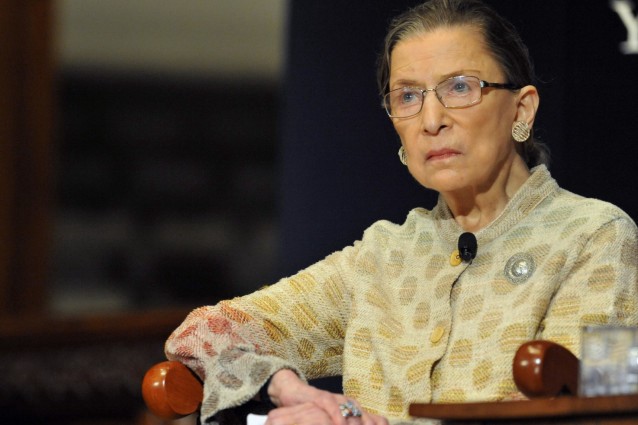
In determining that the fisherman in Yates could not be charged under the statute he was accused of violating, Justice Ruth Bader Ginsburg’s opinion for a plurality of the Court rejects the view that provisions of a law can be read in isolation. “Whether a statutory term is unambiguous,” Ginsburg explains, “does not turn solely on dictionary definitions of its component words. Rather, ‘[t]he plainness or ambiguity of statutory language is determined [not only] by reference to the language itself, [but as well by] the specific context in which that language is used, and the broader context of the statute as a whole.’” Though a word’s meaning “ordinarily” lines up with its “dictionary definition, . . . the same words, placed in different contexts, sometimes mean different things.”
Yates’ conviction hinged upon the meaning of the words “tangible object” in the law he was charged with violating. Though, under the dictionary definitions of the words “tangible” and “object,” a fish certainly qualifies as a “tangible object,” Ginsburg writes that this fact is “not dispositive” of its meaning under this particular law. Her opinion then cites other evidence in the law indicating that Congress intended to give these two words a narrow meaning, including the fact that it was passed as part of a broader statute targeting “corporate document-shredding to hide evidence of financial wrongdoing,” and that the words “tangible object” appear under the caption “Destruction, alteration, or falsification of records in Federal investigations and bankruptcy.” Based on this evidence, Ginsburg concludes that this particular crime should only apply to objects “used to record or preserve information,” not to fish.
Though Justice Elena Kagan authored a dissent, joined by three other justices, disagreeing with Ginsburg’s analysis of this particular law, her dissent includes an even stronger statement against the notion that a few words of a law can be divorced from their broader context. “I agree with the plurality (really, who does not?) that context matters in interpreting statutes,” Kagan writes. “We do not ‘construe the meaning of statutory terms in a vacuum.’ Rather, we interpret particular words ‘in their context and with a view to their place in the overall statutory scheme.’ And sometimes that means, as the plurality says, that the dictionary definition of a disputed term cannot control.”
Chief Justice John Roberts, along with Justices Stephen Breyer and Sonia Sotomayor joined Ginsburg’s opinion, while Justices Antonin Scalia, Anthony Kennedy and Clarence Thomas joined Kagan’s opinion. That’s eight justices who reject the context-free way of reading federal laws that animates the King litigation. Only Justice Samuel Alito, who wrote a brief opinion agreeing with the result in Ginsburg’s opinion but not with its rationale, did not author or join an opinion that casts doubt over the King plaintiffs’ reading of the Affordable Care Act.
None of this means, of course, that King will be an 8–1 decision upholding Obamacare. The last time the fate of the Affordable Care Act was before the Supreme Court, Justice Scalia voted to repeal the entire law, even though he once authored an opinion that left little doubt that Obamacare is constitutional. Nevertheless, the fact that the justices would hand down a decision like Yates just one week before they hear oral arguments in King is a hopeful sign for the millions of people whose health care is threatened by the legal attack on Obamacare.