Donald Trump’s nominee to lead the CIA, the agency’s current Deputy Director Gina Haspel, once ran a “black site” where suspected terrorists were tortured. Her nomination could very well fail in the Senate — assuming that Sen. Rand Paul (R-KY) has regained his spine since he pledged to vote against Secretary of State Mike Pompeo and then went back on that pledge.
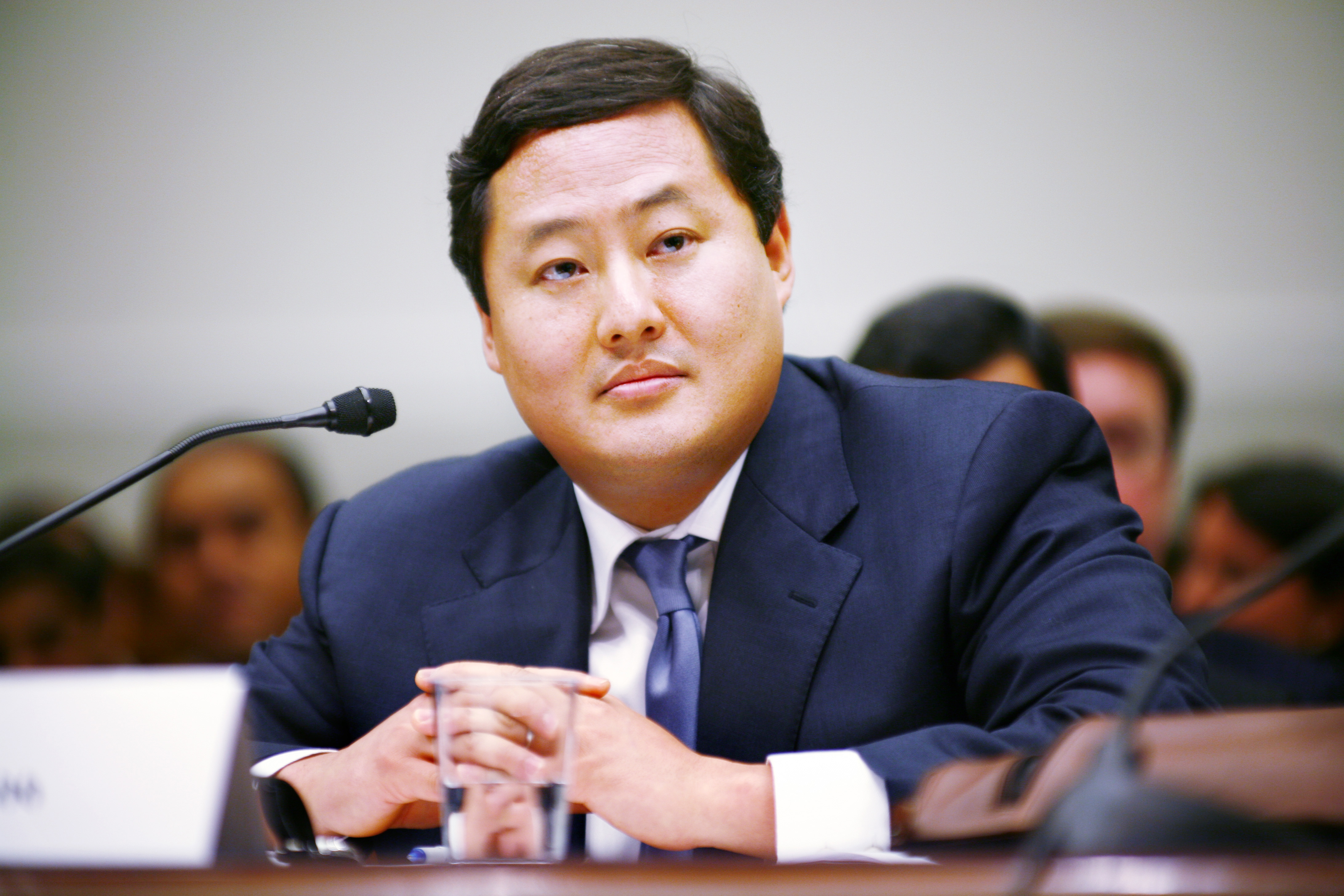
On Monday, however, Haspel did earn the support from one former public official with a very personal stake in the debate over whether people who played a role in torture should be allowed to serve in government. John Yoo, who authored the infamous Torture Memos during the second Bush administration, thinks that Haspel is being treated unfairly.
Professor John Yoo: “Gina Haspel and her colleagues followed the rules.” @DanaPerino #dailybriefing @FoxNews pic.twitter.com/sWp2b5uC9P
— The Daily Briefing (@dailybriefing) May 7, 2018
The crux of Yoo’s defense of Haspel is that the CIA “followed all the rules” because it sought the Justice Department’s advice on whether it could torture.
“The statute says you can’t inflict ‘severe pain and suffering,'” Yoo said of the legal advice he offered to the Bush administration while he was a Justice Department attorney, “and we tried our best to figure out what that was.”
It’s a very odd defense of the CIA. For one thing, regardless of whether torture is legal, it is widely understood to be ineffective among professional interrogators. As a 2014 Senate Select Committee on Intelligence report concluded, the CIA’s use of its enhanced interrogation techniques was not an effective means of acquiring intelligence or gaining cooperation from detainees.” Multiple detainees “fabricated information, resulting in faulty intelligence.” So even if torture were legal, using it against detainees was not in the best interests of the United States.
But lest there be any doubt, torture is not legal, and it was not legal when Yoo said that it is.
As Yoo alludes to, the United Nations Convention Against Torture — which the United States Senate ratified in 1994 — defines torture as “any act by which severe pain or suffering, whether physical or mental, is intentionally inflicted on a person” for reasons including “obtaining from him or a third person information or a confession.”
In one of the torture memos, however, Yoo gave the term “severe pain or suffering” an exceedingly narrow definition. For an act to rise to the level of torture, according to Yoo, “the victim must experience intense pain or suffering of the kind that is equivalent to the pain that would be associated with serious physical injury so severe that death, organ failure, or permanent damage resulting in a loss of significant bodily function would likely result.”
Yoo also claimed that the torturer had to act intending to inflict such pain.
This effort to define torture down is viewed by many leading experts on international law and human rights as egregiously poor lawyering. Harold Hongju Koh, the Yale Law professor who served as Assistant Secretary of State for Democracy, Human Rights and Labor under Clinton and as Legal Adviser to the State Department under Obama, testified that Yoo’s memo “is perhaps the most clearly erroneous legal opinion I have ever read.”