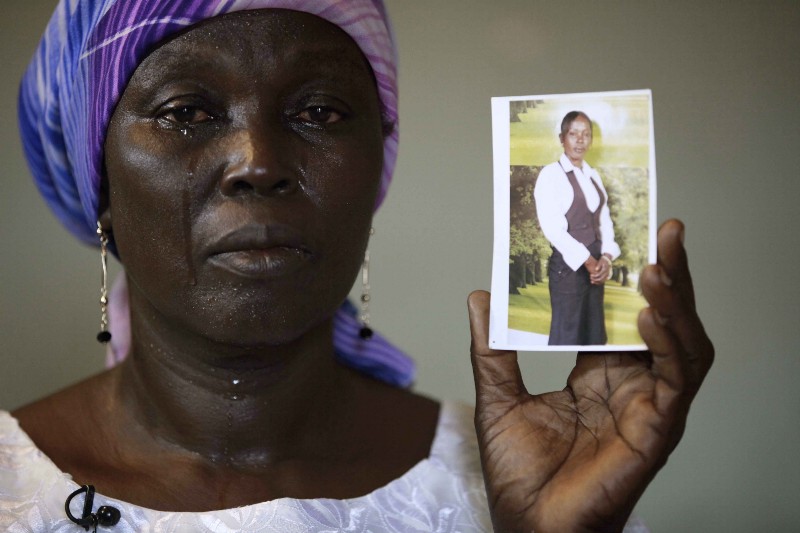
In April 2014, 276 girls were kidnapped from a school in Chibok, Nigeria by the notorious militant group Boko Haram.
Two years later, 219 of the girls are still missing, and the Nigerian government doesn’t appear to be any closer to rescuing them. The girls are suspected to be in the Sambisa Forest in northeast Nigeria, where Boko Haram is using them as human shields. The girls from Chibok gained international recognition following the viral hashtag #BringBackOurGirls that was used by celebrities like First Lady Michelle Obama and Malala Yousafzai.
Boko Haram is an extremist group who claims to want to impose a strict version of Islamic law in Nigeria — a religiously diverse country of Christians and Muslims. Boko Haram’s leader is Abubakar Shekau, a man described as “part gangster,” who has declared his allegiance to ISIS Chief Abu Bakr al-Baghdadi. While Sheaku preaches about establishing a caliphate in Africa, former Boko Haram captives say the group members are more driven by deviancy. “[T]heir victims say the group’s members appeared much more interested in expanding their campaign of sexual violence than governing their self-proclaimed caliphate,” the Washington Post reported. Many of their high ranking members are teenagers, according to the Nigerian military.
A video recently was released that showed 15 of the girls, with one saying, “we are all well,” and applying an emphasis on the word “all.” There is a fear though that some of these girls could be used as attackers by Boko Haram, either through force or after indoctrination. Some of the kidnapped have undertaken suicide attacks on behalf of the group, including young women.
While only four children were used as suicide attackers in 2014 by Boko Haram, 2015 saw a dramatic upsurge with 44 attacks by children, according to a UNICEF report. One in five suicide attacks were committed by a child, with the youngest attacker thought to be only eight years old. One third of child attackers are girls.
To make things harder on the victims, many that have escaped Boko Haram became pregnant while under captivity. Locals now fear the freed women or their children will adopt Boko Haram’s ideology.
Some Nigerians fear that the child may adopt the father’s ideology, “so that at some point in the future they will be likely to turn against their own community,” Rachel Harvey, UNICEF’s head of child protection in Nigeria, told the Washington Post. The fear of attacks in addition to this belief makes it extremely difficult for Boko Haram’s victims to reintegrate into society.
Meanwhile, 18 of the parents of the Chibok girls have died — some from attacks by Boko Haram and some from health issues related to stress.
“Few of us can begin to comprehend the suffering of parents who have not seen their daughters for two years,” Country Director of Amnesty International Nigeria, M.K. Ibrahim, said in a statement. “Muhammadu Buhari’s Government should do all it lawfully can to bring an end to the agony of the parents of the Chibok girls and all those abducted. They should do more to bring back our girls, guarantee the protection of civilians in the north-east of the county and ensure access to education for children in the region.”
Boko Haram has also left behind a wake of destruction, obliterating at least 910 schools and forcing another 1,500 to close. They’ve killed over 600 teachers and forced another 19,000 to flee persecution. More than 2,000 people have been abducted, many of whom are women and children who are subject to sexual violence.
Ibrahim said, “Those guilty of inflicting this unspeakable suffering must be brought to justice, once and for all.”