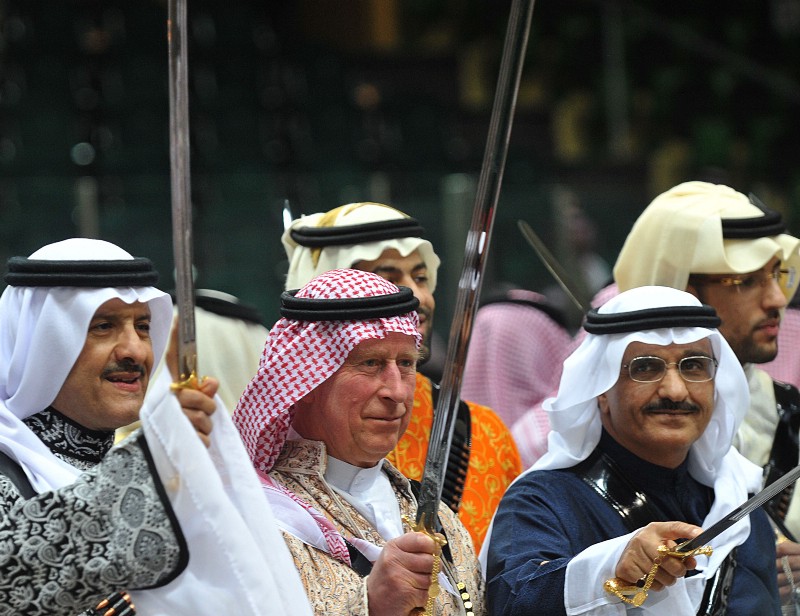
Saudi Arabia and the United Kingdom are longtime allies and have a storied history of controversial arms deals. But cracks in the two nations’ relationship are starting to show, as the Saudi ambassador to the UK warned recently.
“The importance of Saudi Arabia to the UK and the Middle East’s security, as well as its vital role in the larger Arab world as the epicentre of Islam, seems to be of little concern to those who have fomented this change,” Mohammed bin Nawaf bin Abdulaziz wrote in an article entitled How Saudi Arabia helps Britain keep the peace published in the Telegraph. “Yet it should be worrying to all those who do not want to see potentially serious repercussions that could damage the mutually beneficial strategic partnership that our countries have so long enjoyed.”
Saudi Arabia’s human rights abuses have failed to sully their relationships with the UK
The controversy here began when Jeremy Corbyn, leader of the UK’s Labour Party, called for the Ministry of Justice to drop a bid of almost £5.9m for a Saudi prison contract. The contract, which would see Britain train Saudi officers, was later withdrawn. Corbyn cited the example of Ali al-Nimr, a Saudi citizen and member of the minority Shia sect who was arrested and sentenced to death for attending pro-democracy protests. Al-Nimr was 17 when he was arrested.
Saudi Arabia is a serial abuser of human rights. “Saudi Arabia continued in 2014 to try, convict, and imprison political dissidents and human rights activists solely on account of their peaceful activities,” Human Rights Watch’s 2015 report on Saudi Arabia reads. “Systematic discrimination against women and religious minorities continued. Authorities failed to enact systematic measures to protect the rights of 9 million foreign workers. As in past years, authorities subjected hundreds of people to unfair trials and arbitrary detention. New anti-terrorism regulations that took effect in 2014 can be used to criminalize almost any form of peaceful criticism of the authorities as terrorism.”
To date, Saudi Arabia’s human rights abuses have failed to sully their relationships with the UK, or the US for that matter.
As Michael White, a Guardian columnist, wrote on Tuesday:
Saudi oil helps us all to wander around our heated homes in cotton T-shirts in February and to leave the lights on in skyscrapers (and homes) at night. We sell £7bn worth of kit to Saudi Arabia each year, much of it military to keep their demons at bay. They also provide us with a lot of intelligence on the kind of extremists its own repressive politics and theology nurture, information which helps thwart murderous Islamist plots in Britain, so we are told.
White continues: “the question is ‘where to draw the line?’, both ethically and practically.”
Abdulaziz, the Saudi ambassador, is warning that relations could sour if people continue to listen to criticisms — such as Corbyn’s — to the detriment of “the mutually beneficial strategic partnership that our countries have so long enjoyed.”
This mutually beneficial strategic partnership saw half of all British arms exports go to Saudi Arabia between 2009 and 2013, according to Amnesty International.
“If the extensive trade links between the two countries are going to be subordinate to certain political ideologies, then this vital commercial exchange is going to be at risk,” Abdulaziz wrote. “We want this relationship to continue but we will not be lectured to by anyone.”