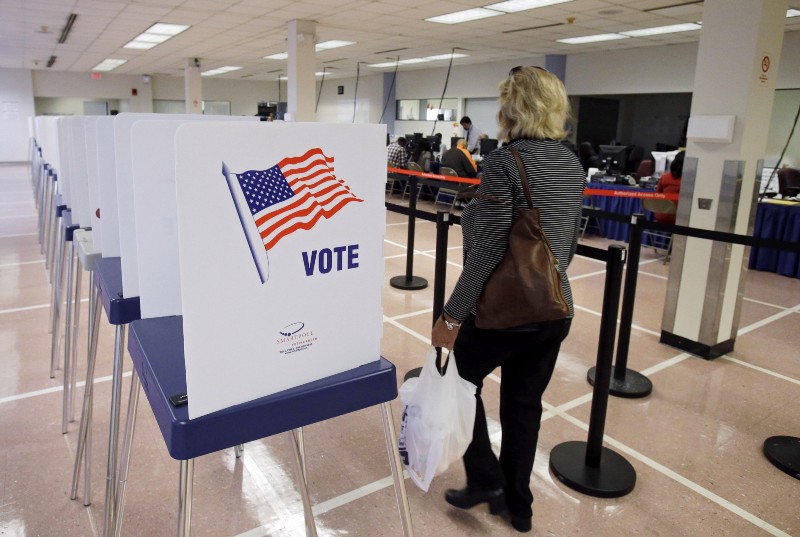
Vermont is about to become the latest state to advance voting rights after the State House passed a bill to permit citizens to register on Election Day.
The House voted this week by an 87–54 margin to allow Election Day Registration. The Senate already approved S. 29 a month ago, so the bill will now head to Gov. Peter Shumlin’s (D) desk. According to an email from Shumlin’s spokesman Scott Coriell to the Burlington Free Press, the governor is “supportive of the bill,” likely clearing the way for EDR to become law.
Following Shumlin’s signature, Vermont would become the 13th state (plus Washington D.C.) to enact EDR, including neighbors Maine, New Hampshire, and Connecticut.
Studies have shown significant benefits from allowing citizens to register to vote up through Election Day, rather than imposing an arbitrary deadline well beforehand. Academics found that eliminating registration deadlines improved overall turnout rates anywhere between seven and fourteen percentage points.
This boost would be particularly welcome in Vermont, where voter turnout in 2014 ranked in the bottom half nationally, even with a hotly contested gubernatorial election. Indeed, turnout was the rationale given by the bill’s main sponsor, Progressive Democrat Sen. Anthony Pollina. “Anything we can do to increase voter turnout, we should do,” Pollina said, according to the Free Press. “Frankly, there is no reason not to do it. There is no downside.”
One objection raised by an opponent of the bill, Rep. Thomas Terenzini (R), was that college students from other states would find it easier to cast a ballot in Vermont’s elections. (Despite objections from numerous conservatives, a 1979 Supreme Court decision suggests that students have the same right to vote in the state where they attend college as any other member of that community.) “Out-of-state college students who don’t pay taxes can change the direction the taxpayers want the state to go,” Terenzini argued, according to the Free Press.