Activist Catherine Weingarten says that she knows firsthand how dangerous society’s unrealistic standards of beauty can be for impressionable young women. That’s why, after overcoming an eating disorder, she joined the international group Endangered Bodies to lobby against industries that don’t celebrate the diversity of body types.
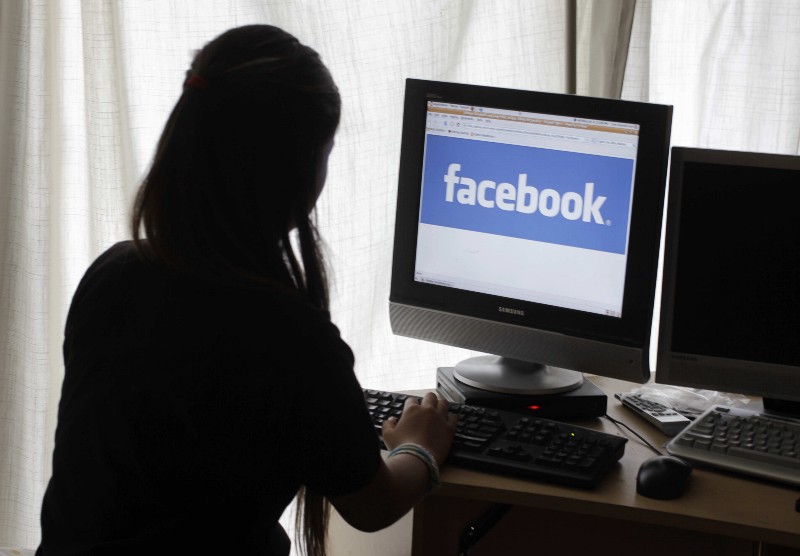
Weingarten’s battle recently reached a new frontier: Facebook. Earlier this month, she launched a Change.org campaign to get the “feeling fat” emoticon removed from the social media site. More than 16,000 people have joined the movement so far, more than halfway toward Endangered Bodies’ goal of 25,000 signatures.
The “feeling fat” emoticon — a puffy, rosy cheek, double chinned character — currently counts among more than 100 preloaded statuses that users can use to express their feelings when they post a status update. Weingarten, however, does not see “fat” as a feeling, saying that she considers the keyboard symbol to be insensitive to people of various body types and particularly women who feel self-conscious about their bodies.
“When Facebook users set their status to ‘feeling fat,’ they are making fun of people who consider themselves to be overweight, which can include many people with eating disorders,” Weingarten wrote in the petition. “That is not ok. Fat is not a feeling. Fat is a natural part of our bodies, no matter their weight. And all bodies deserve to be respected and cared for.”
Endangered Bodies’ fight has sparked a debate about the power of social media to promote images that lower viewers’ self-confidence and compel them to seek superficial ideas of beauty, even when the means of doing so may threaten their life. As shown in a March 2014 study, a college-aged woman’s exposure to Facebook, even if for just 20 minutes, can cause body dissatisfaction, one significant symptom of an eating disorder.
Eating disorders — defined as any psychological condition characterized by abnormal eating habits — affect nearly 24 million people of various ages and demographics in the United States. The most prevalent disorders include anorexia, bulimia, and binge eating disorder, all of which may be fueled by a desire to control one part of an otherwise hectic life. The issue has especially gained prominence in the era of global media where consumers — particularly women — are increasingly exposed to doctored pictures that skew perceptions of beauty.
Taking in those adulterated images, which accurately represent just five percent of American women, can pose dangerous consequences for viewers that emerge at a young age. For example, more than 80 percent of 10-year-olds said they’re afraid to be fat. Nearly 70 percent of girls between grades 5 and 12 reported that images in magazines influenced their ideas of beauty. Nearly half of girls in the same group said wanted to lose weight upon viewing that media.
“It may not seem like a big deal, but fat talk is a problem,” Art Markman, PhD, a psychologist at the University of Texas, told Yahoo Health. “The more time that people — and particularly women — spend thinking about their weight and their diet, the more difficulties they end up having eating in a healthy way. There are many people — again particularly women — who internalize a thin ideal from media and that ideal influences their behavior,” Markman said.
Experts say that adding Facebook to the equation further damages young women by allowing them to reinforce those negative views about their weight and body image on a public forum. The issue becomes even more problematic if users don’t receive comforting messages from their followers.
“When body hatred is normalized, that’s unhealthy for everyone,” Claire Mysko, the director for programs at the National Eating Disorders Association, told ABC News. “On the flip side, body positivity in social media can be a powerful tool both in recovery and early intervention.”
In a statement to PEOPLE, Facebook defended its use of the “feeling fat” emoticon by alluding to the other choices that users have to express their feelings. “You can choose from over 100 feelings we offer based on people’s input or create your own,” said officials from the social media company.
While this particular weight-related status has become the subject of controversy, the social media site has also recently attempted to connect users with tools to aid their physical and mental wellness that have been more well-received. Those services include links to eating disorder resources and a new app that connects troubled people to suicide prevention support.
Update:
Facebook removed the “feeling fat” option from its list of emoticons on Tuesday. In a press statement, Catherine Weingarten wrote: “I’m thrilled to see that FB has removed the ‘feeling fat’ emoji. The petition’s success shows us that people together can challenge the cultural messages that are so damaging to our ability to love ourselves and live comfortably in our bodies. As someone who struggled with body image, I feel so happy that I am eliminating one form of body shaming hatred on the internet.”