Perennial physical, mental, and emotional abuse can take a toll on a person’s psyche long after they escape harrowing conditions. A recent study that focused on survivors of human trafficking highlighted this unfortunate reality, reaffirming the need for long-term mental health care for populations suffering from invisible wounds.
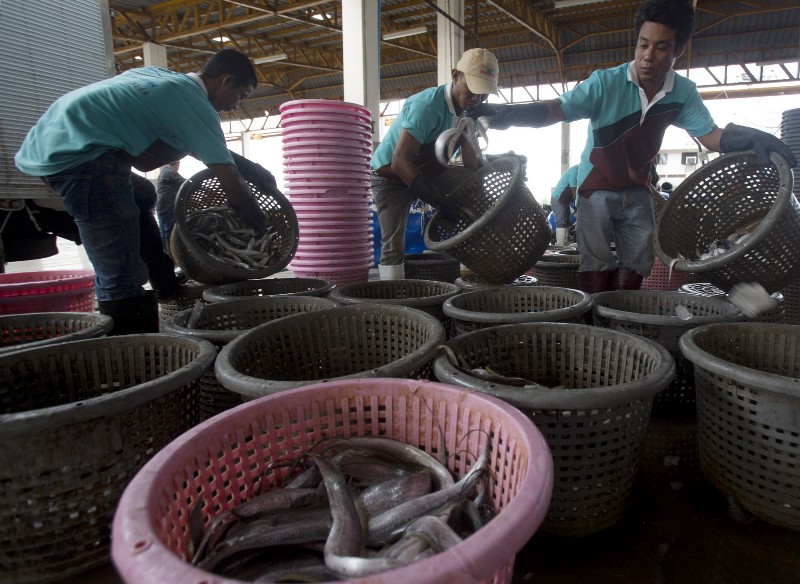
Researchers in London interviewed more than 1,000 men, women, and children in Southeast Asia who were rescued by local organizations two weeks prior to the study. The interviewees — who had been forced into sex work, commercial fishing, agricultural business, and other labor intensive industries — recalled long work days, perpetual bondage, severing of body parts, and being shot at and stabbed.
For many of them, the pain didn’t stop after they escaped physical bondage. More than 60 people in the study showed signs of depression. Nearly 40 percent reportedly had anxiety and post-traumatic stress disorder. Researchers said that these findings — published in a recent issue of The Lancet Global Health — stressed the need for mental health services that go well beyond the duration of victims’ court cases and help them safely reintegrate into their communities, regardless of age, sex, or circumstance.
“Most research to date [on human trafficking] has been conducted on women and sex exploitation,” Ligia Kiss, the study’s lead author and an epidemiologist at the London School of Hygiene & Tropical Medicine, told NPR. “There’s very little research on men and boys, and specific studies on fishermen are still scarce.”
A lack of research about the scope of human trafficking has posed serious consequences for the estimated 29 million people globally who are enslaved, according to a study conducted by the Walk Free Foundation, a global activist organization dedicated to ending modern-day slavery. Ten countries — including India, Pakistan, and China — hold nearly 70 percent of those in physical captivity.
Human trafficking, the third largest criminal enterprise in the world, has taken numerous forms — including prostitution, agriculture, domestic work, and labor in factories and sweatshops producing goods for the global supply chain. Unbeknownst to many, women aren’t the only victims. Many times men, and in some cases families, are thrown into bondage to pay generational debts or fund trips to another place. Members of this population may have already been victims of violence, making them more vulnerable to these types of situations.
“There is no single profile of trafficking victims,” Kiss said. “We found in our sample men, women and children of all different ages, backgrounds and origins, and trafficked into different sectors of work. It is a widespread phenomenon.”
In recent years, mental health professionals have tried to study more closely the effects of the underground slave trade on its victims — particularly those sold into the sex trade — and develop effective treatments. In 2010, a group of Harvard researchers designated unpredictability in abuse as an indicator of negative psychological reactions likely to go on for a long time.
While some trafficked girls and women may not suffer “extraordinary” levels of physical abuse, verbal threats of violence and coercion into sexual acts put them in a fragile state of mind, especially since they have little to no control over when they sleep, what they eat, the number of clients they take, and their use of a condom. This is particularly the case in situations where victims have been moved to another country. For other members of the modern-slave community, forms of control may include threats of police intervention — especially in cases when they’re smuggled into a country illegally — the withholding of money, the threat of the use of weapons, and isolation from support networks.
Those who experience physiological abuse at the hand of their captors often become exhausted and debilitated, have trouble concentrating, abuse substances, and develop feelings of despair along with hallucinations and other forms of psychotic reactions. These effects come from the feelings of helplessness caused by the torture and the economic and social captivity that researchers say makes victims of human trafficking subconsciously dependable on their captors long after their release. Those who don’t have access to effective treatment have difficulty controlling emotions, a detriment to their overall well-being.
“Captivity creates a unique relationship of coercive control between the perpetrator and the victim,” Elizabeth Hopper and Jose Hidalgo wrote in their 2006 article titled Invisible Chains: Psychological Coercion of Human Trafficking Victims. “As victims become more isolated, they grow increasingly dependent on the perpetrator, not only for survival and basic bodily needs, but for information and even emotional sustenance. The purpose of such psychological coercion is to increase control over other persons and… support their ability to exploit others for personal and financial gain.”
In the United States, victims of human trafficking from foreign countries can receive certification that makes them eligible for federally funded benefits and services — including the Refugee Cash and Medical Assistance, the Matching Grant Program, the Public Housing Program, and Job Corps, all of which they can obtain through social services providers. The National Human Trafficking Victims Program, which includes a network of case management services and support systems, spans 28 states, the District of Columbia, and three American territories.
Even with these services at their disposal, however, realizing full psychological rehabilitation comes with difficulties for survivors of human trafficking. First, law enforcement officials have to establish a trusting relationship with victims, a huge undertaking in itself that most rehabilitation programs — many of which provide services for a short duration — don’t take into account. Helping victims require taking the time to allay their fears of retaliation from their captors and challenge their perception that police officers aren’t to be trusted. Victims may also have feelings of shame that discourage them from opening up to mental health professionals.
Accessing mental health services may also be a problem in itself if victims don’t have proper identification and insurance. Those who don’t fall through the cracks and gain access to mental health care may find that it doesn’t fit their needs or takes into account what may be a lengthy healing process. Funding restrictions often limit the number of sessions a victim can receive. Treatment options, such as isolation in facilities, can also conjure memories of abuse in human trafficking victims. Under these conditions, victims of human trafficking stand a great chance of never meeting the “expectations” of their mental health practitioners.