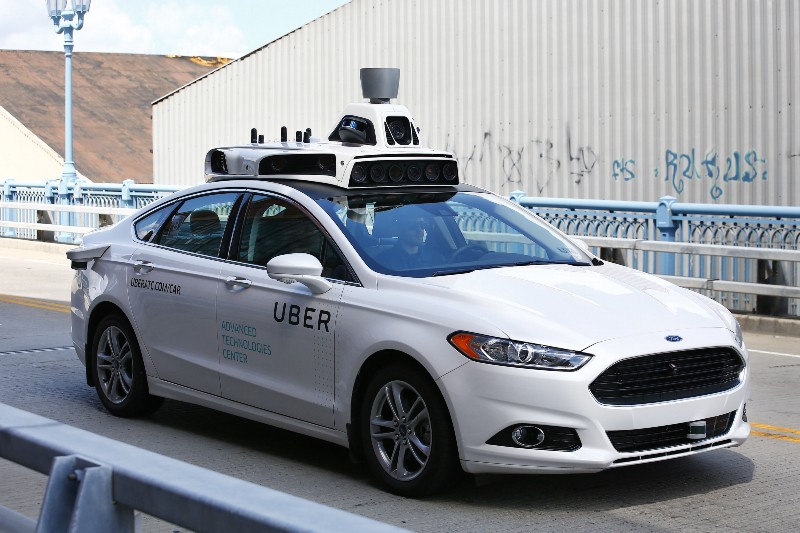
Uber CEO Travis Kalanick announced Thursday it was integrating self-driving cars to its ride-sharing service in Pittsburgh, San Francisco, and Palo Alto, California. Uber acquired transportation startup Otto, which has its own fleet of self-driving trucks, and tapped the company’s co-founder Anthony Levandowski to lead all of Uber’s self-driving efforts.
News of the venture sparked feelings of worry and excitement. Tech enthusiasts are excited that technology — once only in sci-fi films and more recently in the research stage but about three to five years from hitting the market — is coming to life sooner than expected. But that excitement is tinged with economic worry as people who drive for a living worry about being displaced by automated machines.
Self-driving cars picking up passengers were inevitable. Google’s driverless fleet has been cruising around Mountain View, California for years. But Uber’s foray into the space says a bit more about the company’s ethos and relationship with its drivers and regulators than it does about innovation.
Computer automation doesn’t necessarily mean humans are irrelevant. Google and Uber have both said that human operators would be in self-driving cars. And automation has helped increase businesses’ efficiency, creating jobs and boosting the economy.
Still, Uber’s first step to self-driving cars may be more indicative of how the company values human labor. The company’s long contentious relationship with its workforce has led to multiple lawsuits primarily for failing to recognize drivers as employees opting instead to classify them as contractors — a designation that absolves Uber of having to follow labor regulations and pay worker benefits.
Uber drivers routinely complain of fare cuts and low pay that prevent them from earning a living wage. Drivers have sued and a judge recently rejected Uber’s $100 million settlement proposal. US District Court Judge Edward Chen for northern California said the deal was “not fair, adequate, and reasonable.”
So while the prospect of having an Uber pick you up after a night of drinking may be cool and a taste of the near future, the timing also begs the question, is the company really disrupting the status quo or running from its labor woes?