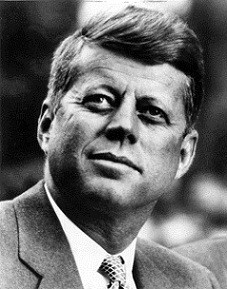
The United States established one of its first true consumer protection laws in 1872, when it protected consumers from fraud involving the use of U.S. mail. But the modern era of consumer protection didn’t begin for another 90 years, when President John F. Kennedy delivered remarks to Congress that established four basic consumer rights — rights to safety, to choice, to be informed, and to be heard — and laid the groundwork for the consumer protections Americans expect and depend upon today.
Kennedy’s remarks, delivered 50 years ago today, argued that protecting consumers was vital to the stability of the American economy and the country’s national interest:
If consumers are offered inferior products, if prices are exorbitant, if drugs are unsafe or worthless, if the consumer is unable to choose on an informed basis, then his dollar is wasted, his health and safety may be threatened, and the national interest suffers.
Kennedy’s four basic consumer rights led to the establishment of the Consumer Product Safety Commission and to the passing of anti-trust, patent, and price gouging laws, as well as the creation of non-governmental actors like the Better Business Bureau to protect consumer rights.
While Americans take many of these protections for granted, they are often under assault from business interests and lawmakers. Regulatory agencies from the Food and Drug Administration to the Securities and Exchange Commission have been subjected to drastic budget cuts, as well as repeated efforts to prevent them from passing new regulations or enforcing those that already exist.
Those same efforts are now focused on the newest consumer protection agency, the Consumer Financial Protection Bureau. President Obama appointed the CFPB’s first director in January, after more than a year of Republican promises that they would block his nominee. Despite those efforts, the CFPB is already helping consumers in numerous ways, primarily by taking steps to prevent and remedy the predatory, discriminatory, and potentially illegal financial practices that were prevalent during the housing crisis.
“The federal Government — by nature the highest spokesman for all the people — has a special obligation to be alert to the consumer’s needs and to advance the consumer’s interests,” Kennedy said. “Their voice is not always as loudly heard in Washington as the voices of smaller and better-organized groups — nor is their point of view always defined and presented. But under our economic as well as our political form of democracy, we share an obligation to protect the common interest in every decision we make.”