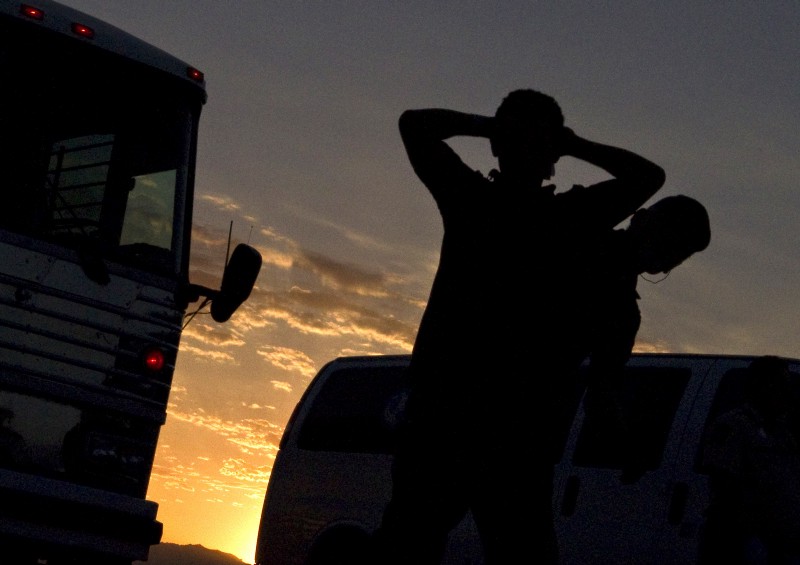
Seven armed federal immigration agents surrounded 18-year-old Gabriella Portillo when they detained her and sent her to a local jail in Oklahoma, where she was later transferred to an immigrant detention facility. Portillo, four months pregnant at the time of her arrest in August, was deported to El Salvador last week, Tulsa World reported.
“She’s terrified,” Tylisha Oliver, Portillo’s foster mother and former caseworker, told the Tulsa World. “She was sad, questioning why her, and fearful of what will happen in El Salvador. She doesn’t know anyone there except a grandmother, who was the one who pulled her into the sex trade in the first place. That’s what Gabriella has to go back to, that’s what’s waiting for her.”
After being forced into sex work in El Salvador, Portillo came to the country at the age of 13 in the back of a cargo truck. When she was reunited with her mother in the United States, she was allegedly sexually abused by a family member. When Portillo reported the abuse to authorities, they placed her in Department of Homeland Security custody — which was when Oliver was assigned as her caseworker.
Oliver said that Portillo was defiant and wound up in group homes and juvenile detention. According to the publication, Portillo was once charged as a “youthful offender for first-degree arson and assault with a deadly weapon” and “charged with violating a statute prohibiting a prisoner to place body fluids on a government worker” after she spat on a worker.
Portillo’s legal problems in the United States really began when she pleaded guilty and received a 10-year suspended sentence. She agreed to in-patient treatment, substance treatment, and a fine, the publication noted.
“I’m not condoning what she did. She made bad choices and it was wrong,” Oliver told the Tulsa World. “Gabby has been in ‘flight or fight’ mode her entire life. She has been abused emotionally, physically, sexually by family members. Going through the system, the only adult she trusted was me. She has trust issues.”
According to her foster mother, Portillo had no idea that her guilty plea would prevent her from becoming a legal resident or land her in deportation proceedings just months after she aged out of Oklahoma’s foster care system.
Portillo is not the first immigrant to be deported after pleading guilty for a criminal charge. Deportations exploded after Congress mandated that immigrants can be sent back to their home countries if they’re convicted of felonies or even certain misdemeanors. In addition, immigrants convicted of certain aggravated felonies are not eligible for deportation relief.
“Aggravated felonies” used to include murder, drug trafficking, and firearms trafficking, but changes to federal immigration law since 1988 have expanded the categories to include shoplifting as well. In fact, according to the Human Rights Watch, 72 percent of the non-citizens (including both undocumented and legal immigrants) deported because of criminal convictions between 1997 and 2007 were non-violent.
Now in El Salvador, Portillo is back with the same family member who allegedly abused her. She’s also too afraid to leave her house, fearing that local police officers would shoot her based on her arm tattoo, which could be perceived as a gang affiliation.
It’s unclear how Portillo will fare in El Salvador, a country pockmarked by violence from upwards of 70,000 gang members that left 907 people dead last month. There, deported immigrants are often at risk of the same dangers that they fled from. A Human Rights Watch report that interviewed deported Hondurans, a neighboring country given the grisly distinction of the murder capital of the world, found many people too scared to leave their homes or who felt that authorities wouldn’t be able to protect them.