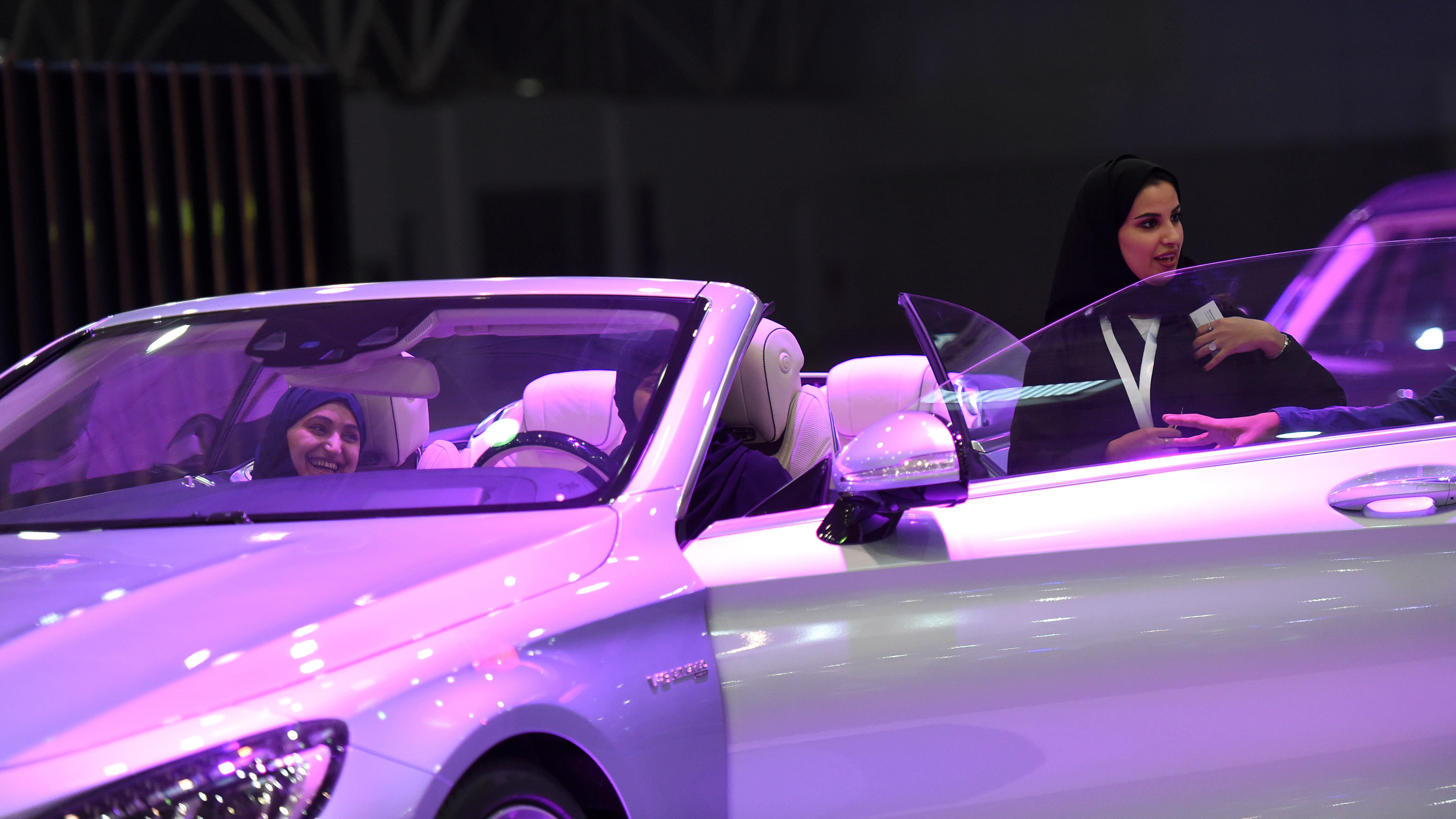
After years of protest, women in Saudi Arabia will reportedly have the right to drive on June 24 — a decision that has earned the country’s Crown Prince Mohammed bin Salman much fawning praise as a “moderate” who is “emancipating women.”
But on Friday, the Wall Street Journal reported that at least five prominent women’s rights activists have been detained this week, including Loujain al-Hathloul, who had been repeatedly arrested in the past over demanding the right to drive.
“Activists say the detentions are intended to prevent anyone from stealing credit for the decision from the government,” reported the WSJ, which also noted that even when the announcement was made in September, dozens of activists received calls from the government forbidding them from commenting on social media or speaking to the press — even in praise — about the Gulf Arab kingdom lifting the driving ban for women.
There’s tremendous frustration over the fact that activists in Saudi Arabia can’t even celebrate their victory.
“It’s so unimaginably stupid. All of these people would have happily talked about how glad they were about the change – just let them have five percent of the credit!” a source who is in contact with activists in Saudi Arabia told ThinkProgress.
Prisoners of Conscience reported that that Aziza al Yousef, Eman al-Nafjan, Muhammed al-Rabia, and Ibrahim Al-Mdmyegh — none of whom are named in the WSJ story — are among the activists detained:
These three #Saudi female human rights activists were arrested yesterday for no reason except their defending of women rights!! We have worries that there are other female activists within that group that were arrested on Thursday. pic.twitter.com/MrU7mKx5pX
— Prisoners of Conscie (@m3takl_en) May 18, 2018
🔴 It is confirmed that Saudi authorities launched yesterday morning a new campaign of arbitrary arrests against several personalities and HRD, among them are:
Dr. Mohammed Alrabiah
Dr. Ibrahim Al-Mdmyegh
Activist Logain Hathalol
Activist Aziza Al-Yousef
Activist Iman Al-Nafjan pic.twitter.com/3gD9AJoicN— Prisoners of Conscie (@m3takl_en) May 18, 2018
Saudi Arabia is the only country in the world that forbids women from driving, with clerics saying that driving “automatically affects the ovaries and pushes the pelvis upwards” and leads to promiscuity.

Although women still live under strict male guardianship laws that have male relatives in charge of virtually every aspect of their lives — legal and personal — the move to finally allow women to drive was nonetheless seen a positive change, even though the timing of the decision was seen as suspicious.
The announcement came at the exact time that Saudi Arabia started facing massive criticism in United Nations over its actions in Yemen, where it has been engaged in the country’s civil war, carrying out U.S.-backed airstrikes against the Houthi rebels that have resulted in thousands of civilian deaths.
Additionally, observers expect backlash against women who drive.
Shortly after the decision was announced, an unnamed Saudi man interviewed by Agence France Presse said, “You can revoke the ban, but you cannot force men to allow their sisters and wives to drive. As head of my family, I make the decisions — not the women.”
Another man posted a video on YouTube, declaring of female drivers, “I swear to God, I will burn her and her car.” He was arrested shortly thereafter.