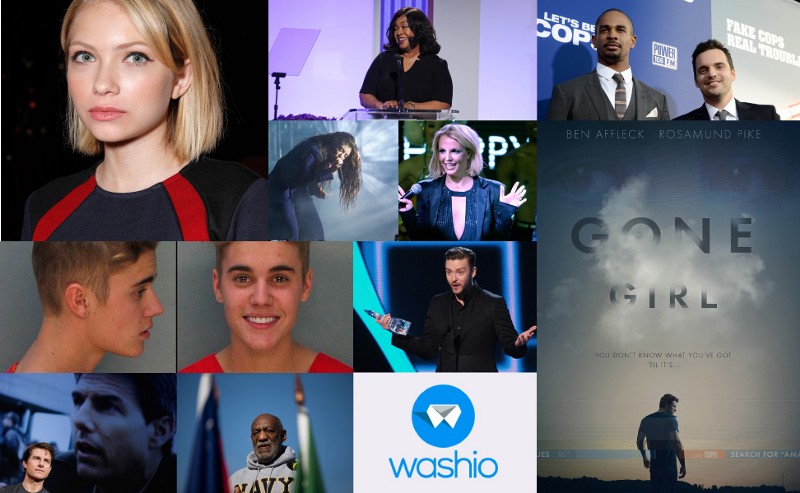
Read on for an unranked list of outstanding stories about culture. These are the gems that made me think about the things I think about all the time in a completely different way than I had before. They’re the stories did not leave me alone when I was done reading them. This is not a list of every excellent culture piece written this year, but every piece on this list is excellent.Let’s Be Real: ‘Let’s Be Cops,’ cop movies, and the shooting in Ferguson, by Wesley MorrisGrantlandLet’s Be Cops is a buddy comedy starring New Girl guys Jake Johnson and Damon Wayans Jr. as friends who dress up as police officers for Halloween and then, when people believe they are actually police officers, lean all the way into their act to see how much they can get away with. Fair to say the creative minds behind this picture did not anticipate its release date would coincide with the fallout from Ferguson, where Michael Brown was shot and killed by a police officer, Darren Wilson, or the aftermath of Eric Garner’s homicide at the hands of a police officer, Daniel Pantaleo. This kind of accidental synergy turned what could have just been a movie review into a sharp, thoughtful look at the issues the movie probably didn’t even intend to raise.
The ethical tension firms up over whether to end the ruse. Justin repeatedly tries, but over and over Ryan stops him or Justin stops himself because the spoils prove hard to resist. But the ecstasy of power never takes over black Justin the way it does white Ryan. The movie’s many assholes are put in their place, and uniformed Ryan is the one who places them there. He throws the lingo around and gets mistaken for a sergeant. Being a cop empowers him. But it stresses Justin out. For one thing, Justin’s name plate says “Chang.” His awareness of other people’s awareness of race keeps barring him from settling into character.
Miss American Dream, by Taffy Brodesser-AknerMedium
Brodesser-Akner goes to Las Vegas for this hyper-observant, weird and insightful deep-dive on Britney Spears. She manages to be both compassionate about the pop star — how critical we have become of the woman we used to worship — while still casting a critical eye over everything around her: the tacky salesmanship of all things Vegas, the culture of fandom around obsessive Britney fans, the deceptively depressing lyrics of “Work Bitch,” the financial nitty-gritty of the “Britneyplex, which is the enormous machine built around Britney Spears.”
For her entire career, Britney has been a living, breathing Rorschach test not just to me but to anyone who regards her. She presents us with action and art, all for interpretation, maybe even fucking with us a little while she does it. And whatever we see in it, that tells us a lot about who we are, not who she is.

The Cosby Show, by Ta-Nehisi CoatesThe Atlantic
Since Coates wrote this piece, even more women have come forward to accuse Cosby of sexual assault. But it was already clear by the time Coates’s story was published that there were more than just a few women claiming Cosby had drugged and either raped or attempted to rape them; it was clear that these accusations spanned not just years but decades; it was clear that any journalist who had covered Cosby before and did not interrogate these readily accessible accusations in their coverage of this man had done a disservice to these women and to all readers. Coates looks back at his own track record of reporting on Cosby and finds it wanting.
The heart of the matter is this: A defender of Bill Cosby must, effectively, conjure a vast conspiracy, created to bring down one man, seemingly just out of spite. And people will do this work of conjuration, because it is hard to accept that people we love in one arena can commit great evil in another. It is hard to believe that Bill Cosby is a serial rapist because the belief doesn’t just indict Cosby, it indicts us. It damns us for drawing intimate conclusions about people based on pudding-pop commercials and popular TV shows. It destroys our ability to lean on icons for our morality. And it forces us back into a world where seemingly good men do unspeakably evil things, and this is just the chaos of human history.

Poor Teeth, by Sarah SmarshAeon
What does dental care have to do with poverty, upward mobility, perception and the pursuit of happiness? As it turns out, everything. Nearly half the U.S. population didn’t have dental coverage in 2012, and patients typically bear the brunt of even basic (yet still not inexpensive) dental care. Smarsh writes about her childhood poverty and how her family’s financial straits left them in “the psychological hell of having poor teeth in a rich, capitalist country.” Her baby teeth, though straight and white, were full of cavities, and her gums ached constantly; as an adult, she fixated on caring for the miraculously “bright, orderly smile” that grew in their place. Teeth aren’t just an issue of health, she writes: they’re about class, about wealth and privilege and prejudice.
Poor teeth, I knew, beget not just shame but more poorness: people with bad teeth have a harder time getting jobs and other opportunities. People without jobs are poor. Poor people can’t access dentistry — and so goes the cycle… When I was a young adult, I learnt I’d been born without wisdom teeth. The dentist told me I was “evolutionarily advanced” since human beings, no longer in the business of tearing raw flesh from mastodon bones, don’t need so many teeth now. So many TV shows, bad jokes and bucktoothed hillbilly costumes in Halloween aisles had suggested that my place of origin made me “backwards”, primitive and uncivilised, that the dentist’s comment struck me deeply, just as in fourth grade when I read the word “genius” in a school psychologist’s evaluation notes to my mother and wept on the sidewalk.
Marriage Is An Abduction, by Elif BatumanThe New Yorker
Of all the thinkpieces to be inspired by Gone Girl, Batuman’s is the most powerful and, quite possibly, the most disturbing, because she zeroes in on the real horror story in the book and the film: marriage. Her piece isn’t about the sociopathy that fuels Gillian Flynn’s narrative or the acts of gruesome violence depicted in all their David Fincherian glory. Batuman describes something far more mundane, which is to say, far more terrifying. Amy isn’t some otherwordly psycho, Batuman writes; she’s one of the “lovely girls, expensively educated educated to seize success for themselves (Amy has diplomas from Harvard and Yale), and yet still groomed for the dream of a beautiful dress and a white cake.”
An independent, expressive single woman is taken from New York; her beautiful body is disfigured, or threatened with disfigurement; and her accomplishments are systematically taken away or negated, rendered worthless by comparison to that all-trumping colossus of meaning, childbirth. (Clearly, many women find happiness in much this way; but, equally clearly, many of them don’t and can’t.) These narratives speak less to the specific challenges of having a sociopath for a child or a spouse than to the pathology of the unstated assumptions that we all pass along and receive. They speak to the revelation lying in wait for women when they hit the ages of marriageability and childbirth: that their carefully created and manicured identities were never the point; the point was for it all to be sacrificed to children and to men.

Your Princess Is in Another Castle: Misogyny, Entitlement, and Nerds, by Arthur ChuThe Daily Beast
Gamergate was and continues to be a horror show. Chu’s take on the violent and sexist entitlement behind the vitriol against feminists is, fortunately, just the opposite: he declares himself to be a “male nerd” and then calls bullshit on all other self-proclaimed “male nerds” who believe their “marginalized” status means they are owed whatever they want, especially in the form of female attention and sex. He goes back to the canon of geek-fantasy-fulfillment and interrogates all the troubling tropes therein, like the key plot point in Revenge of the Nerds that is actually, undoubtedly, a rape scene. Chu’s anger is so articulate. He doesn’t hold back.
But the overall problem is one of a culture where instead of seeing women as, you know, people, protagonists of their own stories just like we are of ours, men are taught that women are things to “earn,” to “win.” That if we try hard enough and persist long enough, we’ll get the girl in the end. Like life is a video game and women, like money and status, are just part of the reward we get for doing well. So what happens to nerdy guys who keep finding out that the princess they were promised is always in another castle? When they “do everything right,” they get good grades, they get a decent job, and that wife they were promised in the package deal doesn’t arrive? When the persistent passive-aggressive Nice Guy act fails, do they step it up to elaborate Steve-Urkel-esque stalking and stunts? Do they try elaborate Revenge of the Nerds-style ruses? Do they tap into their inner John Galt and try blatant, violent rape?

Justin Timberlake Has a Cold, by David Samuelsn+1
This is one of those brilliant, sprawling pieces that completely transcends its premise — and the arguably off-putting gimicky title, however true and appropriate it may be for the subject — and gets at the wonky, strange world of hit-making and the music industry. No detail goes unnoticed. (The story is behind the n+1 paywall now, but it is worth the cost of entry. or at least worth asking around to see if any of your friends are subscribers.)
JT is a stone perfectionist, and so it is odd that he is not yet onstage, more than ten minutes into his scheduled rehearsal time. In his absence, a backup dancer hits the star’s marks at three-quarter speed so that the cameraman can track the routine. All at once, the band falls silent mid-phrase, as if someone pressed pause, opening a path for a lean sweatshirted figure who looks like a software engineer or some other kind of educated geek, with a navy wool mugger’s cap, pulled down low over his close-cropped hair.

On Kindness, by Cord JeffersonMatter
Jefferson digs into his family archives to tell the story of his mother’s life. A white middle-class woman who “had seen her share of the world’s cruelties,” she met Jefferson’s father as she was finalizing her divorce to a man who was “bitterly vindictive and controlling,” who prevented her even from spending money that she’d earned as a teacher. By marrying Jefferson’s father, a black man, she fell out with her entire family. Jefferson tells the story of his mother’s past as he wrestles with her present: she’s very, very sick. But really this essay is about what the title suggests, about kindness, and how kindness demands of anyone who would practice it an astonishing amount of strength.
Her cancer is triple negative, which means that it is absent the three most common types of breast-cancer-growing receptors: estrogen, progesterone, and the HER-2/neu gene. At first, I thought this was a reason to celebrate. Without entryways through which the cancer could feed on normal bodily chemicals, surely the tumor must remain feeble and small. But the opposite is true. Triple-negative cancer is aggressive, though doctors are unsure of what stimulates its growth. It’s also a type of cancer more likely to affect younger women and African-Americans. Armed with that last piece of information, my mom now has a new favorite bit of gallows humor: “I knew hanging out with so many black people would catch up with me one day.”
Trial By Twitter, by Holly MilleaElle
This true crime sounds like something out of a Megan Abbott novel: teen girls caught in a friendship triangle, live-tweeting their affection and rejection, and it’s all fun and games and adolescent drama until one of them winds up murdered. Their tweets are picked apart by Millea, who is never condescending about their teenage feelings but instead uses her reporting to get inside their lives and understand their feelings. What did these girls want and why did they need it so badly? How does social media take the already high-stakes arena that is high school and turn it into something more vicious, all-consuming and public?
There at the edge of the woods, they found a place to sit. When Skylar got up to retrieve a lighter, Rachel said, “On three” — that was the agreed-upon signal, a count of one, two, three — and they began stabbing her from behind. At one point she got away, but Rachel tackled her. In the struggle, Skylar managed to get the knife from Rachel and cut her below the knee. But then Skylar was overpowered. “I asked Rachel what Skylar was saying,” Gaskins says. “She said Skylar was saying, ‘Why?’ I asked Rachel the same question, ‘Why?’ Her response was, ‘Well, we didn’t like her.’ “

How YouTube and Internet Journalism Destroyed Tom Cruise, Our Last Real Movie Star, by Amy NicholsonLA Weekly
Did Tom Cruise really jump on Oprah’s couch? I am sure that he did, and yet, according to Nicholson’s reporting and all available evidence, he didn’t. At least, not in the way that we’ve collectively decided to remember it. How does a star’s image get formed, and how much control do we as an audience even have over what we see when we see someone famous? Not a whole lot, it turns out.
You’ve seen it, too. You can probably picture it in your head: Tom Cruise, dressed in head-to-toe black, looming over a cowering Oprah as he jumps up and down on the buttermilk-colored couch like a toddler throwing a tantrum. Cruise bouncing on that couch is one of the touchstones of the last decade, the punchline every time someone writes about his career.
There’s just one catch: It never happened.

Super Heroine: An Interview With Lorde, by Tavi GevinsonRookie
The interviews on Rookie are consistently fantastic. Often, these sprawling Q&As; have no “news peg” of which to speak, other than “the writers at Rookie decided this person was interesting, and why not talk to them about what makes them interesting right now?” This pairing of two of the most thoughtful, gutsy and poetic writer-thinkers going (I’d say “teen writer-thinkers,” but that would imply these two couldn’t run with everyone born before 1990 and, of course, they can) is the kind of conversation that makes a fangirl like this writer want to abuse the capslock key because IT IS SO GOOD, particularly when they mock the way grown men write about young, successful women but also when these two get into the music industry, critiques of “Royals,” style as self-expression, trusting your instincts, and beyond.
I have grown up in a time when rap music is pop music, and I do think people were maybe a little bit selective about the parts of that song they used to make those arguments, because a lot of it is examples of rock excess, or just standard pop culture “rich kids of Instagram”-type excess. But I’m glad that people are having discussions about it and informing me about it. Also, I wrote that song a few months into being 15, and now I’m a 17-year-old looking back on that, and I didn’t know then what I know now, so I kind of am not too hard on myself.

The Worst Day Of My Life Is Now New York’s Hottest Tourist Attraction, by Steve KandellBuzzfeed
Much of the buzz around the opening of the 9/11 Memorial Museum centered on its inclusion of a gift shop (a choice that, while controversial, was hardly unusual; there’s also a gift shop at the U.S. Holocaust Museum). But for Kandell, the visit to the museum brought him to the site of his sister’s death, and his ruminations on the intersection of public remembrance and personal heartache are poignant, eloquent and sometimes actually funny, in a dark but cathartic kind of way.
The fact that everyone else here has VIP status grimly similar to mine is the lone saving grace; the prospect of experiencing this stroll down waking nightmare lane with tuned-out schoolkids or spectacle-seekers would be too much. There are FDNY T-shirts and search-and-rescue sweatshirts and no one quite makes eye contact with anyone else, and that’s just fine. I think now of every war memorial I ever yawned through on a class trip, how someone else’s past horror was my vacant diversion and maybe I learned something but I didn’t feel anything. Everyone should have a museum dedicated to the worst day of their life and be forced to attend it with a bunch of tourists from Denmark.

Why I Hate Writing About Janay Rice, by Roxane GayCosmopolitan
Gay’s piece was published after the video of Ray Rice punching his then-girlfriend across the face leaked on TMZ and after Rice’s initial two-game suspension from the Baltimore Ravens was upped to an “indefinite” suspension from the NFL. Gay pulls off a great writing trick here: writing about a thing by exploring why she does not want to write about this thing. Gay deploys facts and then walks away from them: “There are always more statistics.” She writes with such empathy about our widespread lack of empathy; she is understanding about a subject so few of us are able, or willing, to understand. She writes of her own exhaustion but immediately corrects herself: “Exhaustion is such a luxury.” She is a voice of reason in a totally unreasonable situation.
In a perfect world, yes, a woman should leave an abusive relationship. She should have the emotional, physical, and financial means to do so. She should be supported by law enforcement and the justice system. She should receive counseling and emotional support. She should be given safe passage to a new life. The perfect world is made up of so much should.

Dartmouth Commencement Address, by Shonda RhimesPublished on Medium
Rhimes went back to her alma mater — where she is, according to The Mindy Project, a reigning beer pong champion — to deliver the 2014 commencement address. Her advice combined the slangy candor everyone familiar with her work already knows and likely loves (“A Dartmouth commencement speech? Dry mouth. Heart beats so so fast. Everything in slow motion. Pass out, die, poop.”) and hard-earned, no-bullshit advice technically for grads but useful for all.
Dreams are lovely. But they are just dreams. Fleeting, ephemeral. Pretty. But dreams do not come true just because you dream them. It’s hard work that makes things happen. It’s hard work that creates change. Maybe you know exactly what you dream of being. Or maybe you’re paralyzed because you have no idea what your passion is. The truth is, it doesn’t matter. You don’t have to know. You just have to keep moving forward. You just have to keep doing something, seizing the next opportunity, staying open to trying something new. It doesn’t have to fit your vision of the perfect job or the perfect life. Perfect is boring and dreams are not real. Just…DO.

“Let’s, Like, Demolish Laundry,” by Jessica PresslerNew York Magazine
Who are the Silicon Valley bros hoping to “disrupt” an industry you may not have realized needed disrupting? The guys behind Washio, an app they hope will be “the Uber of laundry.” Pressler shows us not just who these would-be billionaires really are but who they think they are and who they want to be. She mocks their start-up-speak, and she digs into what it is about our culture that creates the marketplace for this kind of narcissistic aspiration, all while allowing for the possibility that, well, they could really be onto something.
Remember the scrub board? One imagines people were thrilled when that came along and they could stop beating garments on rocks, but then someone went ahead and invented the washing machine, and everyone had to have that, followed by the electric washing machine, and then the services came along where, if you had enough money, you could pay someone to wash your clothes for you, and eventually even this started to seem like a burden — all that picking up and dropping off — and the places offering delivery, well, you had to call them, and sometimes they had accents, and are we not living in the modern world? “We had this crazy idea,’ says Metzner, ‘that someone should press a button on their phone and someone will come and pick up their laundry.”
Hollywood’s Race Problem, by Chris RockThe Hollywood Reporter
Chris Rock has been making the rounds promoting his Toronto Film Festival breakout comedy, Top Five. As part of this tour, he wrote an essay for The Hollywood Reporter in which he offers some of the most candid (and, as per usual, funny) commentary on the state of race and actors of color in the movie industry. He is absolutely matter of fact about the status quo while refusing to let anyone involved in the creation of that status quo off the hook.
It’s a white industry. Just as the NBA is a black industry. I’m not even saying it’s a bad thing. It just is. And the black people they do hire tend to be the same person. That person tends to be female and that person tends to be Ivy League. And there’s nothing wrong with that. As a matter of fact, that’s what I want for my daughters. But something tells me that the life my privileged daughters are leading right now might not make them the best candidates to run the black division of anything. And the person who runs the black division of a studio should probably have worked with black people at some point in their life.

The Down And Dirty History Of TMZ, by Anne Helen PetersenBuzzfeed
Ever wonder how your celebrity gossip sausage gets made? Petersen busts out every tool in her historian arsenal in this narrative explainer on the rise of TMZ. Petersen makes the case for TMZ as the biggest influencer in the world of celebrity scandal, a practically-unchecked empire behind some of the most massive star scandals since 2004. (She cites TMZ as the wrecking ball behind the smashing of Mel Gibson and Tiger Woods.) The piece is juicy, thoroughly reported — she conducted interviews with “nearly two dozen former TMZ employees” — and packed with delicious, dirty little Hollywood secrets.
TMZ’s remarkable success and reputation have come at a price, as the demand to acquire and “own” scoops while simultaneously catering to a demographic of untraditional (read: straight male) gossip consumers has transformed a rag-tag group of reporters invested in illuminating Hollywood hypocrisy into a cabal of ruthless, click-hungry, and aggressive TMZers with little journalistic training and a tolerance of misogyny, both within the workplace and on the site and television show.
