After thirty-six of years of making homes energy efficient, creating jobs, and reduced greenhouse gas emissions, the Weatherization Assistance Program (WAP) is currently up for reauthorization in Congress. The federal government funds weatherization programs in all 50 states, D.C., five territories, and three tribal governments. But it is the local and community organizations, through WAP, that have weatherized over 7.4 million homes. This program successfully cuts the energy costs for low income families.
Senators Chris Coons (D-DE), Susan Collins (R-ME), and Jack Reed (D-RI) introduced S. 1213 on June 20th to reauthorize WAP and continue its track record of saving families an average of $437 per year on energy.
“This bill isn’t just about reauthorization, it is also about modernization,” said Sen. Coons during the Energy Subcommittee hearing on June 25th. “For every dollar invested, the Weatherization Assistance Program returns $2.51 in household savings.”
WAP has benefitted families — particularly the elderly, disabled, and families with children — since it was created in 1976 under the Energy Conservation and Production Act. However, it has not been until recently that WAP has been able to weatherize a significantly higher number of homes. In 2009, the American Recovery and Reinvestment Act (ARRA) contributed $5 billion towards the program’s goal of weatherizing 600,000 low income homes by the end of 2012. The program surpassed its objective by a substantial amount: weatherizing over one million homes through the end of last year.
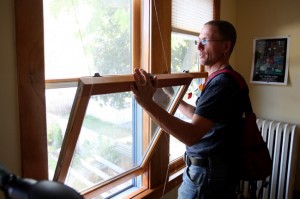
In each home the program accepts, energy auditors implement plans to reduce energy costs by increasing insulation in key areas, as well as installing storm windows, smoke alarms, and carbon monoxide detectors. These retrofitting actions have led to numerous success stories all across the country.
The Conn family of eastern Kentucky is just one household of millions that has benefited from WAP. The program turned their once drafty, unbearably cold house that used approximately 1,400 kilowatt hours of power per month into to a warmer, safer home that only uses 500 kilowatt hours per month.
Low income families typically spend 20 percent of their combined income on heating expenses annually, while those below the poverty line can see up to 40 percent of their wages covering their energy costs. With the weatherization program’s ability to cut utility bills by, “as much as 50 percent,” according to Shaun Wright, the Executive Director of Michigan’s program, families who receive this assistance can use the money they save on other basic living expenses.
Although WAP immediately benefits the families whose houses get renovated, it also spurs job growth and reduces greenhouse gas emissions. In Colorado, the weatherization opportunities have led Veterans Green Jobs to begin training military veterans on how to convert a house into an energy efficient machine.
The EPA states that buildings are responsible for 65 percent of this country’s electricity consumption. With over one million homes completed, the program has certainly attempted to decrease residential energy consumption which is a win-win-win: saving families’ money, creating jobs, and preventing the release of greenhouse gases into our atmosphere.
In order to continue reducing energy costs for low income families and therefore shrinking our energy usage as a nation, Congress needs to stand behind the re-authorization of this program and enact S. 1213.
Matt Kasper contributed to this blog.