In an interview with the Wall Street Journal, President Trump said that his administration doesn’t “have tariffs anywhere.” That’s surprising news to the global economy and many American businesses which are already feeling the pinch from the tariffs Trump himself imposed.
“We don’t even have tariffs. I’m using tariffs to negotiate,” Trump told the Wall Street Journal during an Oval Office interview. The Journal asked him about the risk that tariffs pose to the economy, to which he replied: “Where do we have tariffs? We don’t have tariffs anywhere.”
He then pushed the blame for any economic pain felt by American businesses to the people running them.
“You know what happens? A business that’s doing badly always likes to blame Trump and the tariffs, because it’s a good excuse for some incompetent guy that’s making $25 million a year.”
The president then explained that the threat of tariffs was what allowed him to renegotiate NAFTA. “I could never have done it without tariffs,” he said.
Trump has never been accused of being a policy wonk, but his administration has imposed several significant tariffs on key trading partners in the last year. He has tweeted 49 times about tariffs, often bragging about their size and intended impact.
Our Country was built on Tariffs, and Tariffs are now leading us to great new Trade Deals – as opposed to the horrible and unfair Trade Deals that I inherited as your President. Other Countries should not be allowed to come in and steal the wealth of our great U.S.A. No longer!
— Donald J. Trump (@realDonaldTrump) August 15, 2018
He has even argued that his tariffs will allow him to start paying down the debt and cut taxes.
Here are the tariffs Trump is now trying to pretend he didn’t impose:
Steel and aluminum tariffs
The White House published a handy primer in May entitled, “What You Need to Know About Implementing Steel and Aluminum Tariffs on Canada, Mexico, and the European Union.” In it, it said, “following extensive discussions and a months-long process, the President will implement tariffs on steel and aluminum imports from Canada, Mexico, and the European Union.”
Trump announced on Twitter he was doubling the existing steel and aluminum tariffs on Turkey in August.
I have just authorized a doubling of Tariffs on Steel and Aluminum with respect to Turkey as their currency, the Turkish Lira, slides rapidly downward against our very strong Dollar! Aluminum will now be 20% and Steel 50%. Our relations with Turkey are not good at this time!
— Donald J. Trump (@realDonaldTrump) August 10, 2018
The administration announced more steel and aluminum tariffs on Argentina, Brazil, and Australia in May.
Washing machines
In January, 2018, the Trump administration announced it was placing tariffs on imported washers and washer parts. At the signing ceremony, Trump said “I am taking action to impose safeguard tariffs on imported residential washing machines.” The goal was to get foreign manufacturers to open plants in the United States. Washing machine prices are starting to rise domestically, and it’s not clear whether foreign manufacturers like LG and Samsung changed their pre-existing plans to open plants in the United States. LG has had a long-standing plan with Google to open a plant in Tennessee.
Solar panels
On the same day the Trump administration hit the washing machine industry, it also slapped a 30 percent tariff on imported solar panels. Instead of protecting domestic manufacturing, the effect instead was to slow down renewable energy adoption in favor of fossil fuels.
The first tariffs on Chinese imports affected the solar industry as well, leading to orders being cancelled and workers being laid off. The tariffs have actually undermined the effort to build the domestic solar manufacturing industry.
Chinese imports
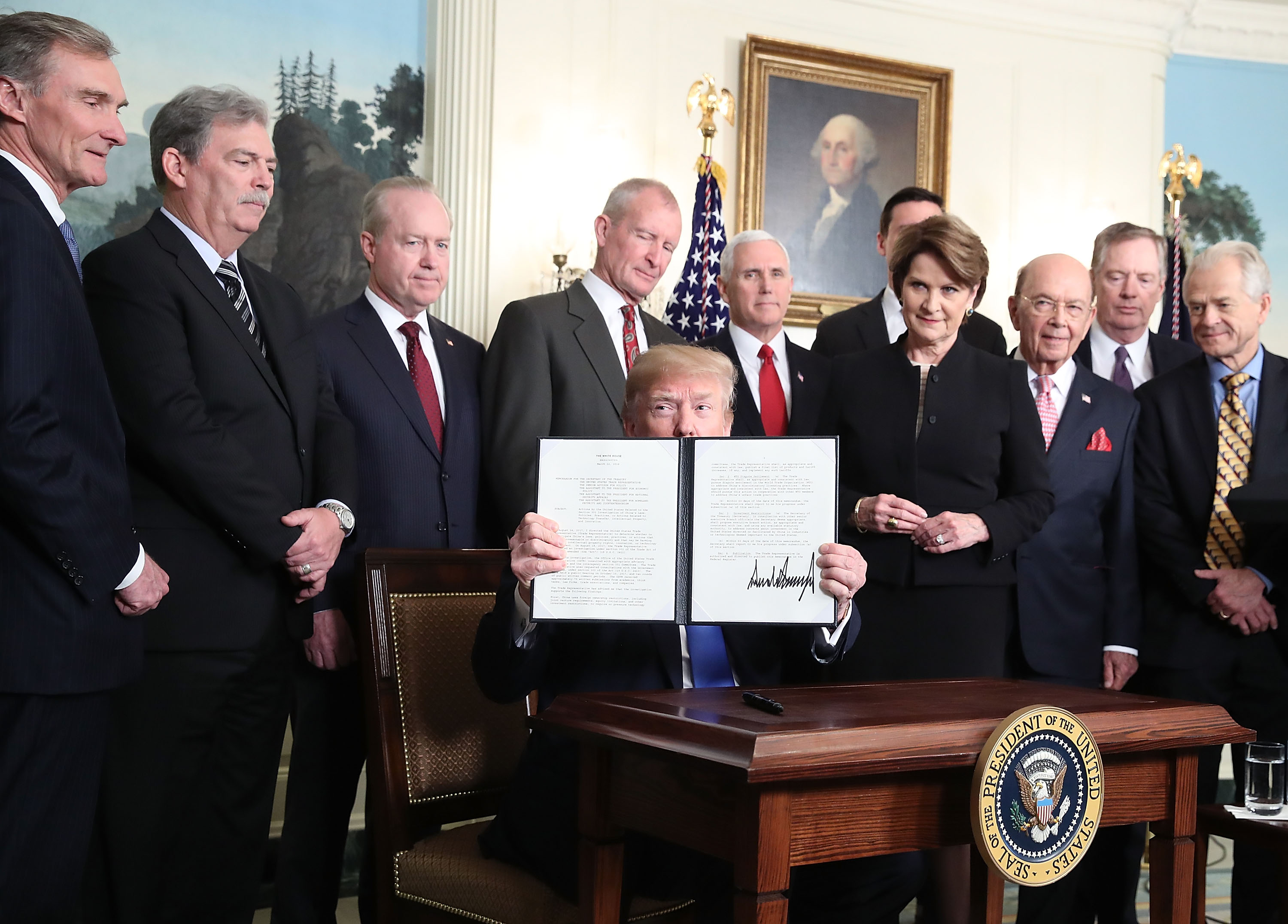
In June, Trump announced a 25 percent tariff on $50 billion worth of imports from China. After China imposed retaliatory tariffs on American goods, the administration then in September imposed a 10 percent tariff on $200 billion worth of Chinese imports. They will rise to 25 percent on January 1, 2019. Trump said in a statement announcing the tariffs, “if China takes retaliatory action against our farmers or other industries, we will immediately pursue phase three, which is tariffs on approximately $267 billion of additional imports.”
Are the tariffs benefiting America’s industries and trade relationships with other countries? Not so far. The trade deficit with China is growing, not shrinking.
These tariffs instead are hurting American companies like Caterpillar, which has seen its stock value decline in part due to the tariffs. Other companies have signaled that prices are likely to rise. And the tariffs are hurting American farmers.
None of these tariffs were among those that Trump promised to impose before he became president. During the campaign, he promised to implement two tariffs — neither of which he has actually imposed.
He told many crowds — including the one at his campaign kickoff speech — he would call up the CEO of Ford to give him a tariff ultimatum, threatening to tax imports 35 percent, and saving jobs from leaving the country.
He also promised that Mexico would pay for the construction of the southern border wall, either through direct payments or through tariffs. The wall has not been built, and he is trying to get Congress to allocate funds for its construction with little apparent effort to get Mexico to pay for it.