Veteran educator Marietta English says she saw the perils of zero tolerance discipline policies as a special education teacher in the Baltimore Public Schools system during the late 1980s and 1990s. That’s why she tried to avoid office referrals for 15 years, opting instead to talk to troubled students and work on understanding the source of their rage.
Amid increasing scrutiny on the high rates of suspension and expulsion in school systems across the country, English’s resolve to connect Baltimore’s misunderstood children with mental health resources has only strengthened. And now, as president of the Baltimore Teachers Union (BTU), she has taken her fight to the state legislature and governor’s office.
Since January, English has been pressuring lawmakers in Annapolis to allocate funding that would expand Baltimore’s system of community schools — educational institutions that have a hodge-podge of local services and programs that troubled students often find difficulty accessing, including those related to mental health. Since the launch of the city’s Community Schools Initiative in 2005, 43 sites have been created, but English says that’s not enough to shift the education system away from a punitive approach.
“Punishment has not been successful. The behavior that we often see is a cry for help,” English, president of BTU since 2002, told ThinkProgress. “Teachers seem to understand that these students are dealing with so many issues from their homes and their lives that they bring to school. We should be thinking about how we best support the students and their families so they could become successful. In a community school, they would get psychologists, social workers, and other resources that they can use when they’re in crisis.”
In Baltimore, the number of children in the grades pre-kindergarten and kindergarten who received suspensions nearly doubled between 2012 and 2013, even amid a six-year campaign by officials to reduce suspensions. In response to the crisis unfolding across the state, the Maryland Department of Education urged a reduction in the number of out-of-school suspensions that teachers dole out, and State School Superintendent Lillian M. Lowery issued guidelines that designate suspension as the last resort be to used only after alternatives had been explored.
Under the guidelines, students would no longer be suspended for poor attendance or other minor offenses. Schools would also have to provide additional academic support for suspended students, which includes making sure that they get their homework while off of school grounds. Reporting of student suspensions and arrests, particularly that of minorities and special education students would also be mandatory.
While many teachers have been supportive of these efforts, some have argued that a reduction in suspensions and expulsions won’t be successful without the implementation of enrichment programs that meet the social and emotional needs of disruptive students. Under the community schools framework, education centers partner with community groups to expand academic, enrichment, health, and social supports that foster healthy youth development and promote students’ academic success while strengthening families.
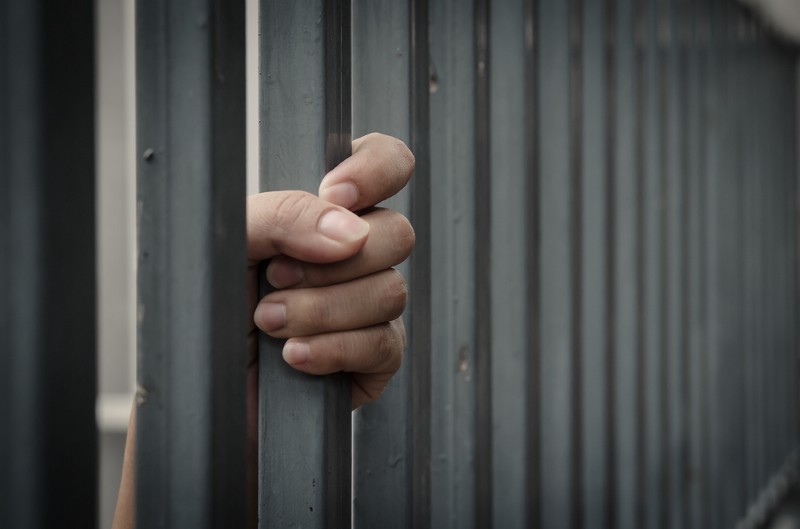
The community schools movement has caught traction in Baltimore and across the country amid the influx of scholarship about the school-to-prison pipeline, defined as polices that push children with learning disabilities, history of poverty, abuse and neglect out of the classroom and into the juvenile and criminal justice system. Experts say that children get indoctrinated into the criminal lifestyle when school administrators criminalize their behavior with harsh sanctions.
But English says suspension and incarceration don’t have to be the answer. She recounted instances in her career when she spent hours with troubled students to get to the root of their misbehavior. She said that in conversing with them, she found signs of depression and other mental ailments, further confirming the need for extra support.
It has taken decades for educators and lawmakers to realize that the “tough on crime” approach has proven fruitless. The American Civil Liberties Union argues suspensions ultimately take the child out of what could be a potentially life-saving environment and introduce him or her to the criminal element. With less time in school and a negative disposition toward the institution and its authority figures, children who have been suspended have a greater chance of entering the criminal justice system later in life.
Even if zero-discipline policies do meet the short-term goal of lightening teachers’ loads, they have had unintended consequences — especially for students of color, a group that has been disproportionately affected by the school-to-prison pipeline. Research, like a landmark study conducted by education experts at Texas A&M University in 2010, shows that implicit bias causes teachers and administrators to characterize what some consider the mischievous behavior of young people of color as dangerous and deserving of the punitive recourse.
Kids struggling with mental health issues are also especially vulnerable to this approach. Today, children with mental disabilities become incarcerated at a rate five times that of youth in the general population, perhaps partly because they act out in ways that starts getting them in trouble from a young age.
Nonprofit medical research group Mayo Clinic say that children with mental disorders — particularly those who have suffer from anxiety disorder, autism spectrum disorder, mood disorders, and schizophrenia — often become more irritable than their adult counterparts. When left untreated or even unacknowledged, youngsters reeling from these ailments may display out-of-control behavior, have difficulty concentrating, and cause harm to themselves or others.
When class, race, and mental health trauma collide, the issues get even bigger. In cities like Baltimore, where the poverty rate stands at 25 percent, the reality of hunger, lack of resources, and exposure to violence can take a toll on a child’s psyche, the signs of which they carry into the classroom.
“There’s a clear disparity in access to care for children of color receiving mental health services and that gap can be attributed to racism and classism,” Lanada Williams, a licensed psychotherapist who lives in the D.C. metropolitan area, told ThinkProgress. “Their behavior is a result of an unresolved mental health issue. We don’t look at kids of color and try to get to the meat of what’s happening to them before we adjudicate them.”
Such was the case in Lynchburg, Virginia last year, when officers charged an autistic black male six-grader, Kayleb, with disorderly conduct after he kicked a trash can and attempted to break from the clutch of an officer on site responding to the commotion. A Lynchburg court recently found him guilty of those charges.
“I thought in my mind — Kayleb is 11,” his mother, who was outraged by the police officer’s allegation that Kayleb “fought back,” said. “He is autistic. He doesn’t fully understand how to differentiate the roles of certain people.”
Regardless of whether Baltimore City expands its community schools initiative, English says that children in the school system may face a similar fate if Maryland Governor Larry Hogan’s proposal to cut $35 million in education funding comes to fruition. In February, more than 100 of Baltimore’s students, parents, and teachers protested the cuts that could have the potential to further damage a system in peril.
“The first thing to always go is education and social work,” English said. “There need to be wrap-around services for children who have some diagnosis of mental illness or whatever they call combative or destructive behavior. In any community, they need those resources and more funding. That’s what we’re pushing.”